Wine-Glass Hydroid (Obelia spp.)
Please Note: This is a wet, live, science specimen.
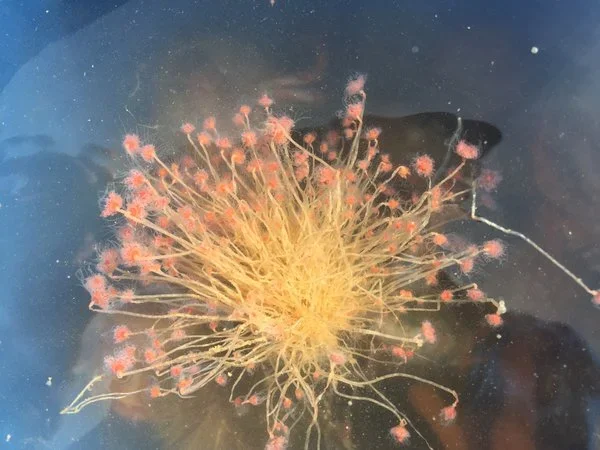
The Wine-Glass Hydroid (Obelia spp.), also known as sea fur, is a colonial cnidarian that forms delicate, branching structures resembling tiny glass goblets. Commonly found on kelp fronds, mooring floats, and in tidepools, these hydroids are an essential part of marine ecosystems—providing food and habitat for small invertebrates and serving as a fascinating subject for studying colonial life cycles, from polyp to medusa stages.
Common name: Wine-glass hydroid, obelia, sea fur
Scientific name: Obelia spp.
Locations: Tidepools, mooring floats, kelp fronds
Seasonality: Spring – late fall
Colors: White
Size: 3” – 6” samples
Collected: By hand
Quantity: Sold by the clump or cluster on rocks, shells, or pieces of kelp
Uses: Excellent for marine biology classrooms, aquariums, or laboratory observation of cnidarian colonies and reproductive cycles.
Note: This is a live marine specimen. Natural variations in size, color, and appearance from photos should be expected. If you would like any specimen preserved, please send a request to: info@gulfofme.com.
Wine-Glass Hydroid (Obelia spp.)
Please Note: This is a wet, live, science specimen.
The Wine-Glass Hydroid (Obelia spp.), also known as sea fur, is a colonial cnidarian that forms delicate, branching structures resembling tiny glass goblets. Commonly found on kelp fronds, mooring floats, and in tidepools, these hydroids are an essential part of marine ecosystems—providing food and habitat for small invertebrates and serving as a fascinating subject for studying colonial life cycles, from polyp to medusa stages.
Common name: Wine-glass hydroid, obelia, sea fur
Scientific name: Obelia spp.
Locations: Tidepools, mooring floats, kelp fronds
Seasonality: Spring – late fall
Colors: White
Size: 3” – 6” samples
Collected: By hand
Quantity: Sold by the clump or cluster on rocks, shells, or pieces of kelp
Uses: Excellent for marine biology classrooms, aquariums, or laboratory observation of cnidarian colonies and reproductive cycles.
Note: This is a live marine specimen. Natural variations in size, color, and appearance from photos should be expected. If you would like any specimen preserved, please send a request to: info@gulfofme.com.

 Image 1 of 2
 Image 2 of 2