
 Image 1 of 5
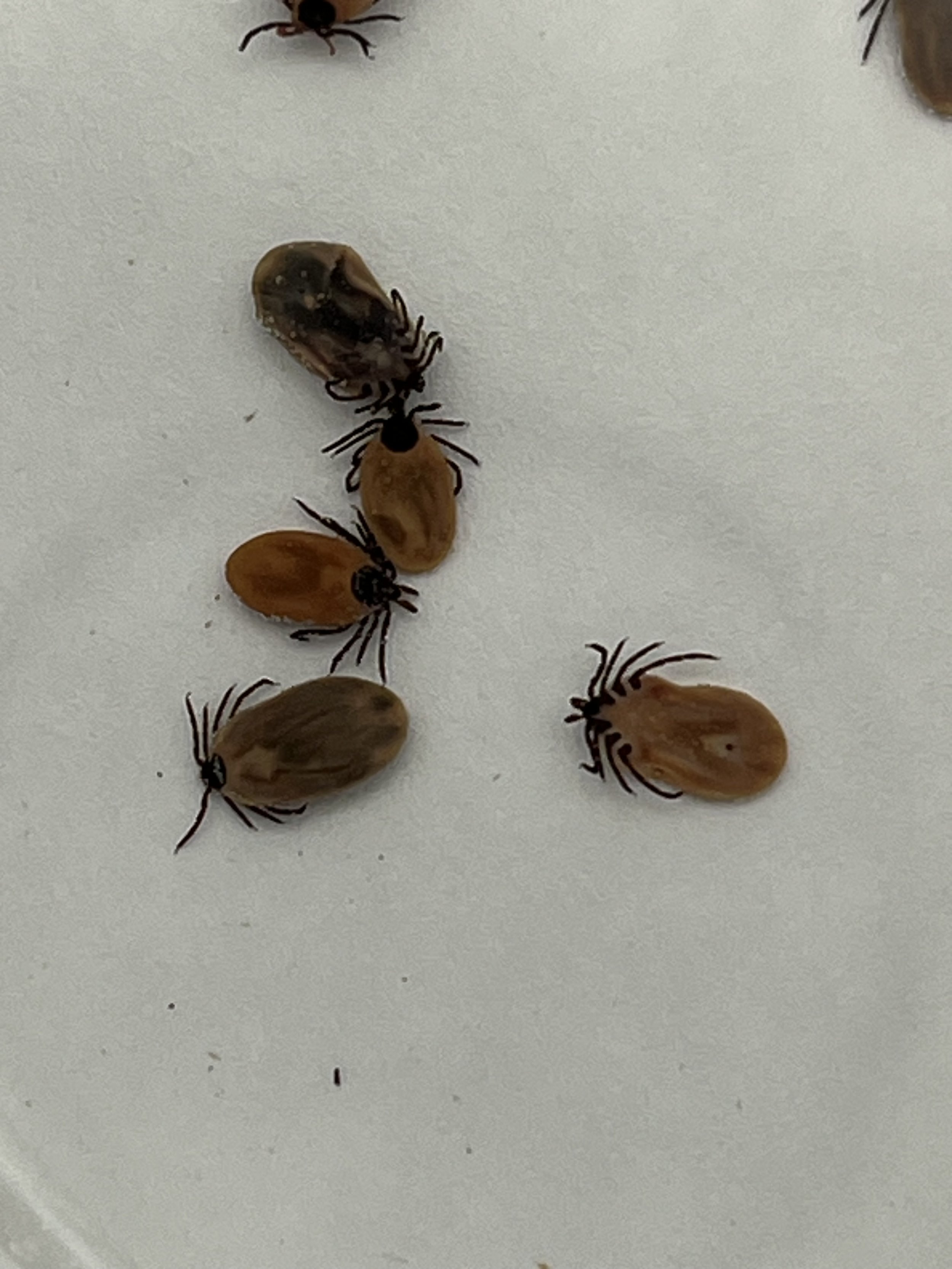 Image 2 of 5
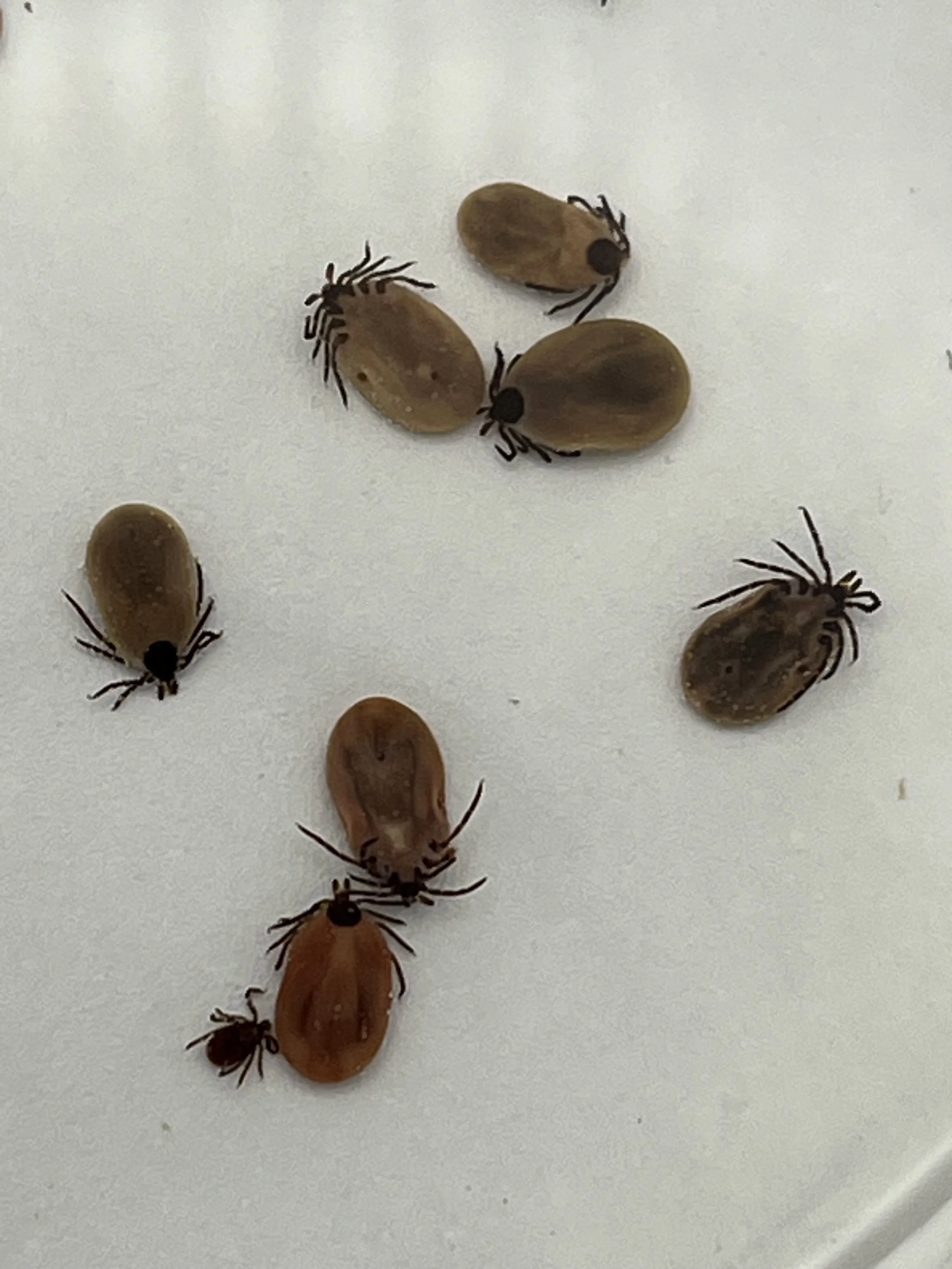 Image 3 of 5
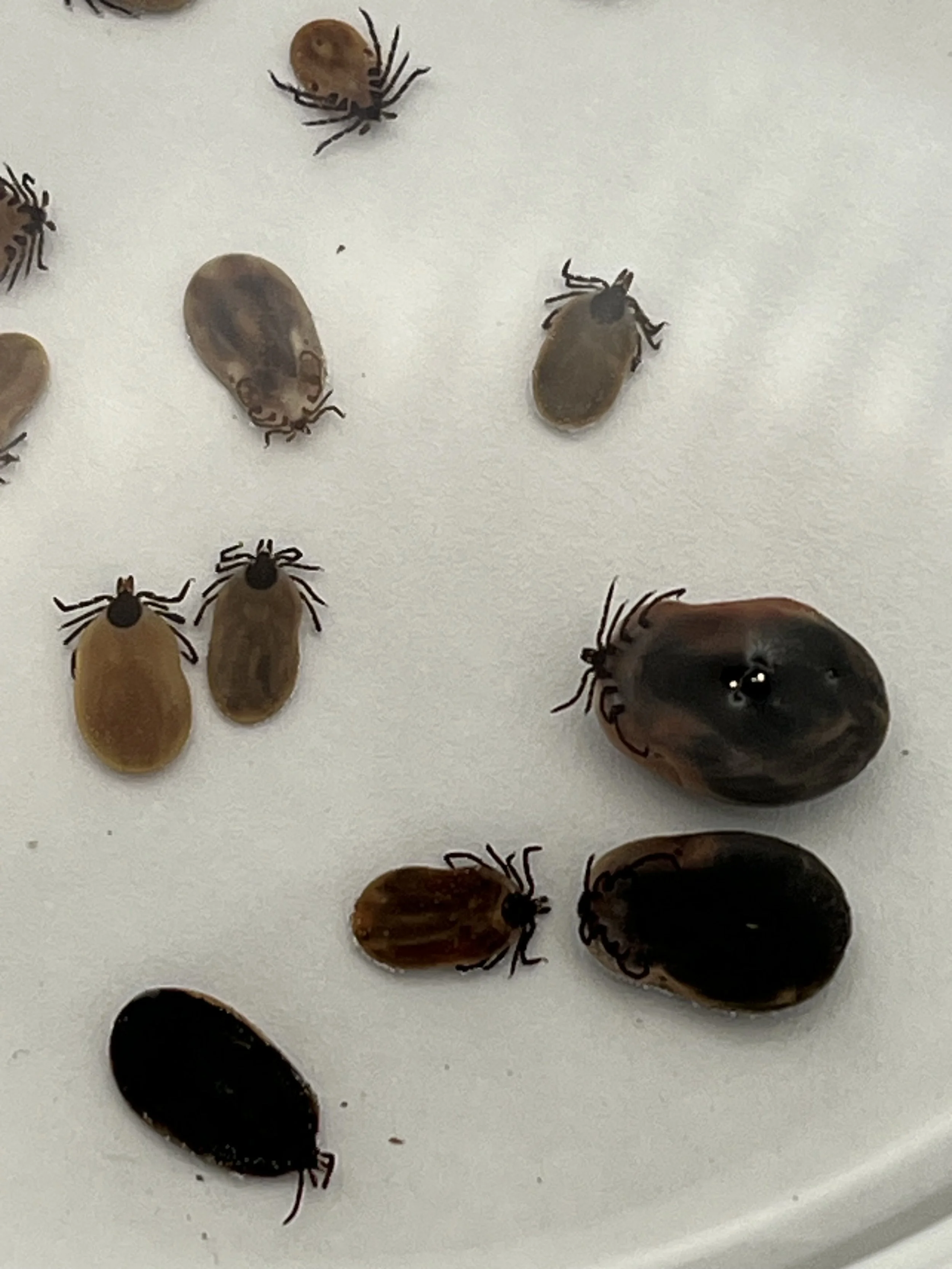 Image 4 of 5
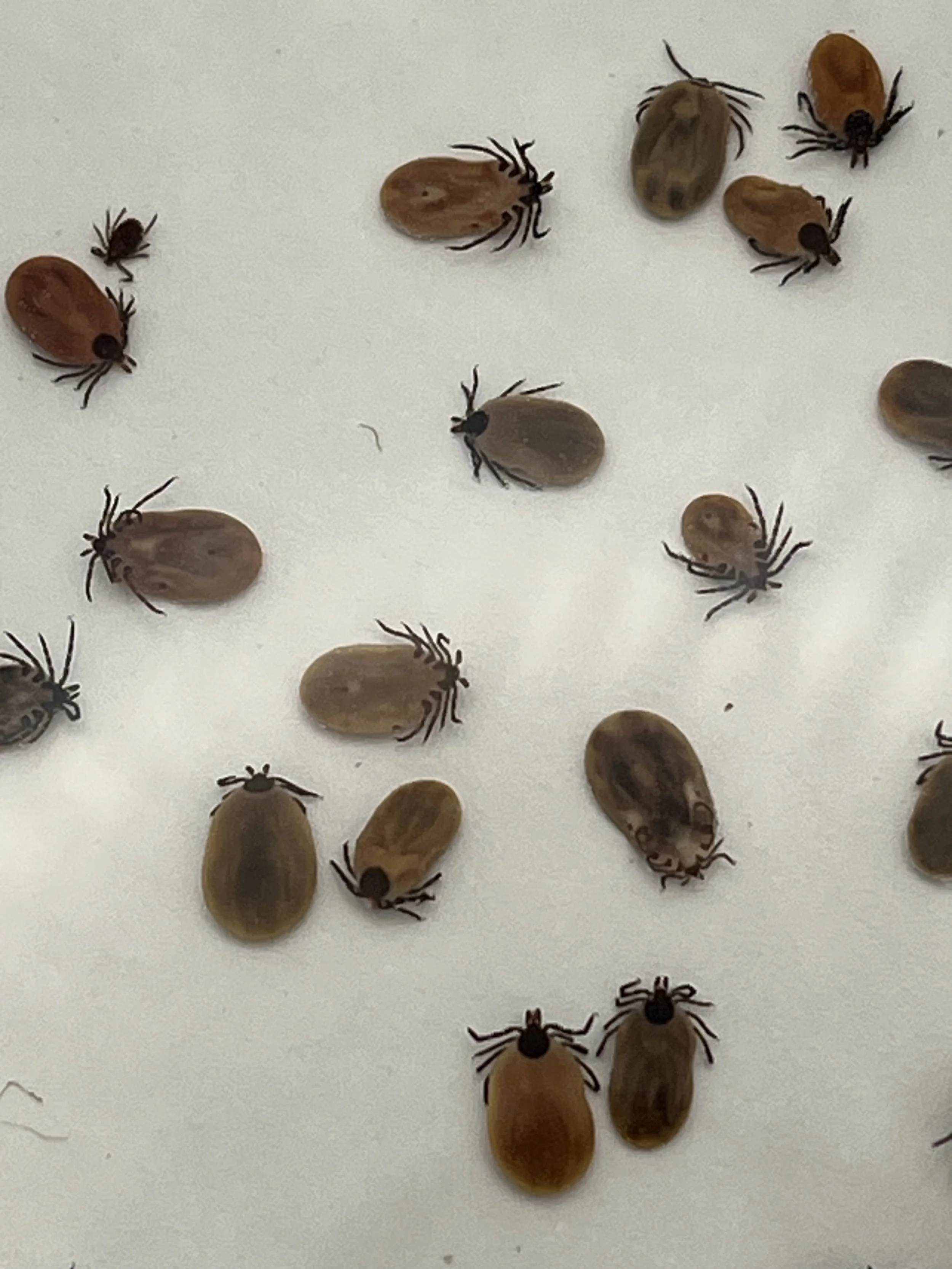 Image 5 of 5
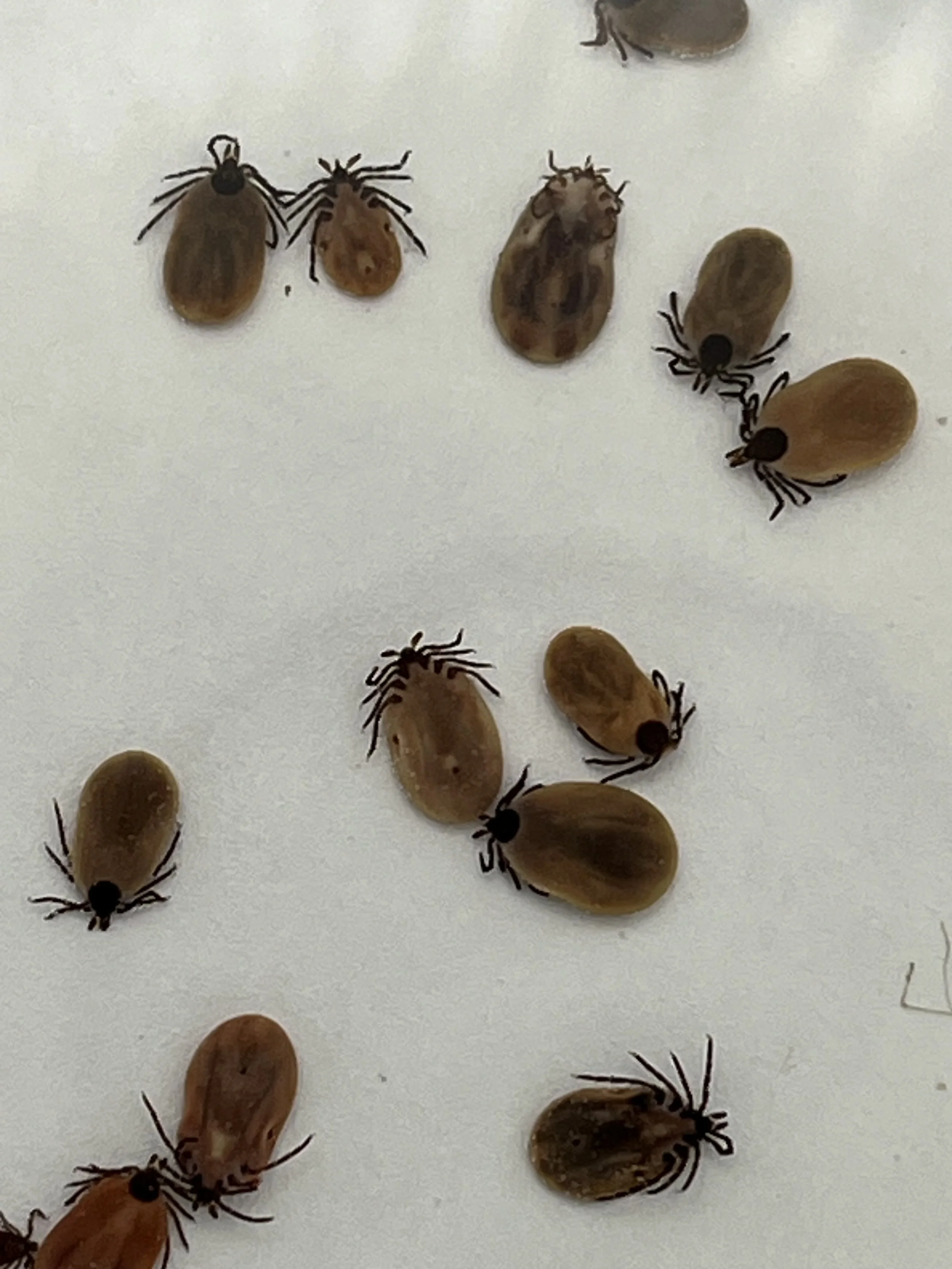
Details: 3 preserved Maine ticks in small glass vial
Common Name: Deer Tick or Blacklegged Tick
Scientific Name: Ixodes scapularis
Habitat: Commonly found in forested and coastal shrub habitats throughout Maine, especially in areas with leaf litter, tall grasses, and wildlife such as deer and small mammals.
Description: The Maine Tick is a small arachnid known for its flattened, oval-shaped body and reddish-brown coloration. Adults measure approximately 2–3 mm unfed and can expand significantly after feeding. These ticks are ectoparasites that feed on the blood of mammals, birds, and sometimes reptiles. In their natural habitat, they play a role in the ecosystem’s food web, serving as prey for spiders, ants, and ground beetles.
Collection & Source: Hand-collected from the forest edge and coastal thickets of Downeast Maine by our team. Specimens are preserved and prepared for educational or display purposes.
Uses: Ideal for educational displays, entomology collections, or biological study. These specimens allow close examination of the tick’s anatomy, including mouthparts, sensory organs, and leg segmentation.
Note: This is a preserved natural specimen. Variations in size, color, and appearance from photos should be expected. If you would like live or ethanol-preserved ticks for specific research applications, please contact us at: info@gulfofme.com
Details: 3 preserved Maine ticks in small glass vial
Common Name: Deer Tick or Blacklegged Tick
Scientific Name: Ixodes scapularis
Habitat: Commonly found in forested and coastal shrub habitats throughout Maine, especially in areas with leaf litter, tall grasses, and wildlife such as deer and small mammals.
Description: The Maine Tick is a small arachnid known for its flattened, oval-shaped body and reddish-brown coloration. Adults measure approximately 2–3 mm unfed and can expand significantly after feeding. These ticks are ectoparasites that feed on the blood of mammals, birds, and sometimes reptiles. In their natural habitat, they play a role in the ecosystem’s food web, serving as prey for spiders, ants, and ground beetles.
Collection & Source: Hand-collected from the forest edge and coastal thickets of Downeast Maine by our team. Specimens are preserved and prepared for educational or display purposes.
Uses: Ideal for educational displays, entomology collections, or biological study. These specimens allow close examination of the tick’s anatomy, including mouthparts, sensory organs, and leg segmentation.
Note: This is a preserved natural specimen. Variations in size, color, and appearance from photos should be expected. If you would like live or ethanol-preserved ticks for specific research applications, please contact us at: info@gulfofme.com