Live Sea Grape (Molgula spp.)
Please Note: This is a live marine specimen.
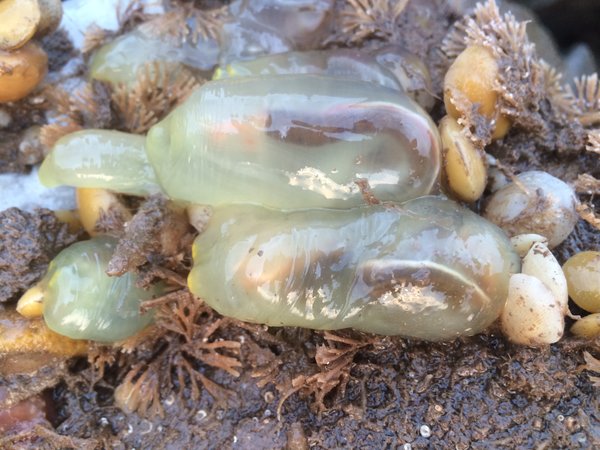
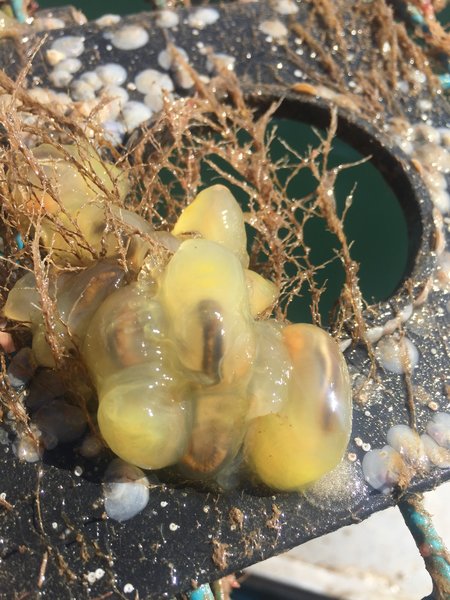
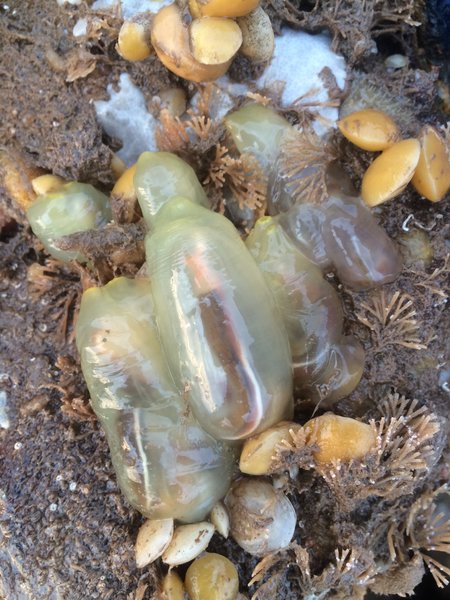
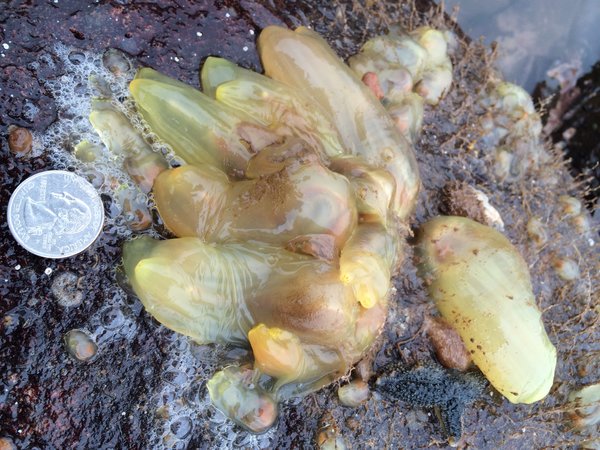
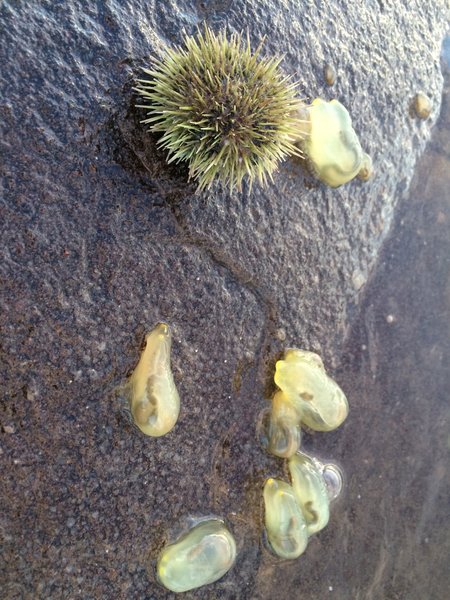
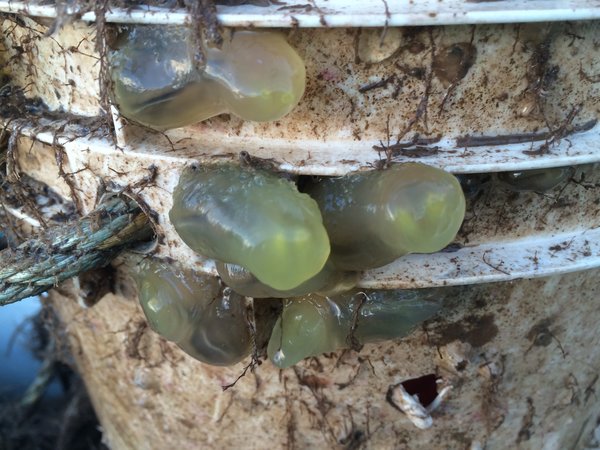
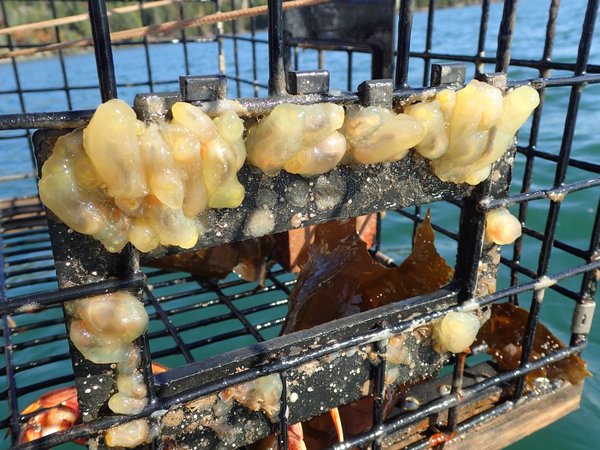
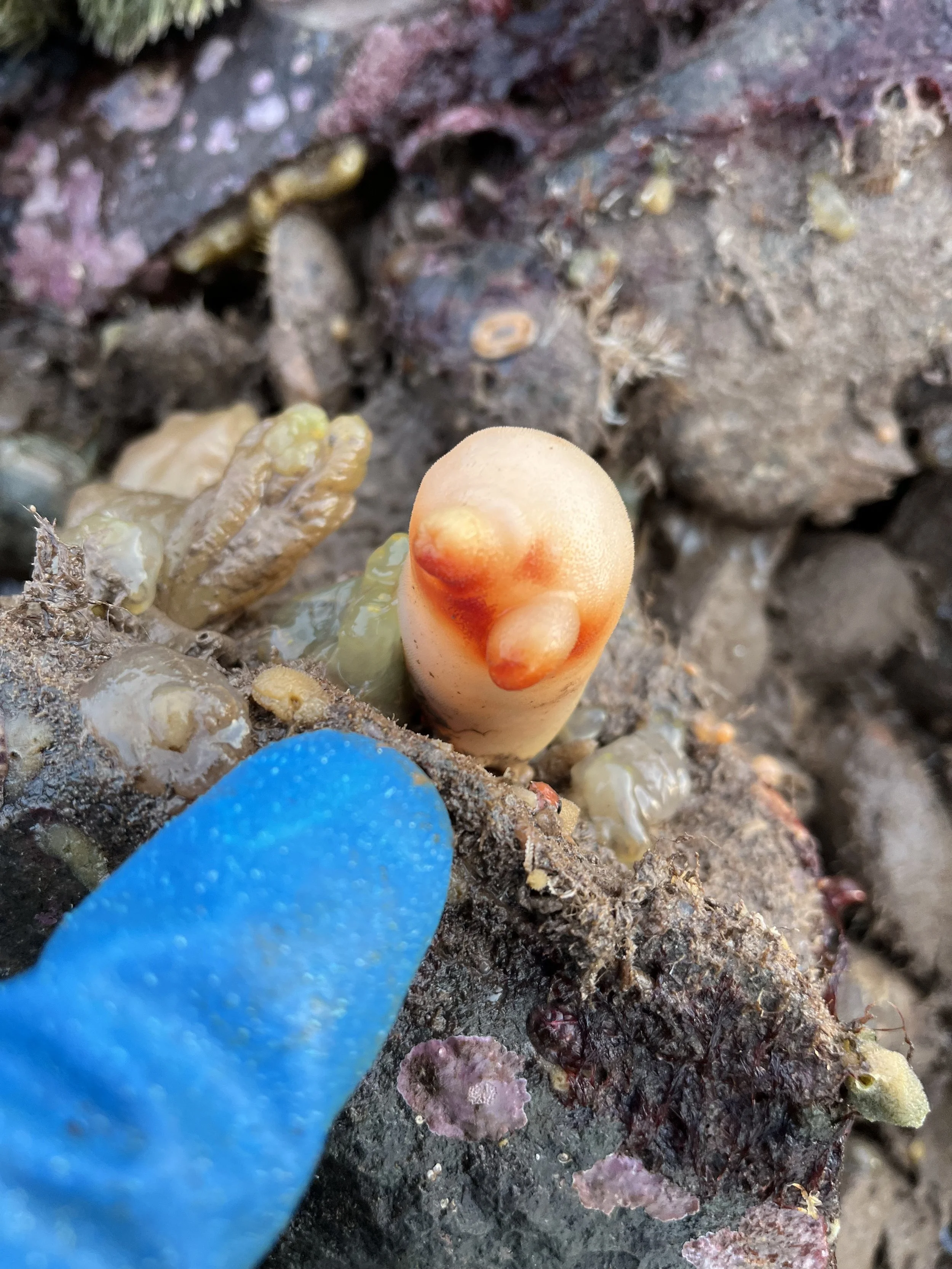
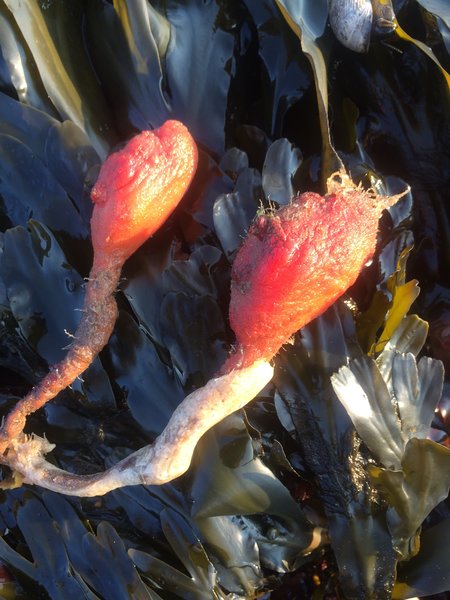
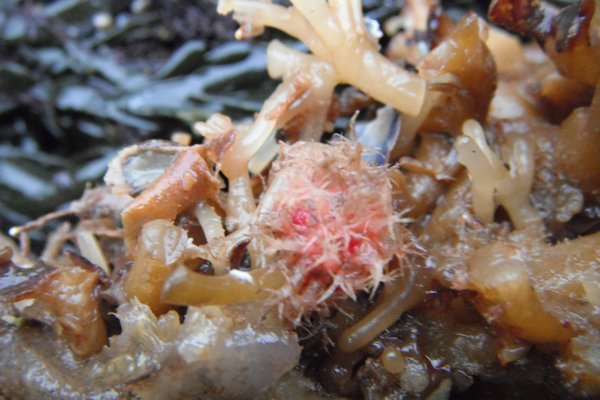
The Sea Grape (Molgula spp.) is a solitary tunicate, or “sea squirt,” commonly found attached to mooring lines, pilings, and submerged rocks. These rounded, translucent-gray organisms resemble small grapes and are known for their unique filter-feeding behavior—drawing in seawater to extract plankton and nutrients.
Collected year-round from the Gulf of Maine, each specimen provides a fascinating example of simple yet efficient marine invertebrate anatomy. Perfect for classroom study, aquaria, and touch tank exhibits, the Sea Grape helps illustrate how tunicates bridge the gap between invertebrates and vertebrates in evolutionary biology.
Common name: Sea grape
Scientific name: Molgula spp.
Locations: Mooring lines, buoys, traps, pilings, floats, salmon pens, undersides of rocks
Seasonality: Available year round
Colors: Dull gray or translucent gray
Size: ½" – 1"
Collected: By hand, scraped from rocks and lines
Quantity: Sold by the each
Uses: Ideal for marine biology education, classroom dissection, aquaria, and evolutionary study.
Note: This is a live marine specimen. Natural variations in size, color, and appearance from photos should be expected. If you would like any specimen preserved, please send a request to: info@gulfofme.com.
Live Sea Grape (Molgula spp.)
Please Note: This is a live marine specimen.
The Sea Grape (Molgula spp.) is a solitary tunicate, or “sea squirt,” commonly found attached to mooring lines, pilings, and submerged rocks. These rounded, translucent-gray organisms resemble small grapes and are known for their unique filter-feeding behavior—drawing in seawater to extract plankton and nutrients.
Collected year-round from the Gulf of Maine, each specimen provides a fascinating example of simple yet efficient marine invertebrate anatomy. Perfect for classroom study, aquaria, and touch tank exhibits, the Sea Grape helps illustrate how tunicates bridge the gap between invertebrates and vertebrates in evolutionary biology.
Common name: Sea grape
Scientific name: Molgula spp.
Locations: Mooring lines, buoys, traps, pilings, floats, salmon pens, undersides of rocks
Seasonality: Available year round
Colors: Dull gray or translucent gray
Size: ½" – 1"
Collected: By hand, scraped from rocks and lines
Quantity: Sold by the each
Uses: Ideal for marine biology education, classroom dissection, aquaria, and evolutionary study.
Note: This is a live marine specimen. Natural variations in size, color, and appearance from photos should be expected. If you would like any specimen preserved, please send a request to: info@gulfofme.com.

 Image 1 of 1