
For Classrooms & Labs
Live and preserved specimens, seaweeds, and teaching materials collected from the Maine coast for education, demonstration, and research support.
Why Educators Choose Gulf of Maine, Inc.
Gulf of Maine, Inc. supplies authentic marine life specimens and seaweeds for hands-on learning. Founded by marine biologist Tidepool Tim, we are a small, family-run business guided by field experience, scientific accuracy, and respect for our coastal ecosystems. All live specimens are collected to order when our tides and weather allow, then packed carefully for classroom and laboratory use.
How it Works
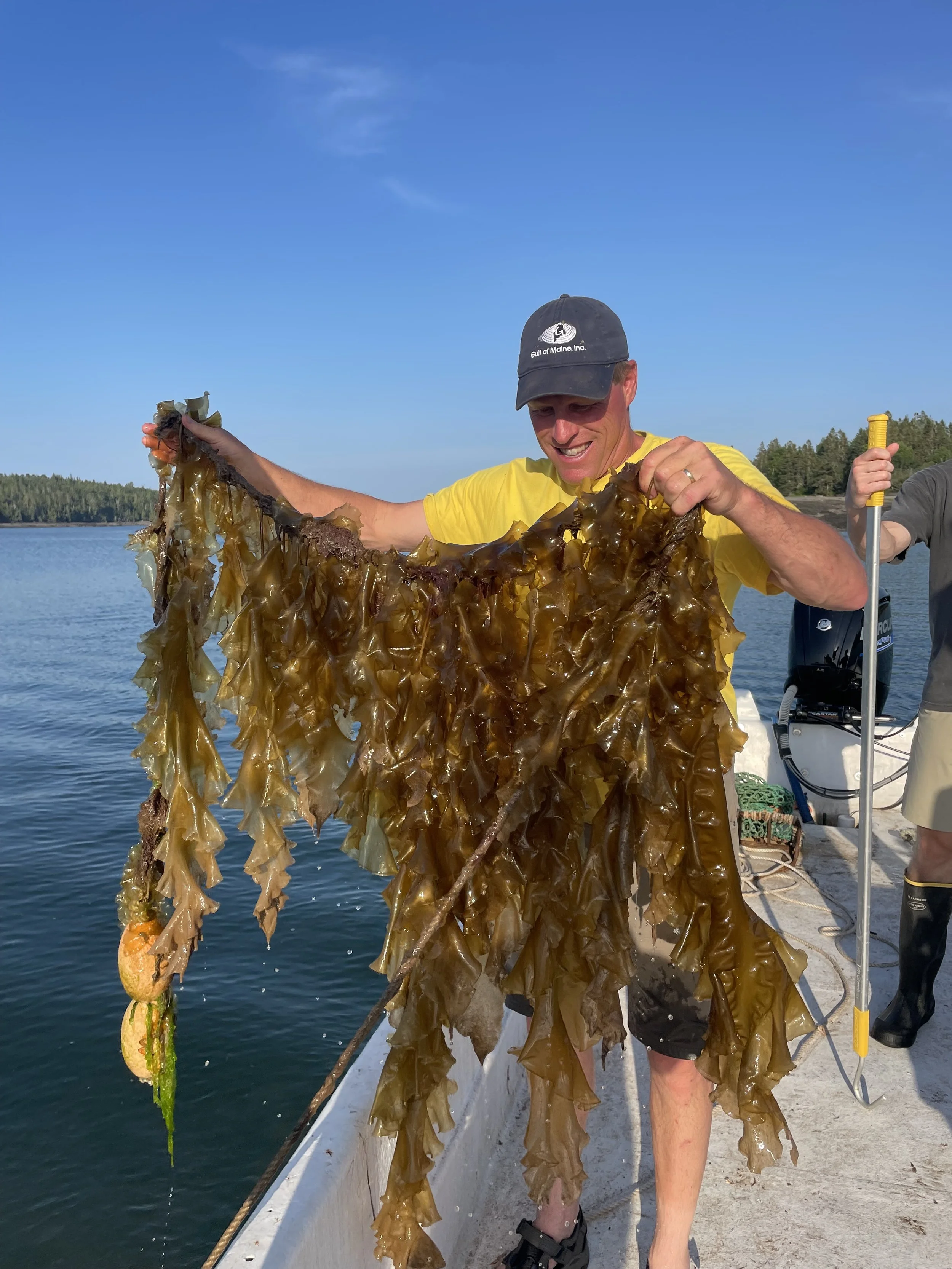
Live specimens are collected from local shorelines, and tidepools the day of shipping when conditions allow.
2. Orders are packed according to specimen needs, seasonality, and weather conditions.
3. Live specimens ship via UPS overnight express service, included in our prices.
Common Classroom & Lab Orders
These items are frequently used for demonstrations, dissections, and hands-on learning.
Live Orange Sea Cucumber (Cucumaria frondosa)
Please note this is a live marine specimen.
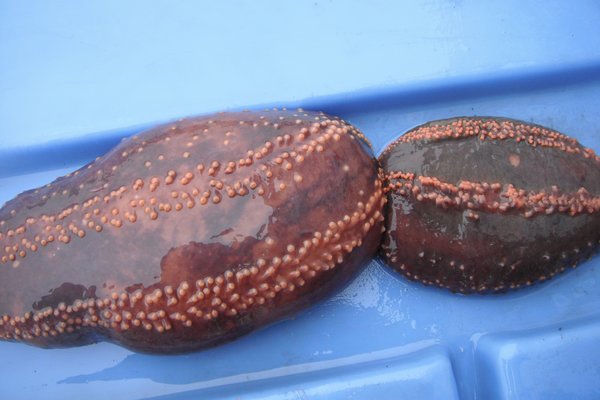
The Orange Sea Cucumber (Cucumaria frondosa) is a vibrant benthic invertebrate found clinging to rocks and nestled in crevices along Maine’s shallow coastal waters. Recognized by its dark brown to maroon coloration and striking orange feeding tentacles, this echinoderm plays an important ecological role in filtering detritus and recycling nutrients on the ocean floor.
Collected by hand from the cold, clean waters of the Gulf of Maine, each specimen is shipped live and ready for use in aquariums, touch tanks, classrooms, or marine biology research.
Common name: Orange Sea Cucumber, orange footed sea cucumber
Scientific name: Cucumaria frondosa
Locations: Shallow waters of the coast, attached to rocks and in cracks and crevices
Seasonality: Available all year
Color: Dark brown, tan, maroon, or purple with orange feeding structures
Size: 4” – 8”
Weight: ~0.75lbs each
Collected: By hand
Quantity: Sold by the pound (live)
Note: This is a live marine specimen. Natural variations in size, color, and appearance from photos should be expected. If you would like any specimen preserved, please send a request to: info@gulfofme.com
Click Here For A Wholesale Quote
Live Northern Red Anemone (Urticina felina)
Please note this is a live marine specimen.
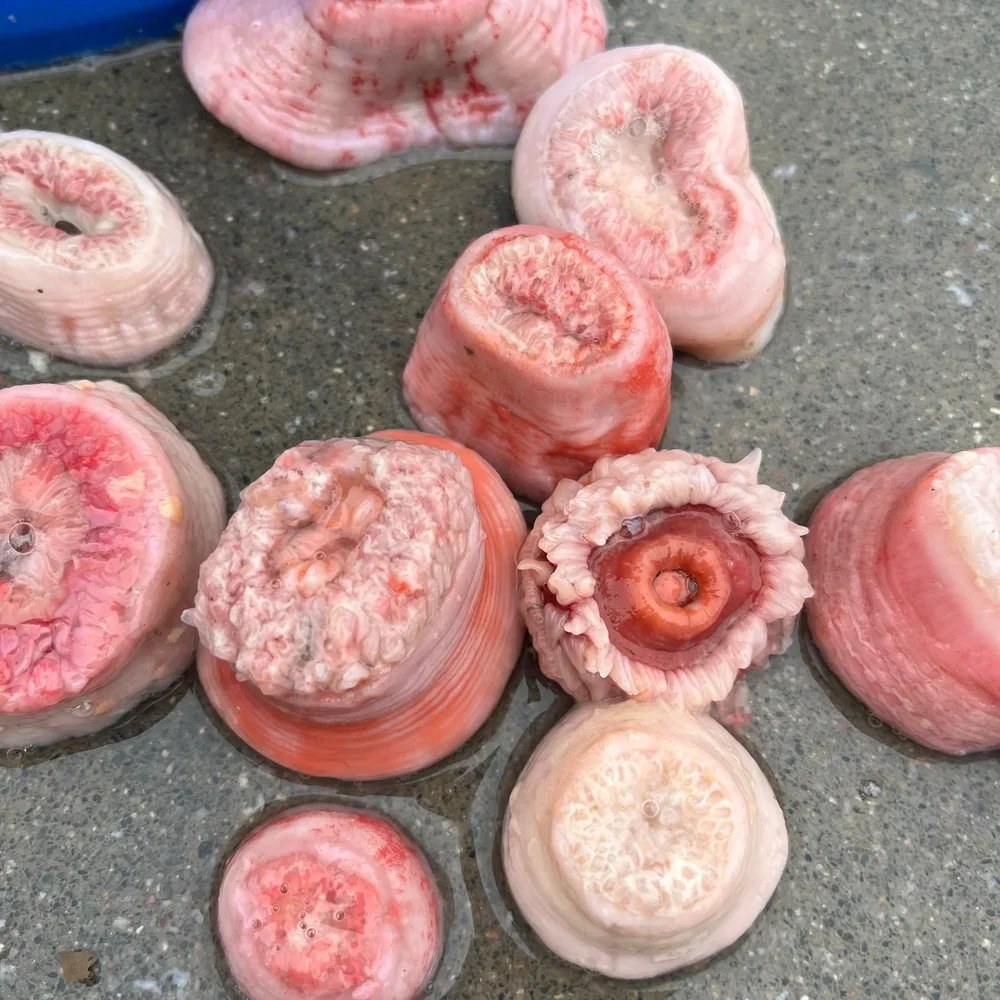
The Northern Red Anemone (Urticina felina), also known as the Dahlia Anemone, is a striking and hardy sea anemone found on subtidal rock piles, mooring blocks, dock floats, and occasionally as bycatch from fishing gear. Its vivid red, pink, and rose coloration—with distinctive radial streaks—makes it one of the most eye-catching invertebrates for aquariums, touch tanks, and marine biology study.
Each specimen is carefully hand-collected and shipped live, offering students and researchers the chance to observe its anatomy and feeding behavior up close.
Common name: Northern red anemone, dahlia anemone
Scientific name:Urticina felina
Locations: Subtidal rock piles, mooring blocks, dock floats, lobster traps, and bycatch from scallop draggers
Seasonality: Available year-round
Colors: Bright red, rose, and pink with reddish streaks on sides
Size: 2”–4” base, sometimes larger
Collected: By hand
Quantity: Sold by the each
Note: This is a live marine specimen. Natural variations in size, color, and appearance from photos should be expected. If you would like any specimen preserved, please send a request to: info@gulfofme.com.
Lumpfish (Cyclopterus lumpus)
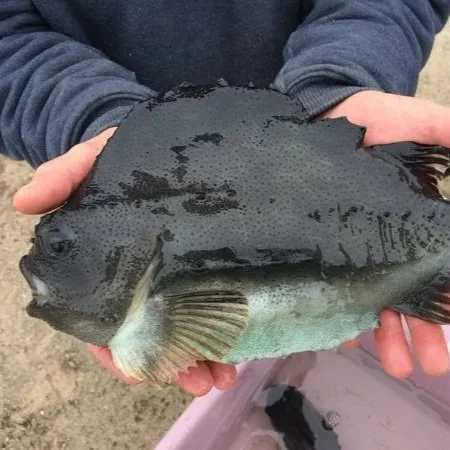
The Lumpfish (Cyclopterus lumpus) is a distinctive cold-water species found along the Maine coast, known for its round body, suction-cup pelvic fins, and seasonal color changes. Juveniles inhabit seaweed beds for protection, while adults migrate to open water, returning to shallow coastal areas to spawn each spring. Males turn a striking red during mating season, making this species especially fascinating for study and display.
Common name: Lumpfish
Scientific name: Cyclopterus lumpus
Locations: Seaweed beds as juveniles; open water as adults
Seasonality: February – June (spawning season)
Colors: Green, blue, gray, brown; males red during mating season
Size: 1” – 12”
Collected: Fishing line
Quantity: Sold by the each
Note: This is a live marine specimen. Natural variations in size, color, and appearance from photos should be expected. If you would like any specimen preserved, please send a request to: info@gulfofme.com.
Click Here For A Wholesale Quote
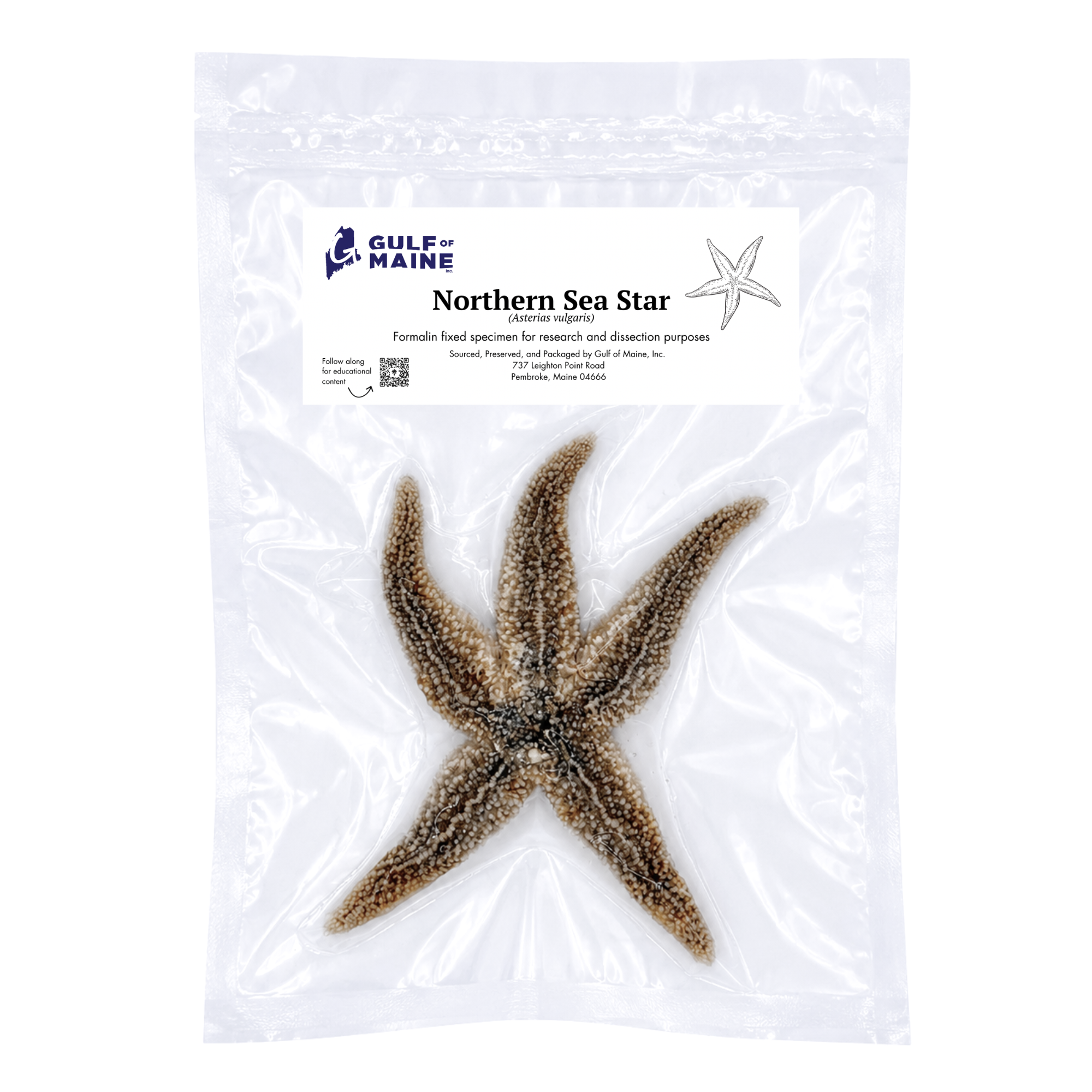
This preserved Northern sea star (Asterias reubens) is a formalin-preserved marine invertebrate specimen used in classrooms and laboratories to study echinoderm anatomy and marine biology. Its radial symmetry and distinctive water vascular system make it an excellent model for invertebrate anatomy and comparative biology instruction.
Specimen Details
Common name: Northern sea star
Scientific name: Asterias vulgaris formerly known as Asterias vulgaris
Size: 5–8 inches
Preservation method: Formalin-preserved
Habitat: Shallow coastal waters, attached to rocks
Collection method: Hand-collected
Quantity: Sold individually, and in bulk bags
Educational Applications
Commonly used in marine biology and invertebrate zoology courses, this specimen supports instruction in echinoderm anatomy, locomotion via tube feet, stomach eversion, and regenerative biology. Students can examine external and internal features characteristic of echinoderms.
Anatomical Features
Radial symmetry typical of echinoderms
Water vascular system with tube feet
Clearly preserved arms, ambulacral grooves, and central disc
Suitable for invertebrate anatomy and comparative biology studies
Sourcing & Preservation
Specimens are responsibly collected from coastal waters of the Gulf of Maine and preserved in formalin to maintain anatomical integrity for long-term educational use and repeated classroom handling.
Note: This is a preserved marine invertebrate specimen. Natural variations in size, color, and appearance should be expected. For bulk or institutional orders, please contact info@gulfofme.com.
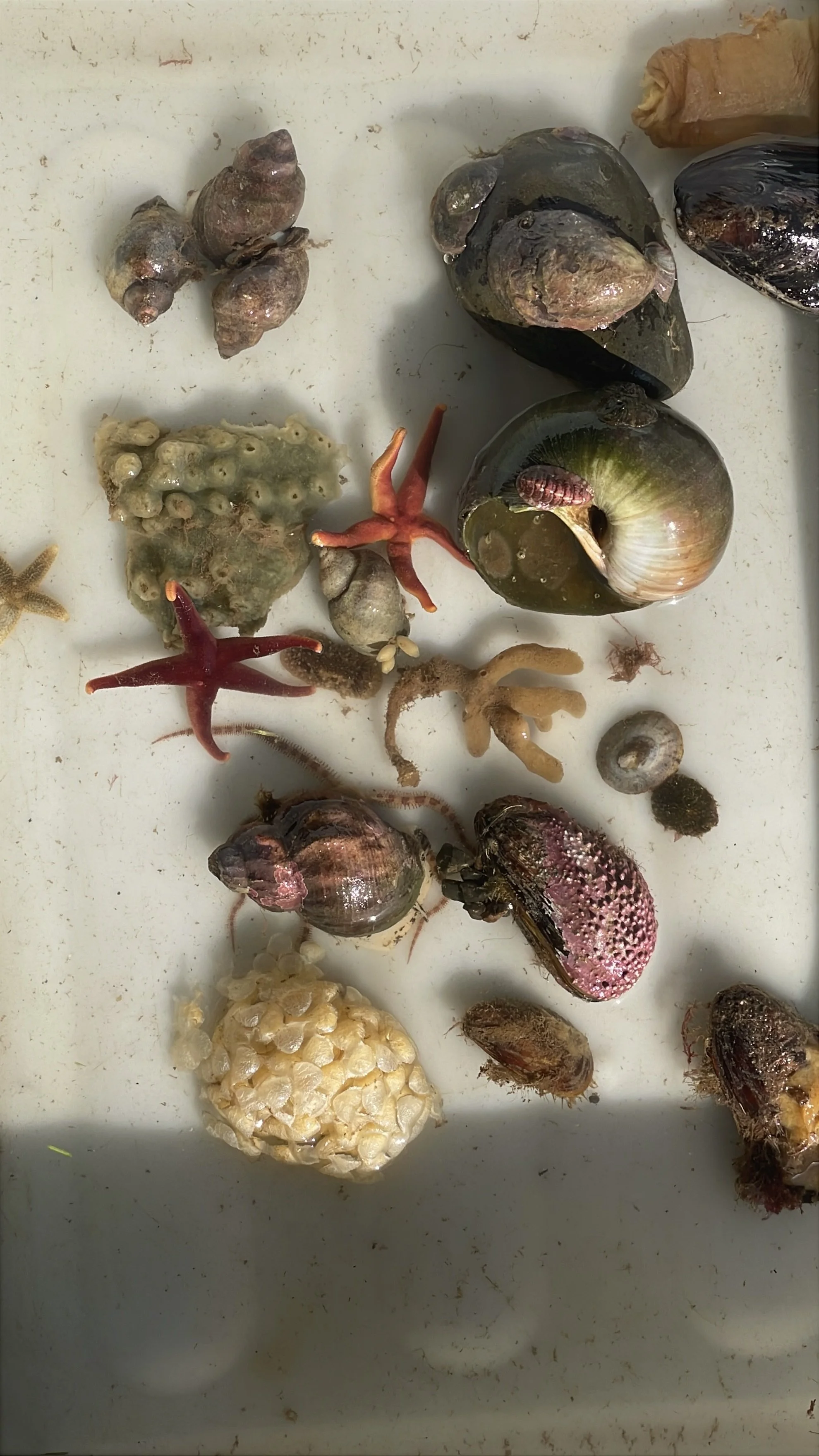
Bring the rich biodiversity of the North Atlantic into your touch tank or cold water aquarium with this curated assortment of live marine species. Sustainably hand-collected from the Gulf of Maine, this collection is perfect for classrooms, labs, aquariums, and marine education programs.
Included (Unless Otherwise Specified):
Green & Brown Algae: Sea lettuce (Ulva, 2), bladderwrack (Fucus, 2)
Red Algae: Irish moss (Chondrus crispus, 1)
Sponges: Finger sponge (Chalina, 1), crumb-of-bread sponge (Halichondria, 1), sulfur boring sponge (Cliona, 1)
Cnidarians: Frilled anemone (Metridium, 2), northern red anemone (Urticina, 1)
Bryozoans: Bushy sea fern (Bugula, 1)
Mollusks: Tortoiseshell limpets (Acmaea, 2), Atlantic red chitons (Ischnochiton, 2), blue mussels (Mytilus, 2), common periwinkles (Littorina, 3), dog whelk (Thias, 1)
Annelids: Sandworm (Nereis, 1), twelve-scaled worm (Lepidonotus, 1), lugworm (Arenicola, 1)
Crustaceans: Hermit crab (Pagurus, 2), green crab (Carcinus, 2), rock barnacle (Balanus, 2)
Echinoderms: Orange-footed cucumber (Cucumaria, 1), northern sea star (Asterias, 2), green sea urchin (Strongylocentrotus, 2), blood star (Henricia, 1)
Tunicates: Sea vase (Ciona, 1), sea peach (Halocynthia, 1), cactus sea squirt (Boltenia, 1)
In total, you’ll receive 30 live specimens across multiple marine species, carefully packaged or available by local delivery for safe arrival.
If you’d like to choose specific species or customize your mix, please contact us before ordering and we will do our best to accommodate your request.
Species availability may vary seasonally. Please contact us with special requests.
Live Sea Gooseberry (Pleurobrachia pileus)
Please Note This Is A Live Science Specimen
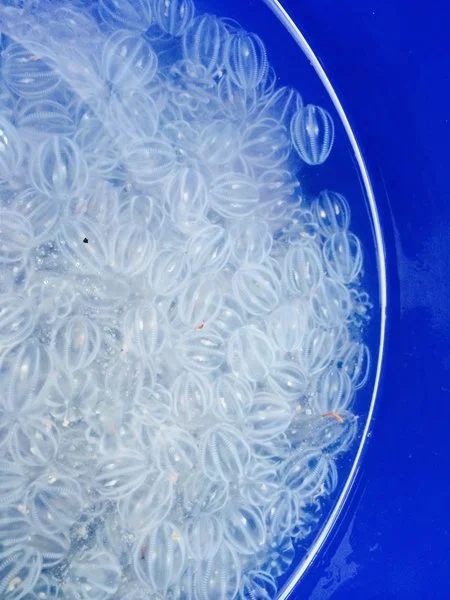
The Sea Gooseberry (Pleurobrachia pileus), is a small, translucent ctenophore found drifting in tidal upwellings throughout open bays of the Gulf of Maine. These delicate, gelatinous animals are mesmerizing to observe, with rows of tiny ciliary combs that refract light into shimmering rainbow colors as they pulse through the water.
Collected by gentle dip-netting, Sea Gooseberries are best viewed in seawater aquaria with minimal flow, where their rhythmic movements and iridescence can be appreciated up close. Though fragile, they are among the most captivating live specimens available for classroom and laboratory study, particularly in early summer when populations are most abundant.
Common name: Sea Gooseberry
Scientific name: Pleurobrachia pileus
Locations: Tidal upwellings in open bays
Seasonality: Early summer is best; sometimes available year-round in plankton tows
Colors: Translucent clear, white
Size: ½” average
Collected: By dip-net
Quantity: Sold by the each
Uses: Excellent for marine biology demonstrations, ctenophore research, or educational aquarium exhibits showcasing bioluminescence and ciliary motion.
Note: This is a live marine specimen. Natural variations in size, color, and appearance from photos should be expected. Ctenophores are delicate and must be handled with extreme care. If you would like a preserved sample instead, please send a request to: info@gulfofme.com.

Gulf of Maine Seaweeds Survey Set (6 Species)
Please note these are live marine specimens.
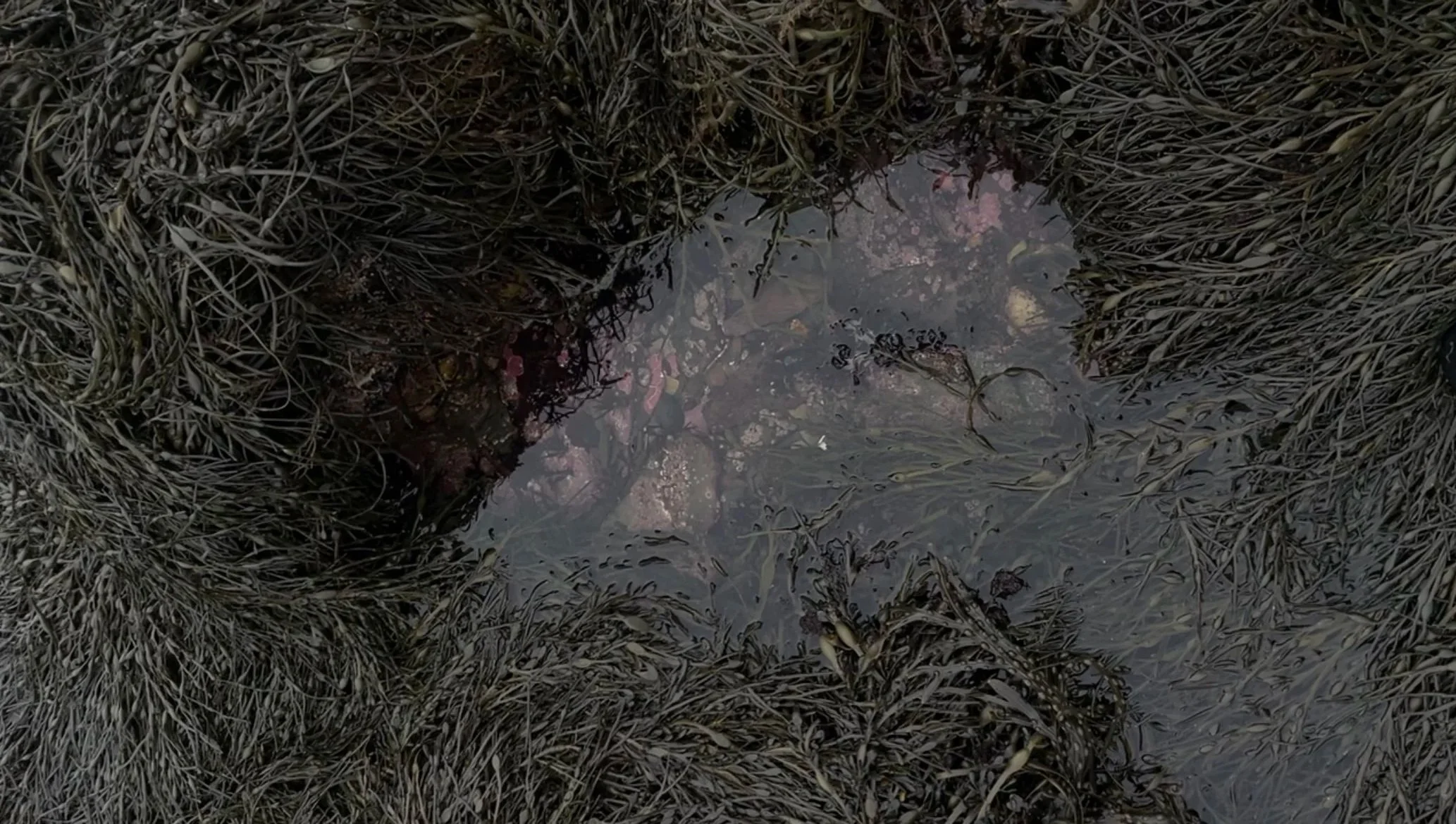
The Gulf of Maine Seaweeds Survey Set includes a curated assortment of six distinct marine algae species commonly found along Maine’s lower intertidal zones. Each collection highlights the extraordinary biodiversity of Cobscook Bay and neighboring coastal habitats. This educational set offers a range of colors, textures, and forms representing the three major seaweed groups — green, brown, and red algae — providing an excellent introduction to phycology, coastal ecology, and marine biology study.
Each order contains approximately one quart-sized mass of each seaweed type, sustainably hand-collected and rinsed in seawater to preserve its natural structure and vitality. Perfect for classroom study, aquaria, or scientific display, these seaweeds bring the diversity of the Gulf of Maine’s intertidal ecosystems directly to you.
Key Facts:
Common names: Kelp, rockweed, bladderwrack, sea lettuce, dulse, coralline, Irish moss
Scientific names: Laminaria, Ascophyllum, Fucus, Ulva, Chondrus, Palmaria, Corallina
Locations: Lower intertidal marine algae species from Cobscook Bay collecting areas
Seasonality: Available all year
Colors: Red, green, brown, and coral seaweeds included
Size: 2” – 6’
Collected: By hand
Quantity: 1 quart-sized mass of each seaweed
Note: This is a live marine specimen. Natural variations in color, texture, and composition from photos should be expected. The assortment will vary seasonally. If you have specific requests, please contact us at info@gulfofme.com.
Already know what you’re looking for?
Frequently Asked Questions for Educators
-
We supply K–12 classrooms, universities, homeschool families, museums, aquariums, and research labs.
-
It depends on the product. Each listing clearly states how the item is shipped (live, preserved, dried, or wet-packed) so you know what to expect before ordering.
-
Live specimens are collected to order when tides, weather, and seasonal conditions allow—usually the day of shipping.
-
Absolutely. Tell us the age level, topic, and timeline, and we’ll recommend appropriate specimens or sets.
-
No. Natural variation in size, color, and appearance is expected for live or natural marine specimens. Photos represent typical examples.
-
Yes. If you would like a specimen preserved, please contact us before ordering or immediately after placing your order.
-
Some products are seasonal or weather dependent. If timing matters for a lesson or lab, we recommend contacting us before ordering.
-
Live specimens ship via required UPS overnight express service, which is included in our prices. Packing methods vary by species and conditions.
-
We are always open to conversation with our customers. If you’re looking for something specific not listed on our site please send us an email at: info@gulfofme.com