
How Kelp Is Harvested — and What Kelp Meal Is Used For
When people talk about “kelp meal,” they’re often referring to dried brown seaweeds such as Ascophyllum nodosum, commonly known as rockweed. While rockweed is not classified as a true kelp species, it has long been harvested along the North Atlantic coast and marketed in agriculture as kelp meal. For clarity, when we use the term “kelp meal” in this article, we are referring to products made from Ascophyllum nodosum.
Abundant along North Atlantic shores and harvested for centuries—long before it became a green powder you could buy in a bag—this seaweed remains an important coastal resource.
Whether you’re interested in harvesting seaweed yourself or trying to understand how kelp meal is used today, it helps to start with the basics: where it grows, how it’s traditionally collected, and why people continue to work with it.
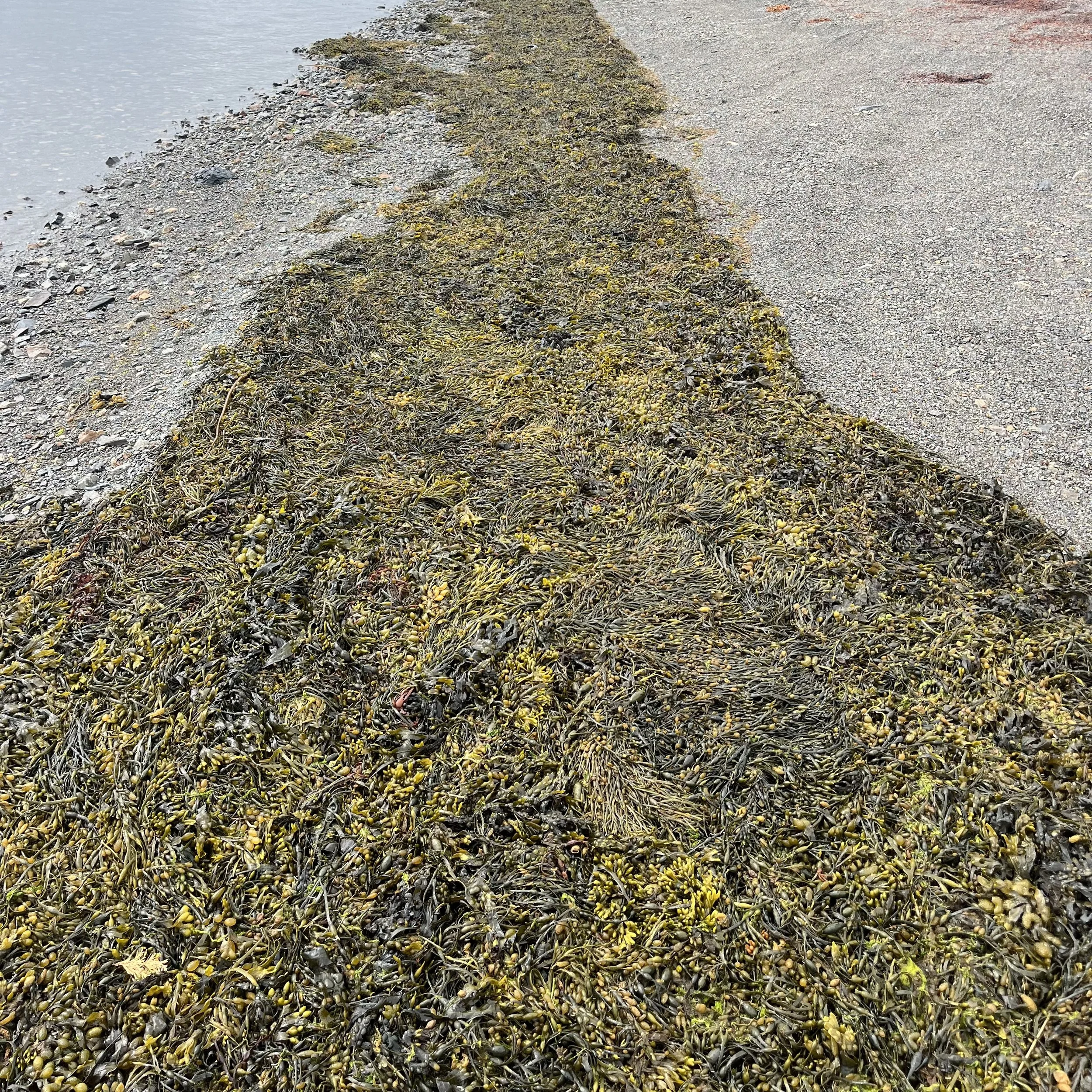
Storm-cast kelp on the beach after a large storm.
1. Harvesting Storm-Cast Kelp
Harvesting regulations vary by location, so it’s always important to check local and state guidelines before collecting seaweed. After what Mainers call Nor'easters or big storms, kelp is naturally torn away from its holdfasts and washed ashore. This is the kelp you see in masses along the shoreline after rough weather, hence it’s name: storm cast.
Storm-cast kelp has long been the easiest and most accessible option for people harvesting by hand. Because the seaweed is already detached, and tide blown ashore, this method requires no cutting and minimizes disturbance to seaweed beds.
Once collected, storm-cast kelp is typically:
Used right off the beach in gardens or compost
Dried for later use
For many living near the coast, this remains the first place to look.
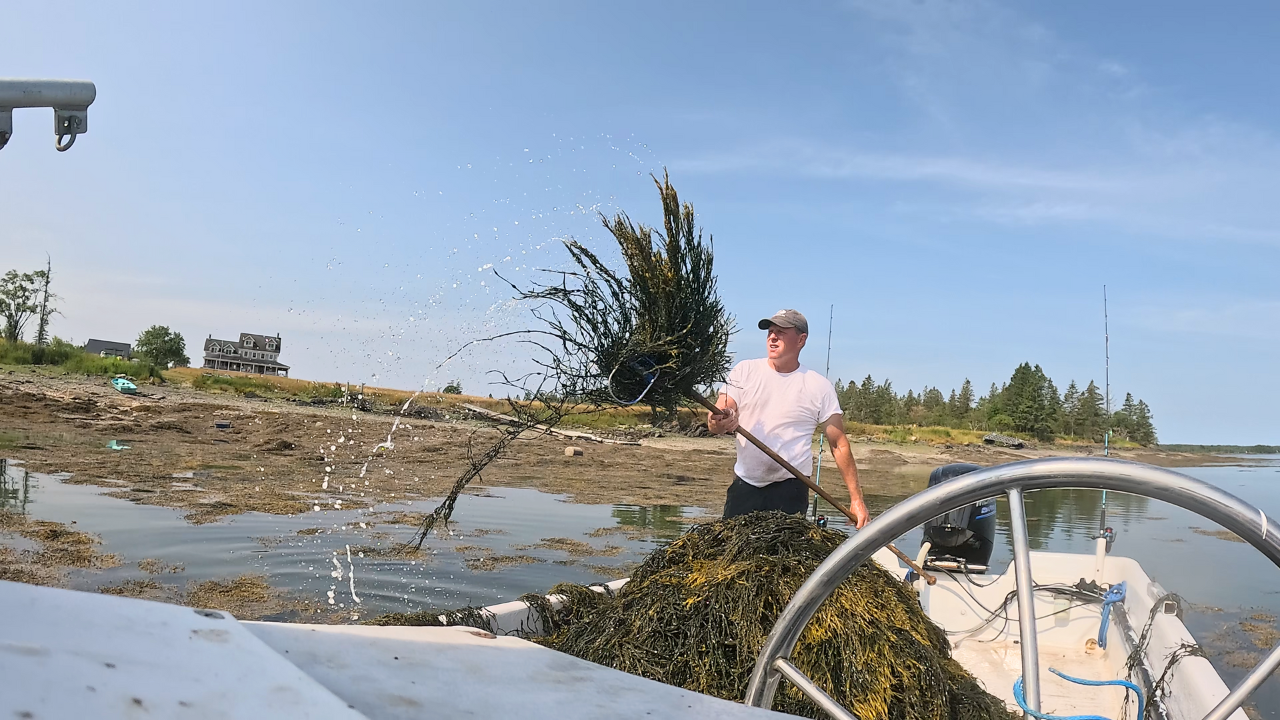
Tidepool Tim collecting kelp by boat.
2. Harvesting Offshore By Boat
The second method involves collecting kelp directly from offshore beds, often from a small boat or skiff.
If you watch my father, Tidepool Tim, harvesting kelp by boat here in Maine, you’ll notice the process is slow and deliberate. Rather than pulling entire plants free, small sections are cut using a specialized rake, leaving the holdfast—the part that anchors the kelp—intact. This allows the seaweed to continue growing for the years ahead.
👉 You can watch the video here:
https://www.youtube.com/watch?v=tzJ-HmKShZE
This approach requires more knowledge and attention and has been used for generations where access allows.
Harvesting regulations vary by location, so it’s always important to check local and state guidelines before collecting seaweed by boat. See local Maine Regulations Here.
Where Kelp Grows (and What Kind Is Used)
One of the most common seaweeds along the North Atlantic coast is Ascophyllum nodosum, often called rockweed.
Rockweed grows in the intertidal zone, anchored to rocks and ledges by a strong holdfast. It’s easy to recognize once you know what to look for: olive-brown fronds, air bladders, and a tough structure shaped by waves, ice, and massive tides. If you live in areas where it’s abundant it’s practically impossible to miss. It makes up a majority of the seaweed you see floating above and below the surface.
This is the same seaweed commonly used to make kelp meal.
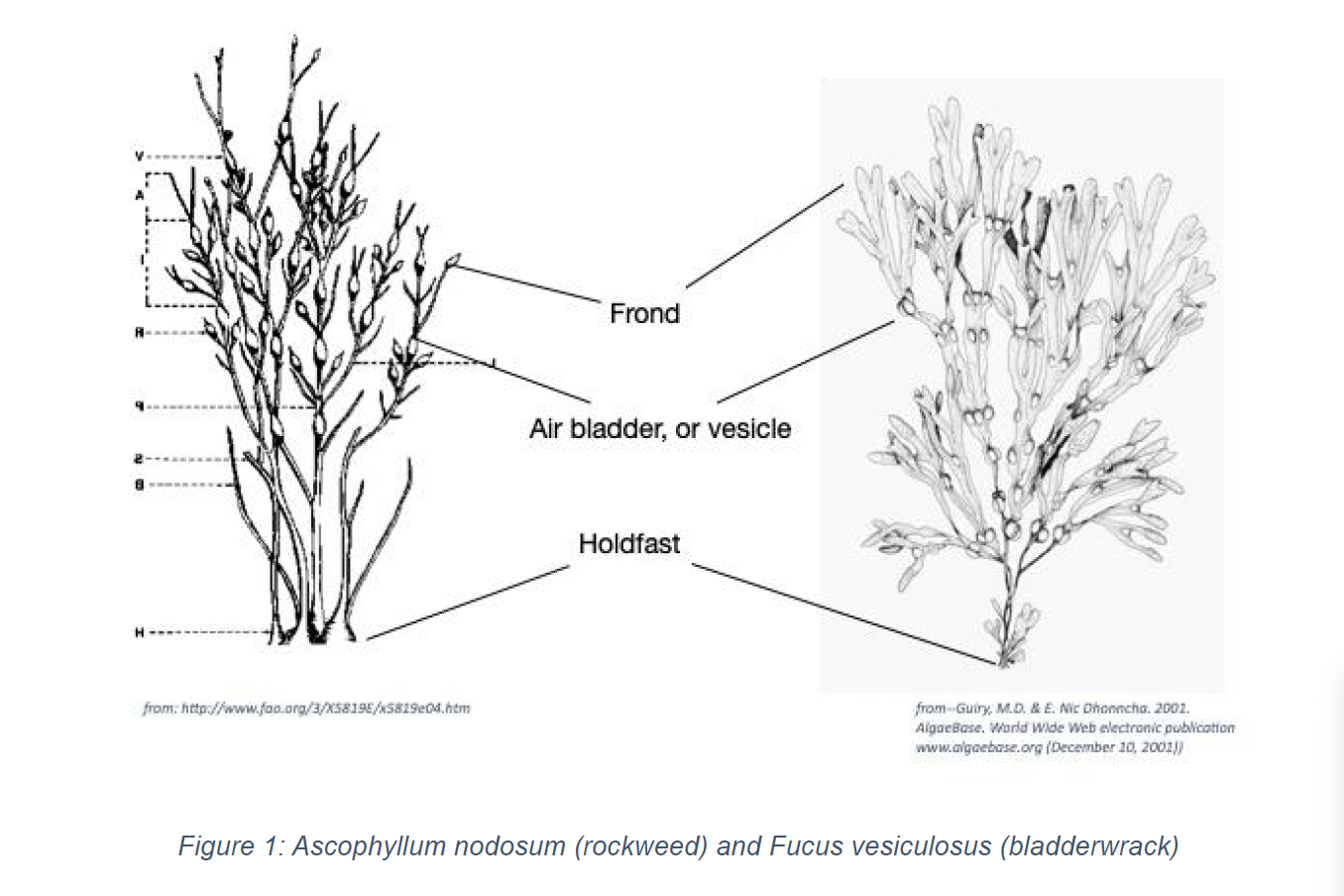
Kelp Structure and holdfast diagram by https://share.google/V7ZqGO2HNm8z4RtEy
Using Fresh (Wet) Kelp
Fresh kelp can be used directly after harvesting. Historically, people along the coast worked with it in simple, flexible ways rather than following strict formulas.
Common uses include:
Laying whole fronds on soil as a surface mulch
Chopping kelp into compost piles
Drying kelp before mixing it into garden beds
Like using any new growing input, it’s best to start with small amounts, observe how your soil and plants respond, and adjust over time. We have customers who spread a full ton of kelp across large garden plots, and others who work with nothing more than a small bucket of fresh seaweed. Both approaches can work, speak to your garden and see what it likes and dislikes.
The key is to observe how your soil and plants respond and make adjustments over time. Gradual application helps ensure kelp supports soil health without overwhelming the system.
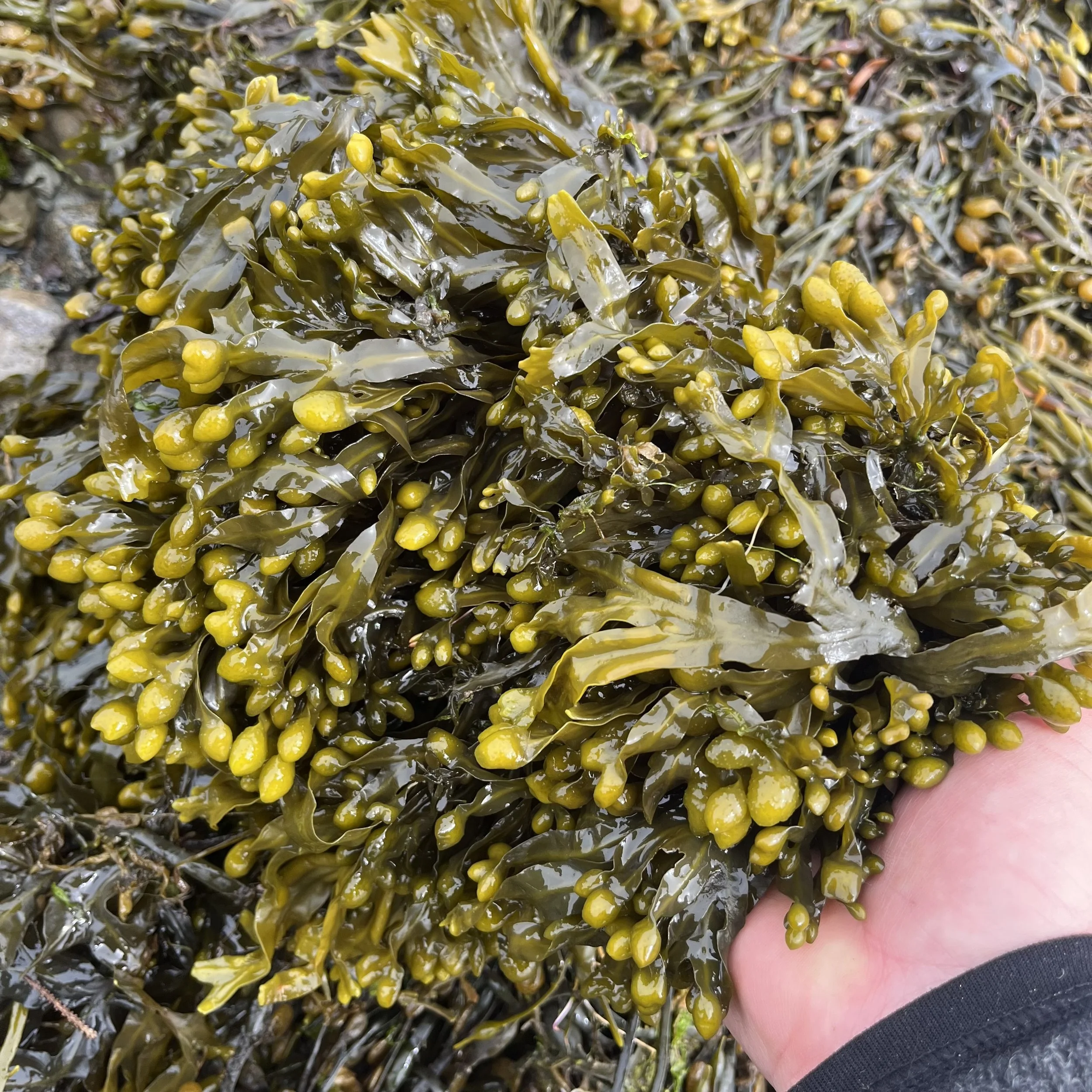
Wet, fresh kelp highlighting its air bladders.
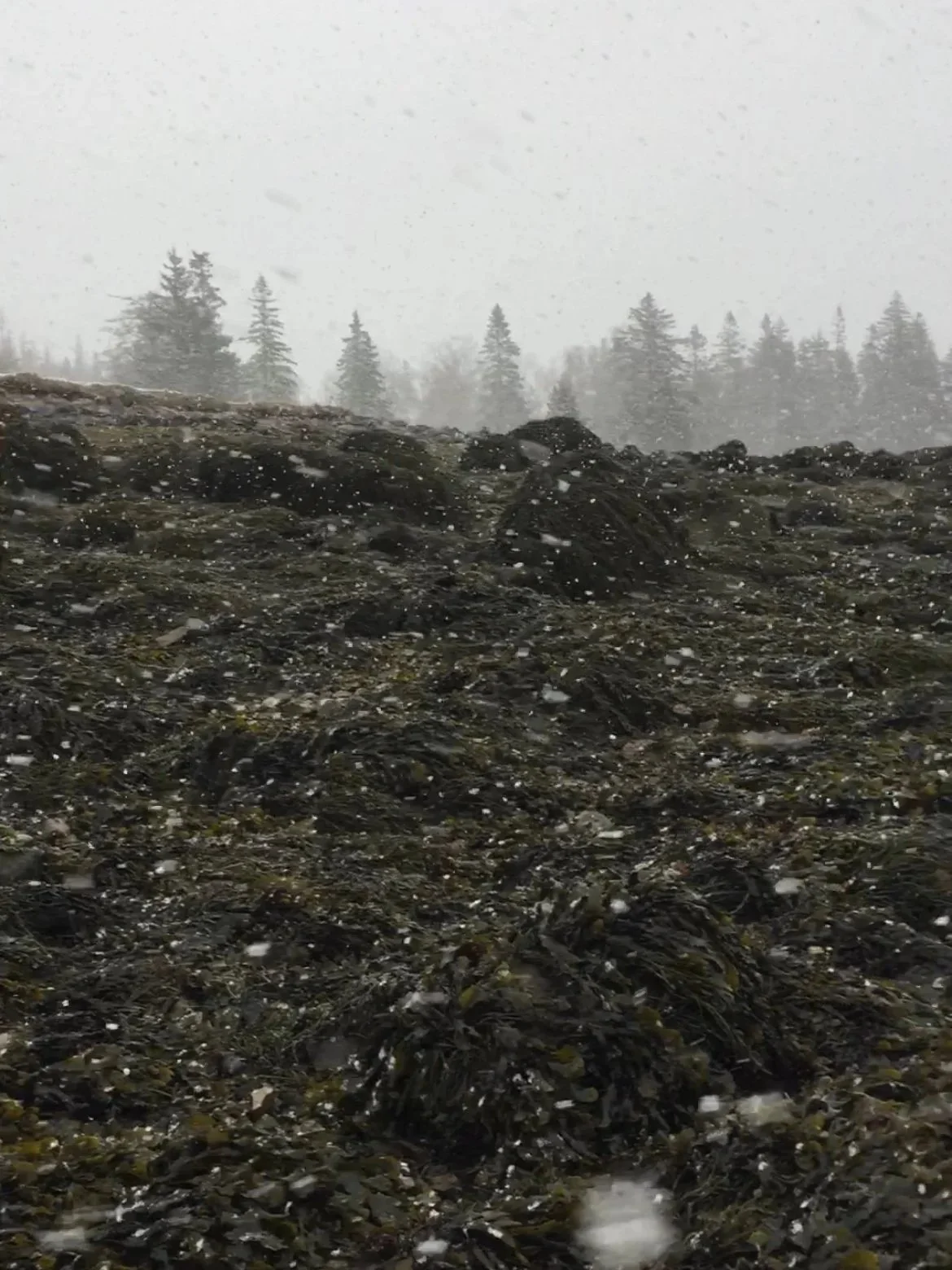
Kelp covered rocky coast during a nor’easter.
Why Kelp Is Dried
Now, for the moment you all have been waiting for— let’s talk kelp meal! Fresh kelp is heavy, wet, and harder to transport and store. Drying makes it easier to store and use year-round, especially for people who don’t live near the coast. Since wet kelp needs to be used fairly quickly, dried kelp is a more versatile alternative.
Once dried, kelp can be milled into a coarse powder or meal. This process doesn’t change the seaweed—it simply makes it more convenient. Especially if you don’t live near the coast.
What Kelp Meal Is Used For
Kelp meal is the dried, ground seaweed—most often Ascophyllum nodosum—that has been milled to a shelf stable, easy-to-use form. While it is the same seaweed harvested fresh along the coast, drying and milling make it more practical for storage, transport, and consistent application throughout the year.
Gardeners and growers use kelp meal because it is:
Shelf-stable, allowing it to be stored and used year-round
Easy to measure, making applications more predictable
Consistent, especially compared to fresh, variable seaweed
These qualities are what allow kelp meal to fit into modern growing routines, particularly for people who don’t have access to fresh kelp.
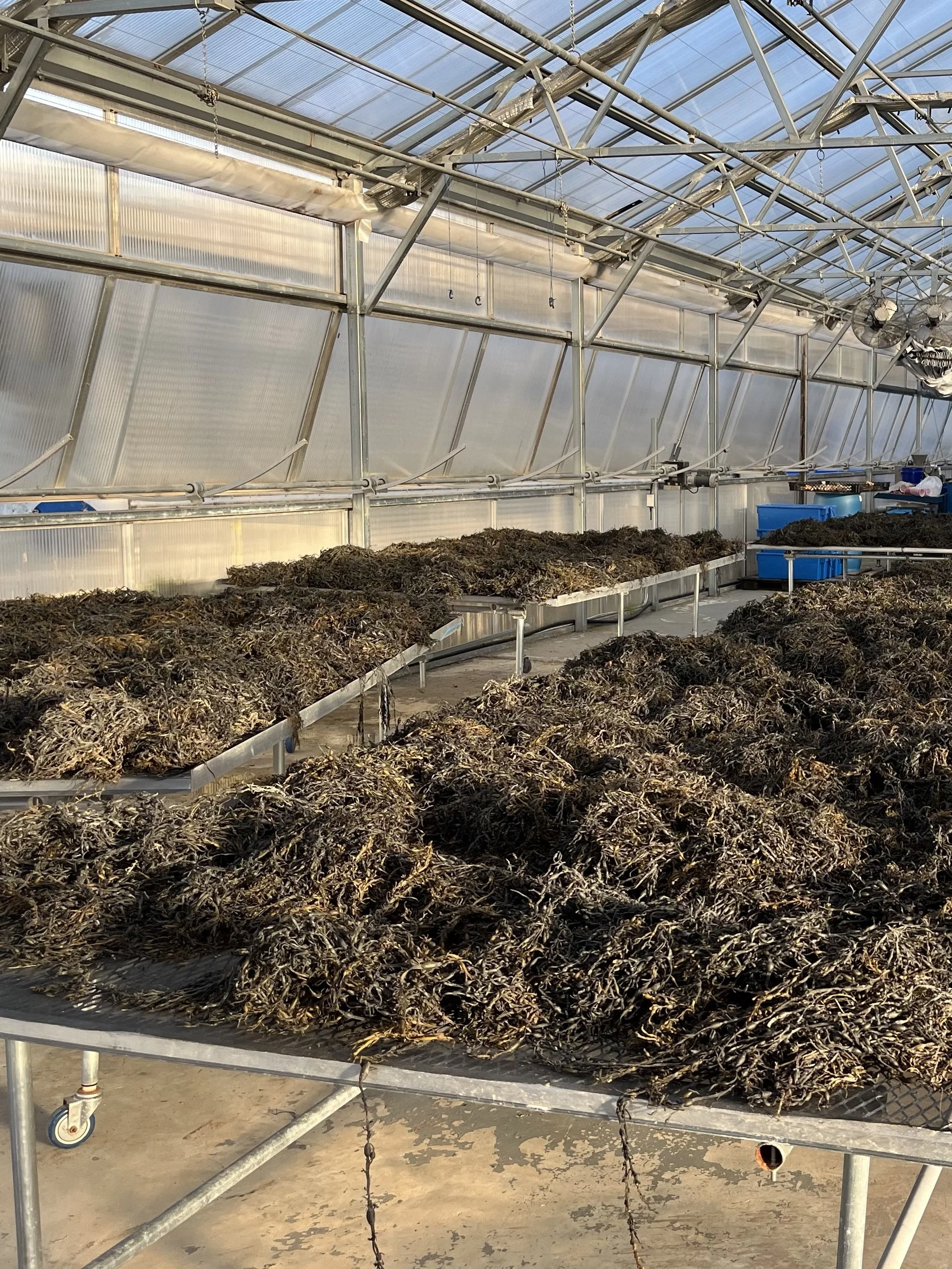
Kelp drying in our greenhouse
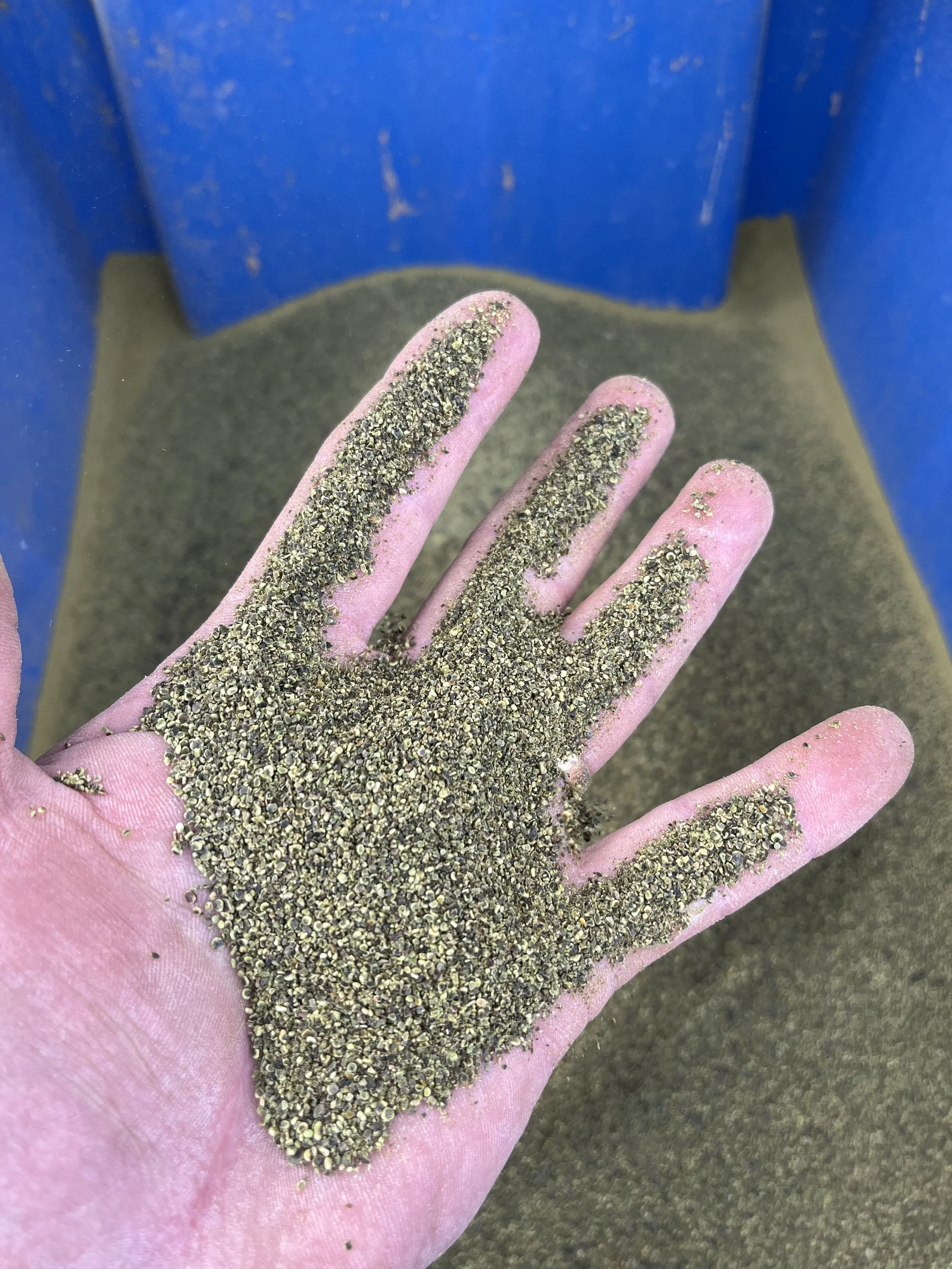
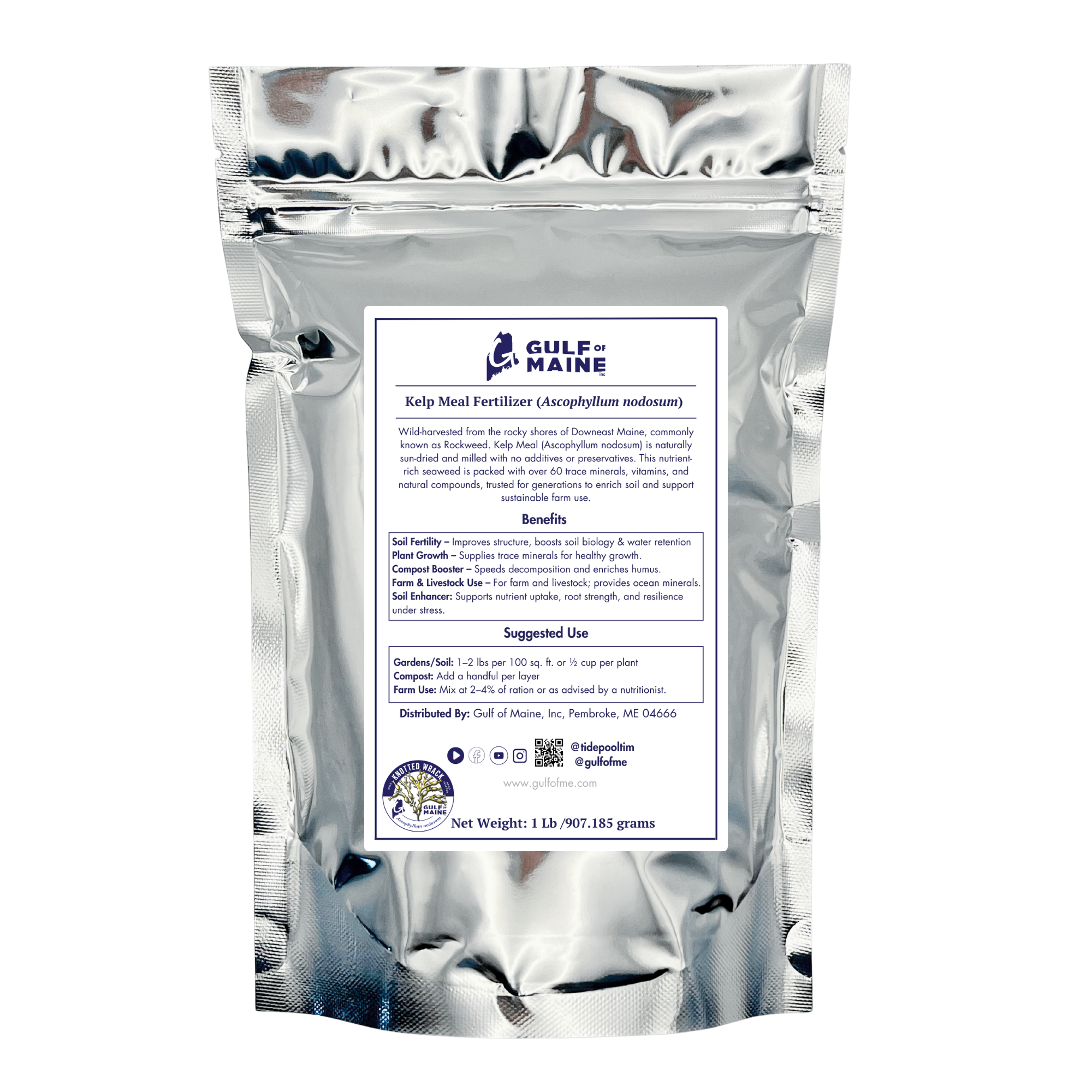
Kelp meal fertilizer
Common Uses in Gardens and Soil
Kelp meal is most often used as a soil amendment and bio stimulant rather than a primary fertilizer. It’s typically added in small amounts and worked into existing systems.
Common garden uses include:
Mixing into garden beds before planting, where it can be incorporated into the top layer of soil
Adding to compost piles, where it blends with other organic materials
Blending into soil mixes for outdoor plants, raised beds, or container gardens
Because it’s concentrated, kelp meal is usually applied lightly and combined with other organic inputs rather than used on its own.
Other Ways People Use Kelp Meal
Beyond basic garden beds, kelp meal shows up in a variety of outdoor and soil-based uses:
Perennial plantings and shrubs — applied around the base and worked into the soil
Lawns and landscape areas — used sparingly as part of broader soil care routines
Tree and orchard plantings — incorporated into planting holes or surface-applied and watered in
Soil rebuilding projects — blended with compost or organic matter when restoring tired or depleted soils
Check out this post by Maine Coast Sea Vegetables that shows other great uses of kelp.
Use as a Livestock Feed Supplement
Kelp meal has also been used for generations as a supplemental feed ingredient for livestock. Farmers have traditionally incorporated small amounts into feed rations for animals such as cattle, sheep, goats, and poultry.
In this context, kelp meal is used as a supplement, not a standalone feed. It is typically mixed with existing grain or forage-based rations and introduced gradually.
As with any feed ingredient, usage varies depending on animal type, age, and management practices. Many livestock owners follow established feeding guidelines or consult agricultural extension resources when incorporating kelp meal into animal diets.
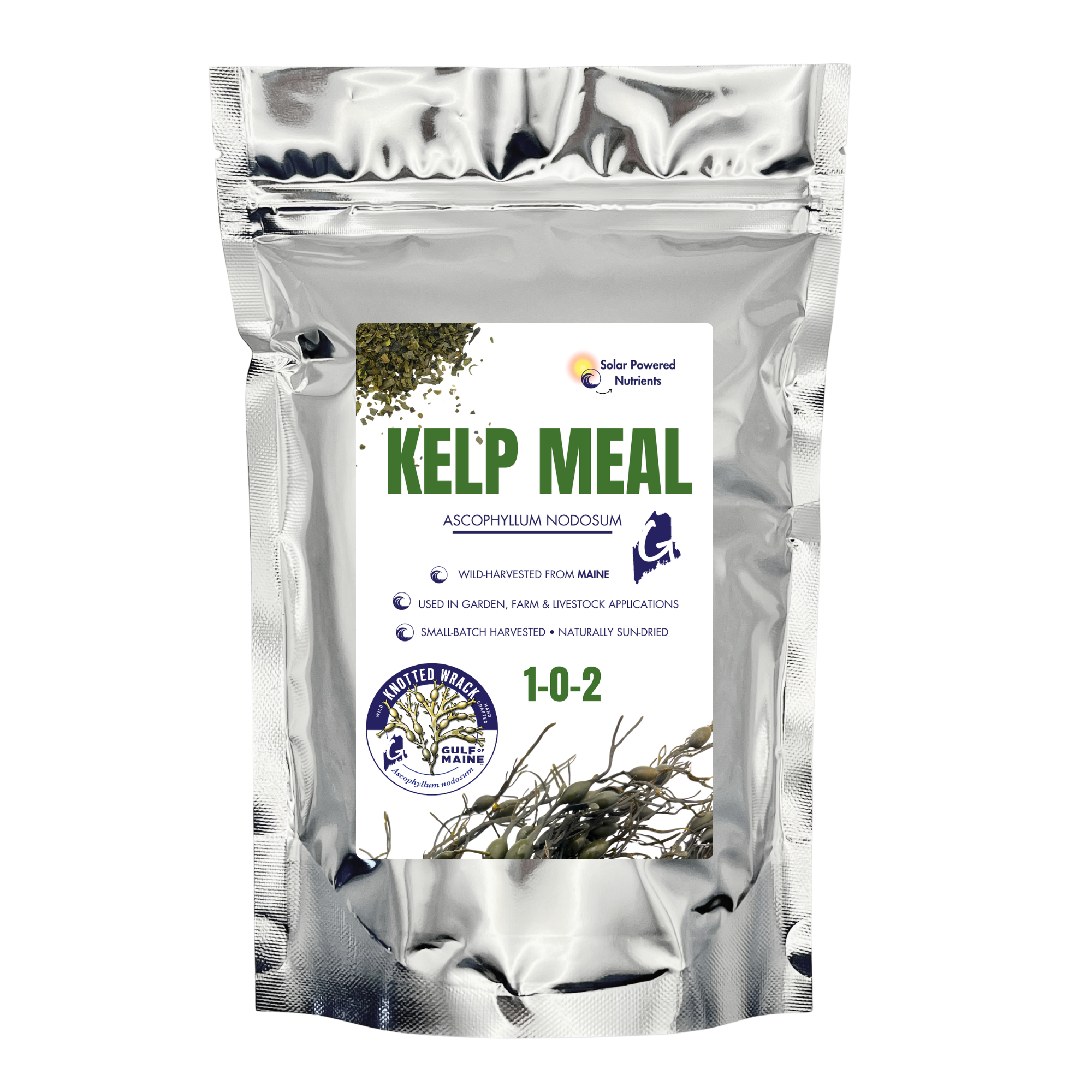
Kelp Meal Fertilizer
Fresh Kelp vs. Kelp Meal
Let’s do a little recap. The difference between fresh kelp and kelp meal comes down to access and convenience.
Fresh kelp is ideal for those living near the coast who want to work directly with seasonal seaweed.
Kelp meal works well for those who want a ready-to-use option or live far from harvesting areas.
Both are the same seaweed, just different forms used for generations.
A Note on Application
Like any new material added to soil, kelp meal is best introduced gradually. Starting with small amounts allows you to observe how your soil and plants respond before increasing application over time. Kelp meal is generally used as a complement to existing soil practices rather than a standalone solution.
When You Can’t Harvest Kelp Yourself
Not everyone has access to legal harvesting areas or lives near the ocean. In those cases, kelp meal offers a way to work with seaweed without collecting it yourself.
We offer a kelp meal powder made Ascophyllum nodosum, for those looking for a simple, ready-to-use option.
👉 You can find our one pound kelp meal pack here if you’re curious:
https://www.amazon.com/dp/B0FZM6JS6J
We also offer bulk kelp meal on our website here.
From Shore to Soil
Harvesting kelp and using kelp meal are simply two ways of working with the same resource. Fresh kelp is well suited to those who live near the coast and want to use what the tides provide, while kelp meal offers a practical option for gardeners and growers who need consistency and year-round access. Understanding where kelp comes from, how it’s harvested, and how it’s commonly used makes it easier to decide which form fits your situation. Whether gathered by hand or used in meal form, kelp remains a flexible, time-tested material that continues to find a place in modern gardens, farms, and outdoor systems.
FAQ’s
-
In many coastal areas, people are allowed to harvest kelp, but rules vary by location. Some regions permit collecting storm-cast seaweed from the shoreline, while others regulate or restrict cutting live seaweed from offshore beds. Always check local and state guidelines before harvesting kelp to ensure it’s done legally and responsibly.
-
Most kelp meal is made from Ascophyllum nodosum, commonly known as rockweed. This seaweed grows along the North Atlantic coast and is widely used because of its durability and long history of traditional use.
-
Kelp meal is commonly used as a soil amendment in gardens, compost systems, and agricultural settings. It is also used as a supplemental ingredient in livestock feed. Kelp meal is typically applied in small amounts and combined with existing soil or feed practices rather than used on its own.
-
Fresh kelp and kelp meal serve the same purpose but are suited to different situations. Fresh kelp works well for people who live near the coast and want a seasonal, hands-on option. Kelp meal offers consistency, ease of storage, and year-round use for those without access to fresh seaweed.
-
Yes—but only fresh, wet kelp. Freshly harvested kelp should be rinsed to remove excess salt, sand, and debris before being used in gardens or compost. Rinsing helps prevent salt buildup and makes the kelp easier to work with.
-
When used thoughtfully and in reasonable amounts, kelp is generally considered a gentle soil input. As with any new material, it’s best to start with small amounts and observe how soil and plants respond before increasing use.
-
Yes. Kelp meal has traditionally been used as a supplemental feed ingredient for livestock such as cattle, sheep, goats, and poultry. It is typically mixed into existing feed rations and introduced gradually. Feeding practices vary, so many livestock owners follow established guidelines or consult agricultural extension resources.
-
Application frequency depends on how kelp meal is being used and the system it’s added to. Many gardeners incorporate it during bed preparation or composting rather than applying it frequently. Starting with small, infrequent applications is generally recommended.