Gulf of Maine Bryozoa (4 Species Assortment)
Explore the intricate architecture of Maine’s marine life with our Gulf of Maine Bryozoa Collection, featuring four distinct colonial species of bryozoans. These delicate, lace-like animals form living colonies on seaweeds, shells, and rocks throughout the Gulf of Maine and are ideal for classroom observation, microscopy, and marine ecology studies.
Depending on the “catch of the day,” your assortment may include:
Common name: Leafy bryozoan
Scientific name: Flustra foliacea
Locations: Subtidal on sand and cobble bottoms
Seasonality: Available year-round
Colors: Brown, yellow-brown
Size: 2” – 4"
Collected: By hand
Common name: Shielded bryozoan
Scientific name: Scrupocellaria scabra
Locations: Epiphyte on knotted wrack (Ascophyllum nodosum)
Seasonality: Available year-round
Colors: Tan
Size: ½" – ¾"
Collected: By hand
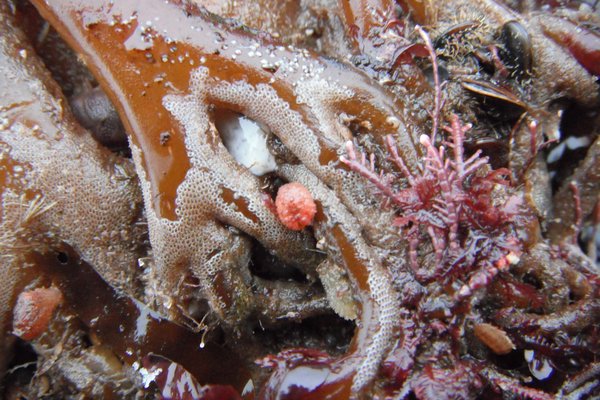
Common name: Lacy crust bryozoan
Scientific name: Membranipora spp.
Locations: Grows on macroalgae such as kelps and Irish moss
Seasonality: Available year-round
Colors: White colonies
Size: 1" – 12"
Collected: By hand
Common name: Sea mat bryozoan
Scientific name: Electra pilosa
Locations: Found on kelp fronds and stipes
Seasonality: Available year-round
Colors: White
Size: 3" – 12"
Collected: By hand
Each specimen is sustainably hand-collected from Maine’s rocky coastal ecosystems and delivered fresh for study or display. These colonies highlight the diversity and complexity of marine invertebrate life.
Quantity: Sold as an assorted 4-species pack
Note: This is a live marine specimen collection. Natural variations in size, color, and species assortment should be expected. If you would like any specimens preserved, please send a request to: info@gulfofme.com.
Gulf of Maine Bryozoa (4 Species Assortment)
Explore the intricate architecture of Maine’s marine life with our Gulf of Maine Bryozoa Collection, featuring four distinct colonial species of bryozoans. These delicate, lace-like animals form living colonies on seaweeds, shells, and rocks throughout the Gulf of Maine and are ideal for classroom observation, microscopy, and marine ecology studies.
Depending on the “catch of the day,” your assortment may include:
Common name: Leafy bryozoan
Scientific name: Flustra foliacea
Locations: Subtidal on sand and cobble bottoms
Seasonality: Available year-round
Colors: Brown, yellow-brown
Size: 2” – 4"
Collected: By hand
Common name: Shielded bryozoan
Scientific name: Scrupocellaria scabra
Locations: Epiphyte on knotted wrack (Ascophyllum nodosum)
Seasonality: Available year-round
Colors: Tan
Size: ½" – ¾"
Collected: By hand
Common name: Lacy crust bryozoan
Scientific name: Membranipora spp.
Locations: Grows on macroalgae such as kelps and Irish moss
Seasonality: Available year-round
Colors: White colonies
Size: 1" – 12"
Collected: By hand
Common name: Sea mat bryozoan
Scientific name: Electra pilosa
Locations: Found on kelp fronds and stipes
Seasonality: Available year-round
Colors: White
Size: 3" – 12"
Collected: By hand
Each specimen is sustainably hand-collected from Maine’s rocky coastal ecosystems and delivered fresh for study or display. These colonies highlight the diversity and complexity of marine invertebrate life.
Quantity: Sold as an assorted 4-species pack
Note: This is a live marine specimen collection. Natural variations in size, color, and species assortment should be expected. If you would like any specimens preserved, please send a request to: info@gulfofme.com.

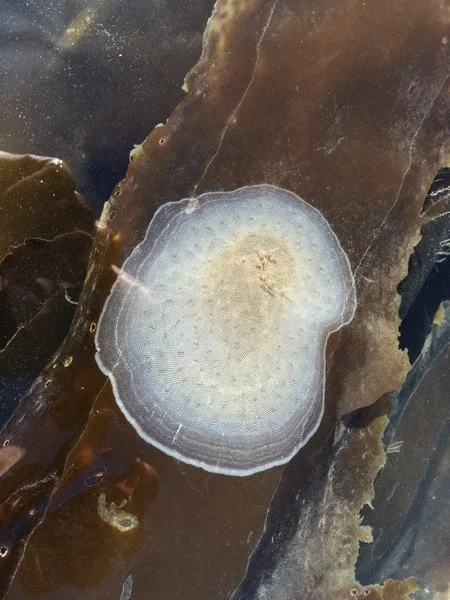 Image 1 of 4
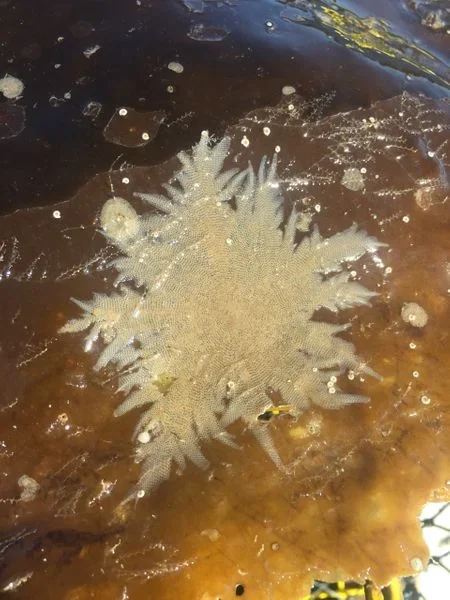 Image 2 of 4
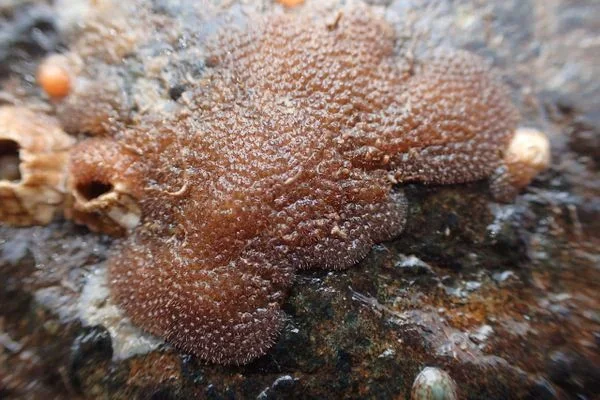 Image 3 of 4
 Image 4 of 4