 Image 1 of 3
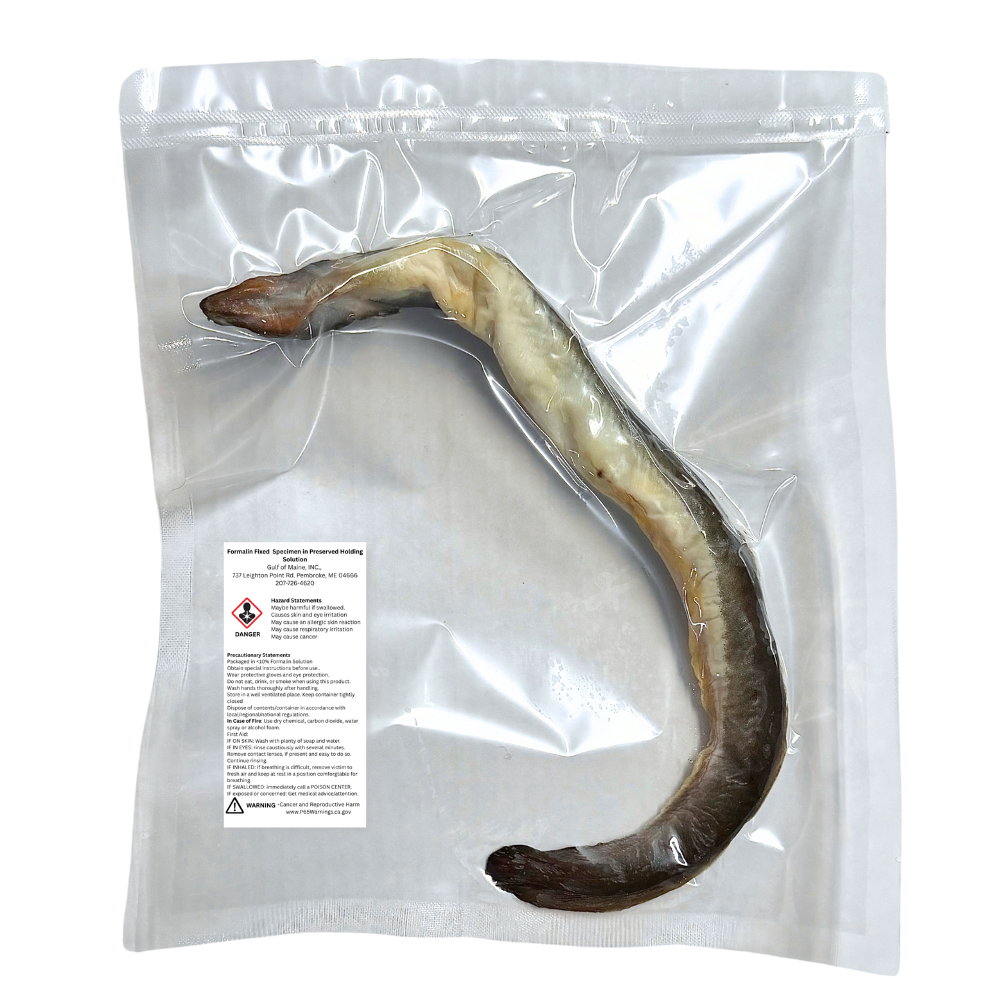 Image 2 of 3
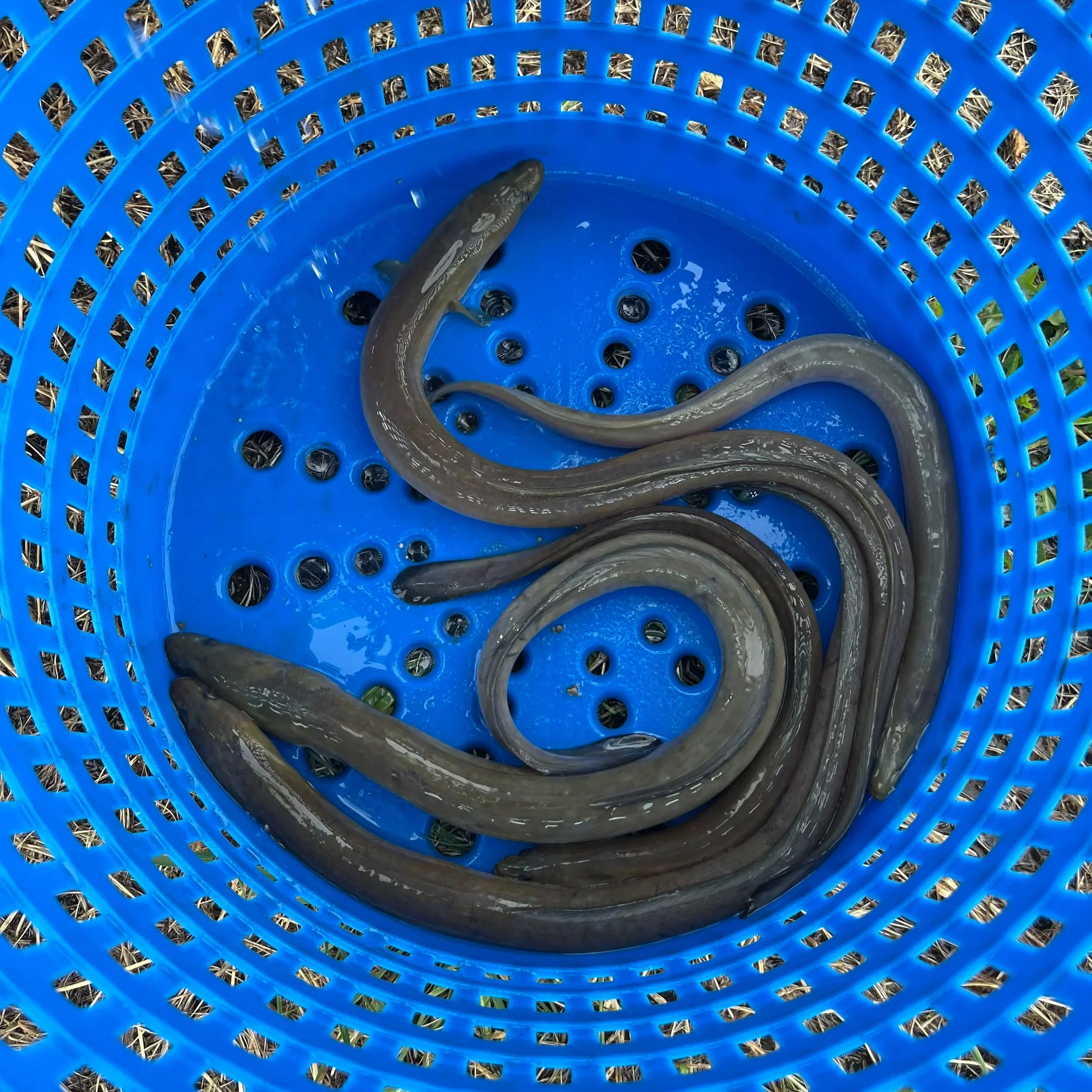 Image 3 of 3
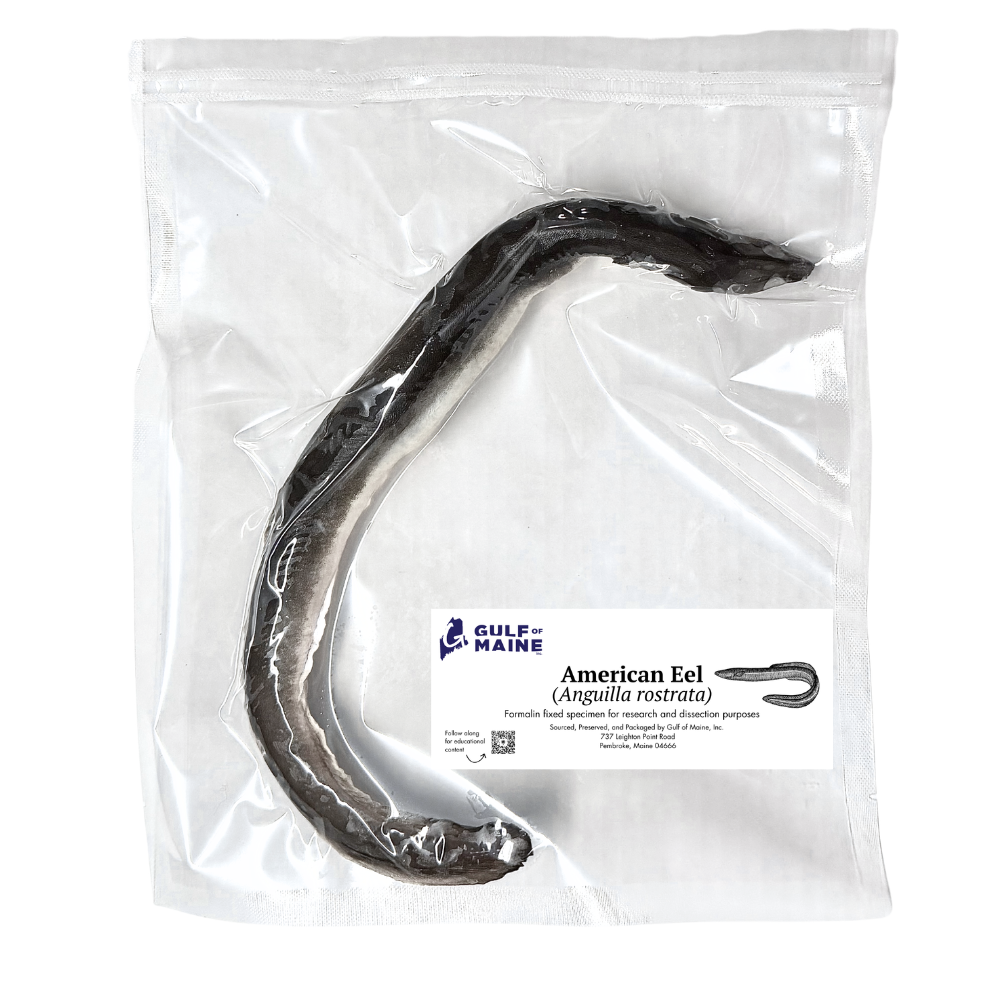
This preserved American eel (Anguilla rostrata) is a formalin-preserved vertebrate specimen commonly used in classrooms and laboratories to study fish anatomy, physiology, and life cycles. Its elongated body form and distinctive skeletal and muscular structures make it an excellent model for vertebrate anatomy and comparative biology instruction.
Specimen Details
Common name: American eel
Scientific name:Anguilla rostrata
Size: 8–12 inches
Preservation method: Formalin-preserved
Habitat: Coastal and freshwater systems (catadromous species)
Collection method: Bycatch
Quantity: Sold individually
Educational Applications
Commonly used in biology, vertebrate zoology, and marine science courses, this specimen supports instruction in fish anatomy, muscle organization, and migratory life cycles. Students can examine external morphology as well as internal anatomical structures typical of teleost fishes.
Anatomical Features
Elongated body adapted for burrowing and migration
Clearly preserved musculature and skeletal structure
Distinct head morphology and fin structure
Suitable for vertebrate anatomy and comparative biology study
Sourcing & Preservation
Specimens are responsibly sourced and preserved in formalin to maintain anatomical integrity for long-term educational use and repeated classroom handling.
Note: This is a preserved vertebrate specimen. Natural variations in size, color, and appearance should be expected. For bulk or institutional orders, please contact info@gulfofme.com.
This preserved American eel (Anguilla rostrata) is a formalin-preserved vertebrate specimen commonly used in classrooms and laboratories to study fish anatomy, physiology, and life cycles. Its elongated body form and distinctive skeletal and muscular structures make it an excellent model for vertebrate anatomy and comparative biology instruction.
Specimen Details
Common name: American eel
Scientific name:Anguilla rostrata
Size: 8–12 inches
Preservation method: Formalin-preserved
Habitat: Coastal and freshwater systems (catadromous species)
Collection method: Bycatch
Quantity: Sold individually
Educational Applications
Commonly used in biology, vertebrate zoology, and marine science courses, this specimen supports instruction in fish anatomy, muscle organization, and migratory life cycles. Students can examine external morphology as well as internal anatomical structures typical of teleost fishes.
Anatomical Features
Elongated body adapted for burrowing and migration
Clearly preserved musculature and skeletal structure
Distinct head morphology and fin structure
Suitable for vertebrate anatomy and comparative biology study
Sourcing & Preservation
Specimens are responsibly sourced and preserved in formalin to maintain anatomical integrity for long-term educational use and repeated classroom handling.
Note: This is a preserved vertebrate specimen. Natural variations in size, color, and appearance should be expected. For bulk or institutional orders, please contact info@gulfofme.com.