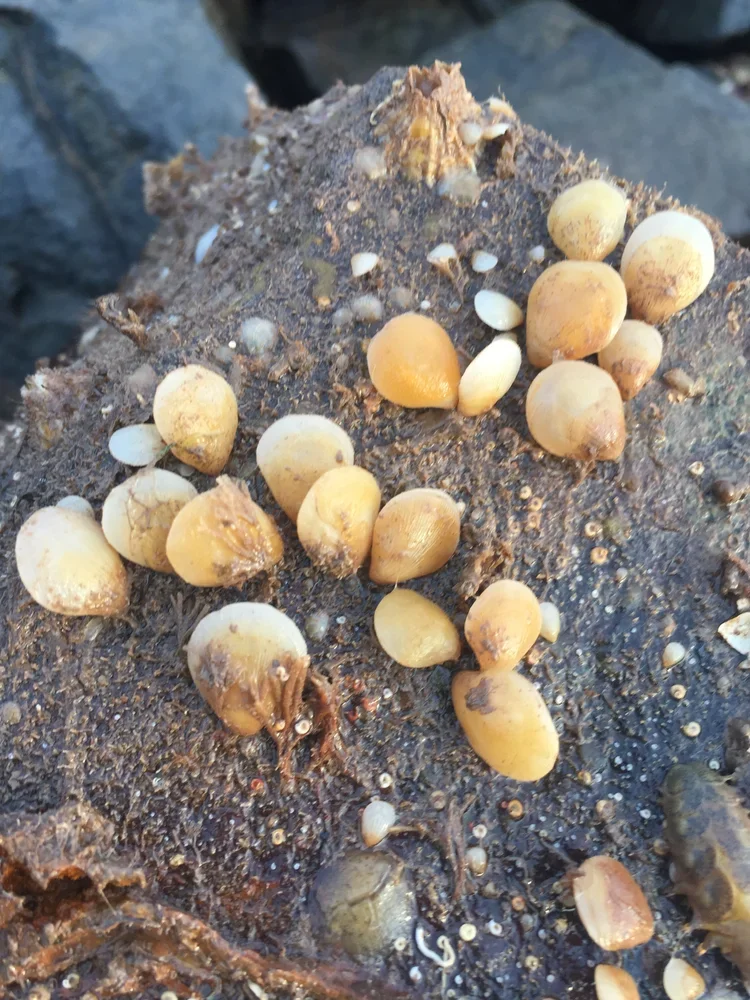
This preserved northern lampshell (Terebratulina septentrionalis) is a formalin-preserved marine brachiopod specimen used in classrooms and laboratories to study brachiopod anatomy, shell morphology, and marine invertebrate diversity. Its preserved shell form and distinctive external structure make it an excellent model for invertebrate anatomy, taxonomy, and comparative biology instruction.
Specimen Details
Common name: Northern lampshell
Scientific name:Terebratulina septentrionalis
Size: Approximately 3 specimens per vial
Preservation method: Formalin-preserved
Habitat: Cold marine environments, typically attached to hard substrates
Collection method: Professionally prepared and sealed for educational use
Quantity: 3 specimens in a vial, or bulk (12)
Educational Applications
Commonly used in marine biology, invertebrate zoology, taxonomy, and paleobiology courses, this specimen supports instruction in brachiopod structure, shell morphology, and comparative anatomy. Students can examine preserved external characteristics and observe features relevant to identification and marine invertebrate study.
Anatomical Features
Preserved brachiopod shell structure
External form suitable for classroom observation
Useful for shell morphology and comparative anatomy study
Suitable for marine biology and invertebrate instruction
Sourcing & Preservation
Specimens are professionally prepared and preserved to maintain shell form and external characteristics for long-term educational use and repeated classroom handling. Each vial is sealed for safe storage, transport, and dependable use in labs, classrooms, and specimen collections.
Note: This is a preserved marine brachiopod specimen. Natural variations in size, color, and appearance should be expected. For bulk or institutional orders, please contact info@gulfofme.com.
This preserved northern lampshell (Terebratulina septentrionalis) is a formalin-preserved marine brachiopod specimen used in classrooms and laboratories to study brachiopod anatomy, shell morphology, and marine invertebrate diversity. Its preserved shell form and distinctive external structure make it an excellent model for invertebrate anatomy, taxonomy, and comparative biology instruction.
Specimen Details
Common name: Northern lampshell
Scientific name:Terebratulina septentrionalis
Size: Approximately 3 specimens per vial
Preservation method: Formalin-preserved
Habitat: Cold marine environments, typically attached to hard substrates
Collection method: Professionally prepared and sealed for educational use
Quantity: 3 specimens in a vial, or bulk (12)
Educational Applications
Commonly used in marine biology, invertebrate zoology, taxonomy, and paleobiology courses, this specimen supports instruction in brachiopod structure, shell morphology, and comparative anatomy. Students can examine preserved external characteristics and observe features relevant to identification and marine invertebrate study.
Anatomical Features
Preserved brachiopod shell structure
External form suitable for classroom observation
Useful for shell morphology and comparative anatomy study
Suitable for marine biology and invertebrate instruction
Sourcing & Preservation
Specimens are professionally prepared and preserved to maintain shell form and external characteristics for long-term educational use and repeated classroom handling. Each vial is sealed for safe storage, transport, and dependable use in labs, classrooms, and specimen collections.
Note: This is a preserved marine brachiopod specimen. Natural variations in size, color, and appearance should be expected. For bulk or institutional orders, please contact info@gulfofme.com.

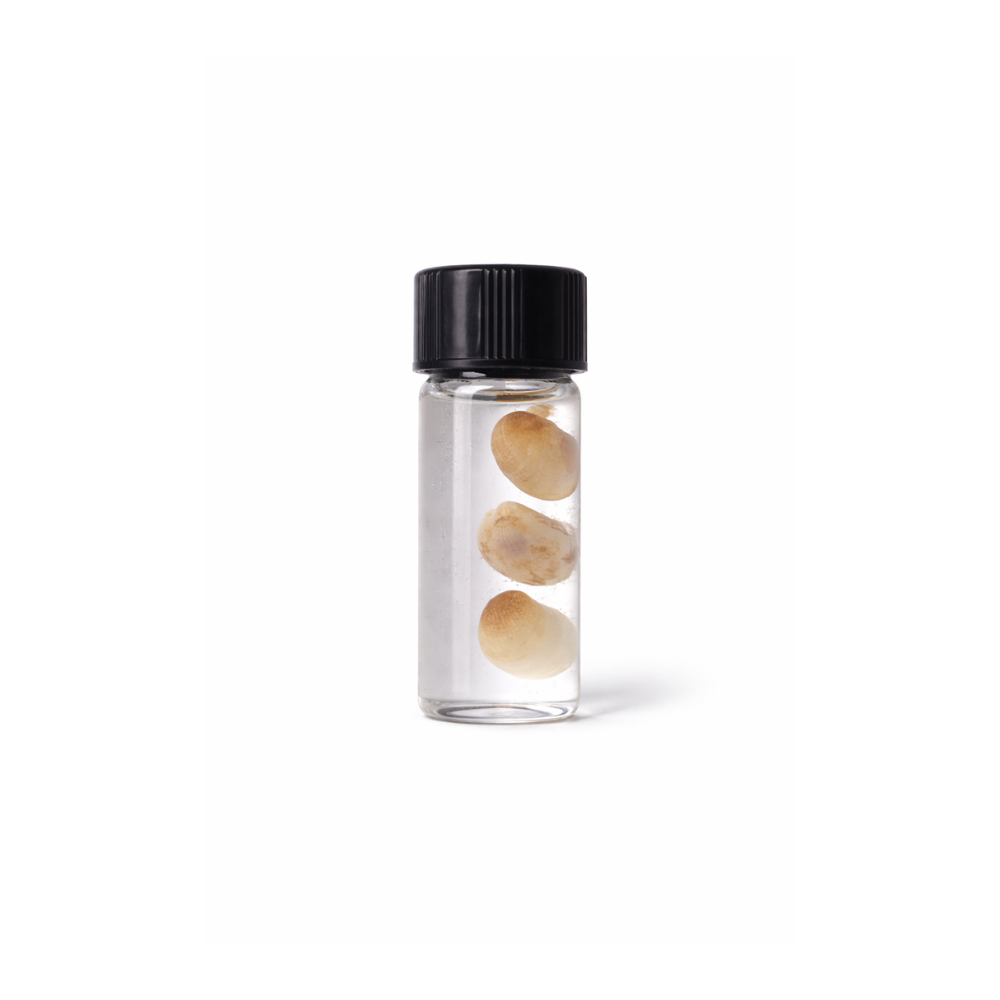 Image 1 of 3
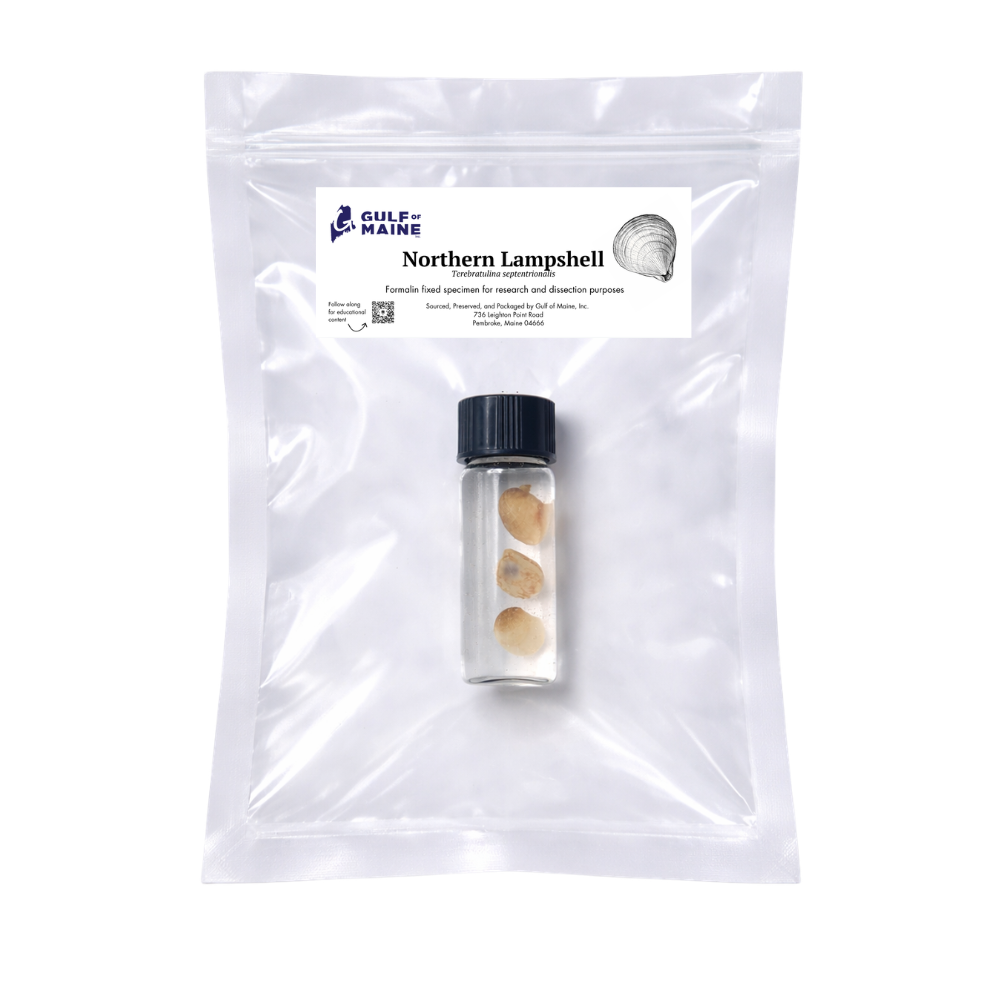 Image 2 of 3
 Image 3 of 3