
What Is Irish Moss? Understanding Chondrus crispus from the Gulf of Maine
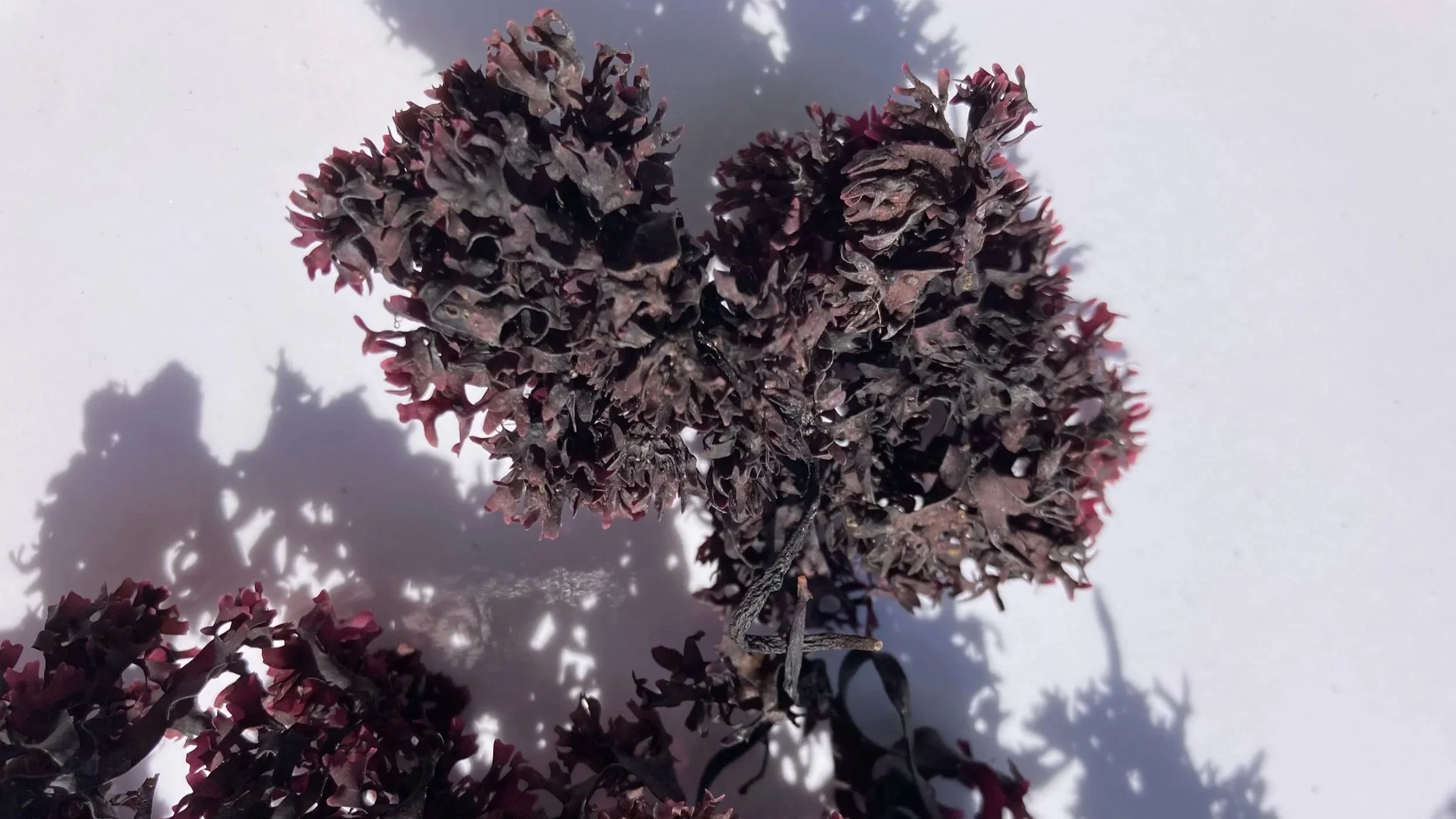
Gulf of Maine, Inc., wild-harvested Irish Moss, dried in whole leaf form.
The Scientific Name for Irish Moss
Irish moss, scientifically known as Chondrus crispus, is a species of marine red algae that grows naturally along the cold North Atlantic coastline, including the rocky shores of Maine, Ireland, and Atlantic Canada. Traditionally harvested for generations, Irish moss has long been valued for its rich texture, culinary versatility, and historical use in coastal communities.
Today, the term “Irish moss” is often misunderstood or confused with other seaweed species — and even with an entirely different garden plant. Understanding what Chondrus crispus actually is can help consumers make more informed decisions about sourcing, species, and harvesting practices.
Why Is It Called Irish Moss?
Irish moss is one of the most recognized edible seaweeds found along the North Atlantic coastline. The name Irish moss comes from the seaweed’s long historical use in Ireland, particularly during the 19th century when it was commonly used in soups, broths, puddings, and homemade recipes.
Over time, the name became associated with Chondrus crispus throughout Atlantic coastal communities where the species naturally grows.
In more recent decades, Irish moss gained additional attention through natural wellness communities and herbal traditions, including mentions by Dr. Sebi, who discussed marine plants and mineral-rich foods as part of his nutritional philosophy.
Where Does Irish Moss (Chondrus crispus) Grow?
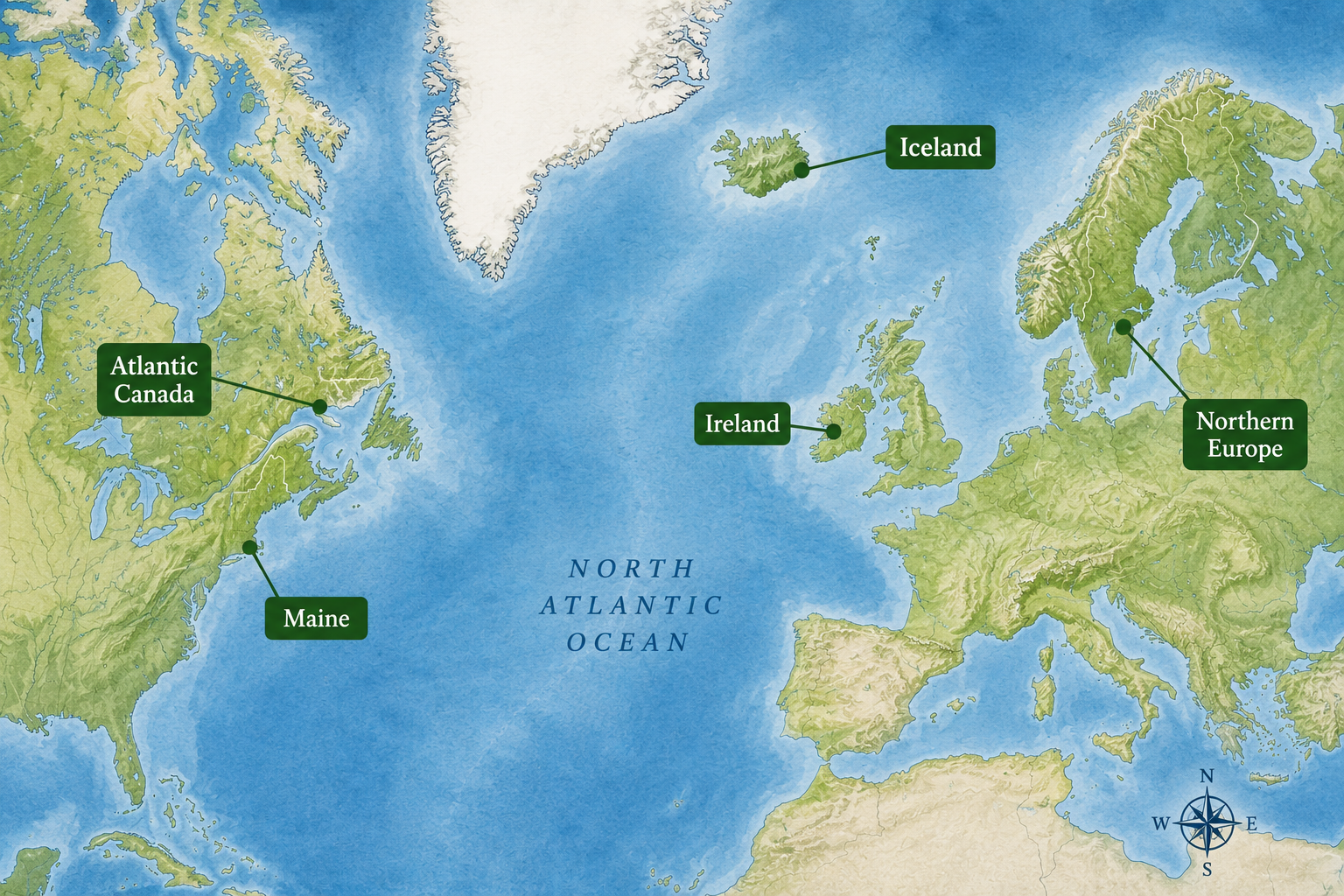
Irish moss naturally grows along the rocky coastlines of:
Maine
Atlantic Canada
Ireland
Iceland
Northern Europe
In the Gulf of Maine, Chondrus crispus grows attached to rocks, and even mussel shells and other substrates near the low tide mark, where cold ocean conditions and strong tidal movement create ideal growing conditions.
The Gulf of Maine is one of the coldest and most biologically productive marine ecosystems in the Atlantic, experiencing some of the largest tides in the world. As tides rise and fall, nutrient-rich waters from deeper parts of the ocean circulate upward along the rocky shoreline, helping support the growth of Chondrus crispus.
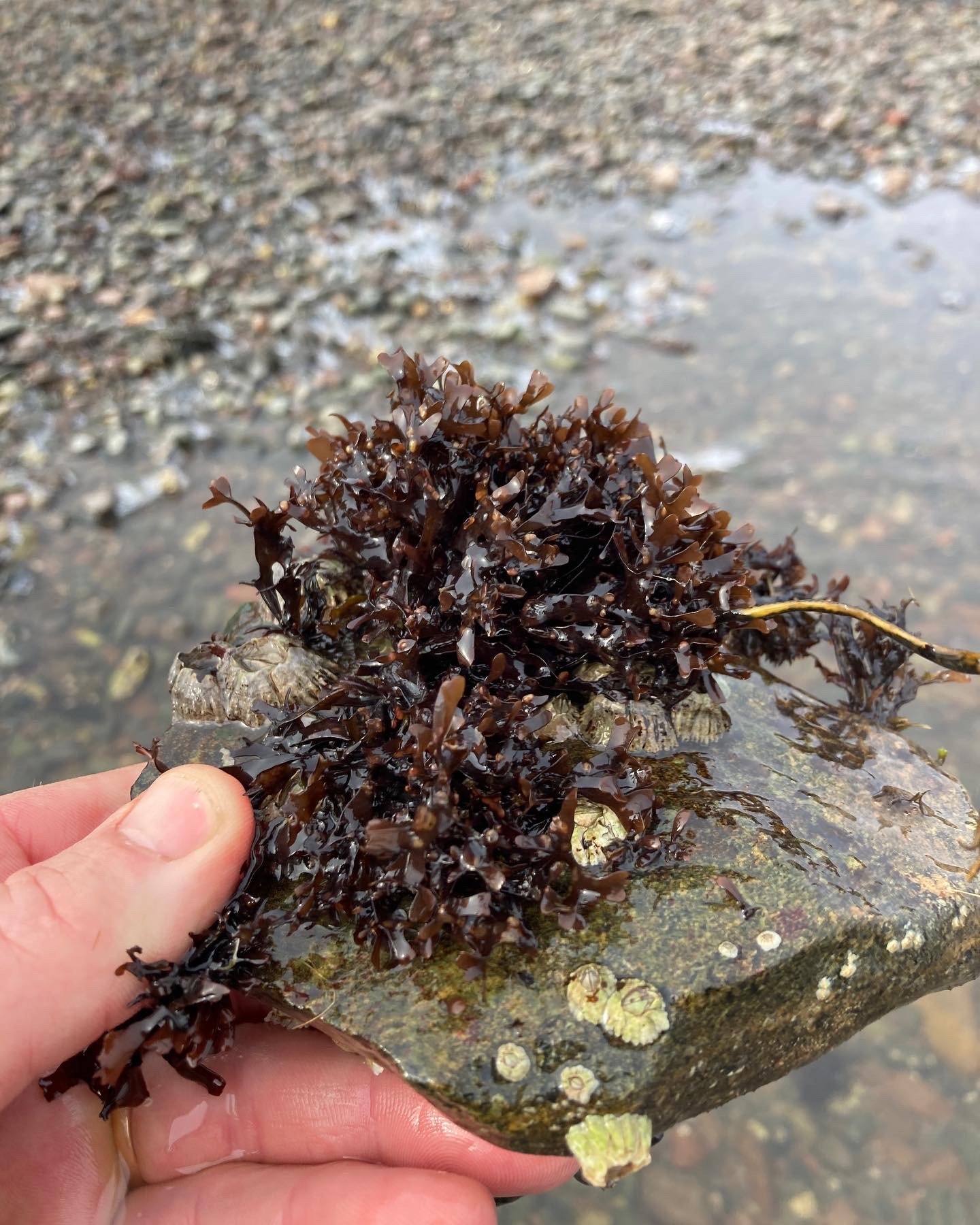
Irish moss attached to a rock at low tide.
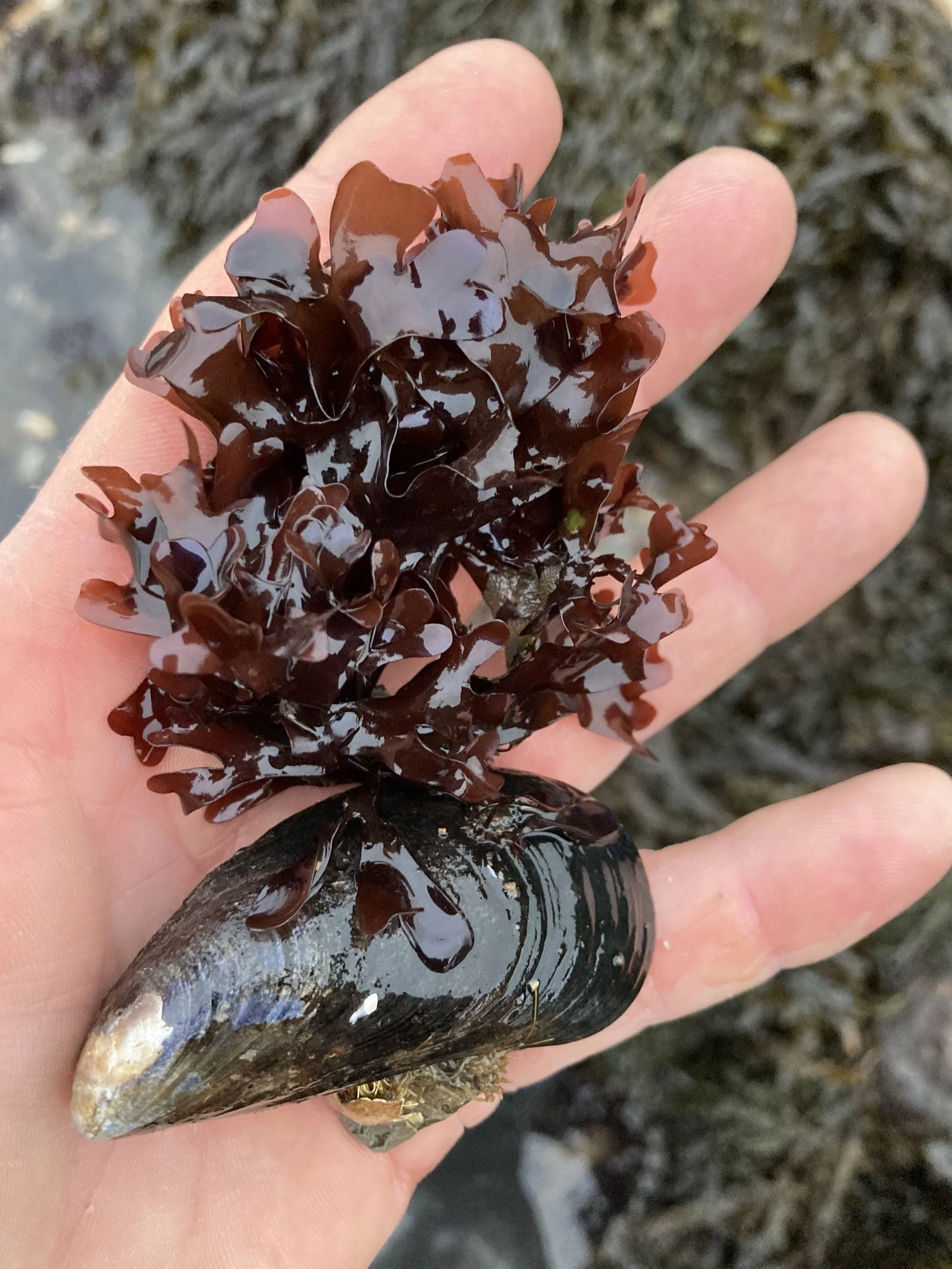
Irish moss attached to a live blue mussel at low tide.
Where Irish Moss (Chondrus crispus) Does NOT Grow
Because Irish moss is a cold-water North Atlantic species, Chondrus crispus does not naturally grow in warm tropical waters.
Many commercially sold “sea moss” products harvested in tropical regions are entirely different seaweed species grown in much warmer climates and environmental conditions.
Irish moss is naturally associated with colder Atlantic coastlines like Maine, Ireland, and Atlantic Canada, where frigid ocean temperatures play an important role in shaping its texture, coloration, and seasonal growth.
Unlike tropical sea moss species, Chondrus crispus evolved in cold North Atlantic waters with dramatic seasonal temperature shifts and strong tidal movement.
What Does Irish Moss Look Like?
Real Irish moss typically has:
branching fronds
curly or fan-like structures
deep purple, red, maroon, or bronze coloration
a slightly translucent appearance when wet
Depending on the season and drying process, the seaweed may darken significantly and appear nearly black once dried.
Freshly harvested Chondrus crispus often displays especially vibrant coloration during periods of active seasonal growth in the colder Atlantic waters of Maine. Check out our article explaining more of the physical characteristics of Irish moss.
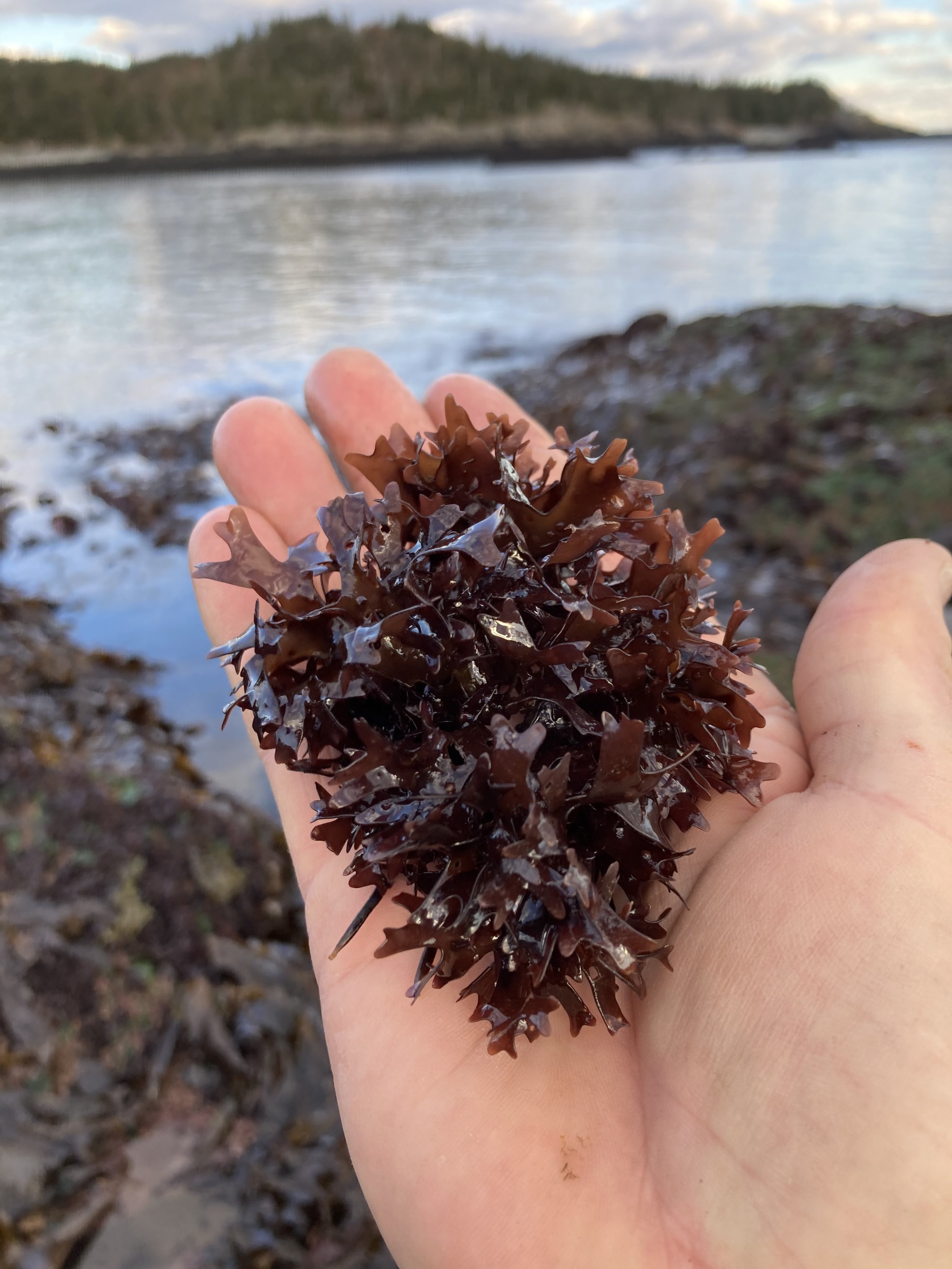
Wet Irish Moss from the Gulf of Maine.
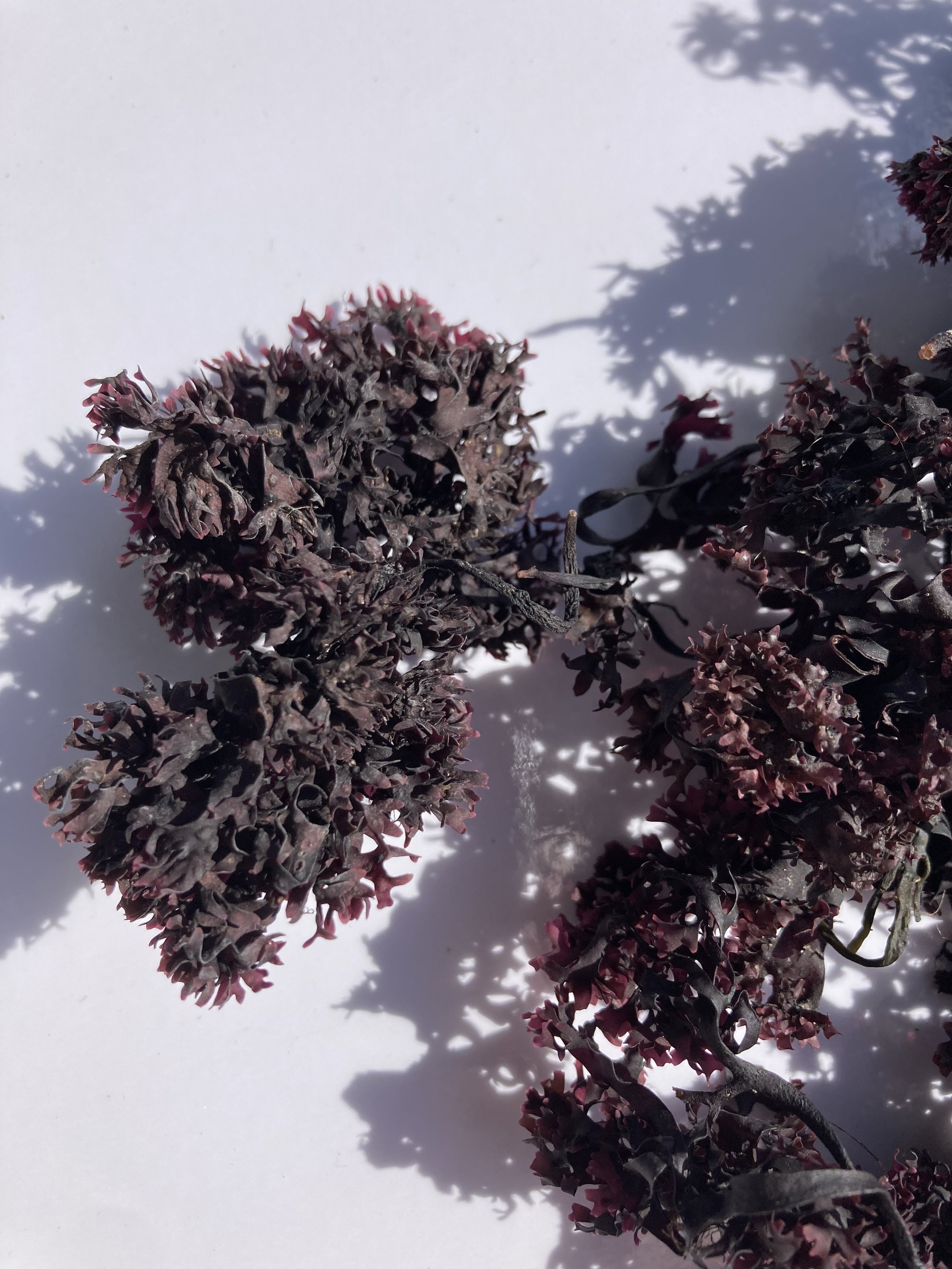
Dried Irish Moss from the Gulf of Maine.
Irish Moss vs. Tropical Sea Moss
As interest in marine botanicals has grown, the term “sea moss” has become increasingly broad and often refers to several completely different seaweed species.
Authentic Irish moss refers to Chondrus crispus — a cold-water red algae species naturally found throughout the North Atlantic, including the Gulf of Maine, Ireland, and Atlantic Canada.
Many commercially sold “gold” or “yellow” sea moss products are instead tropical species such as Gracilaria or Eucheuma, which grow in much warmer ocean environments.
While both are commonly referred to online as “sea moss,” these species grow in very different marine environments.
Irish Moss (Chondrus crispus)
Cold-water North Atlantic species
Naturally grows along rocky coastlines
Typically deep red, purple, or bronze
Dense branching fronds
Traditionally harvested in Maine, Ireland, and Atlantic Canada
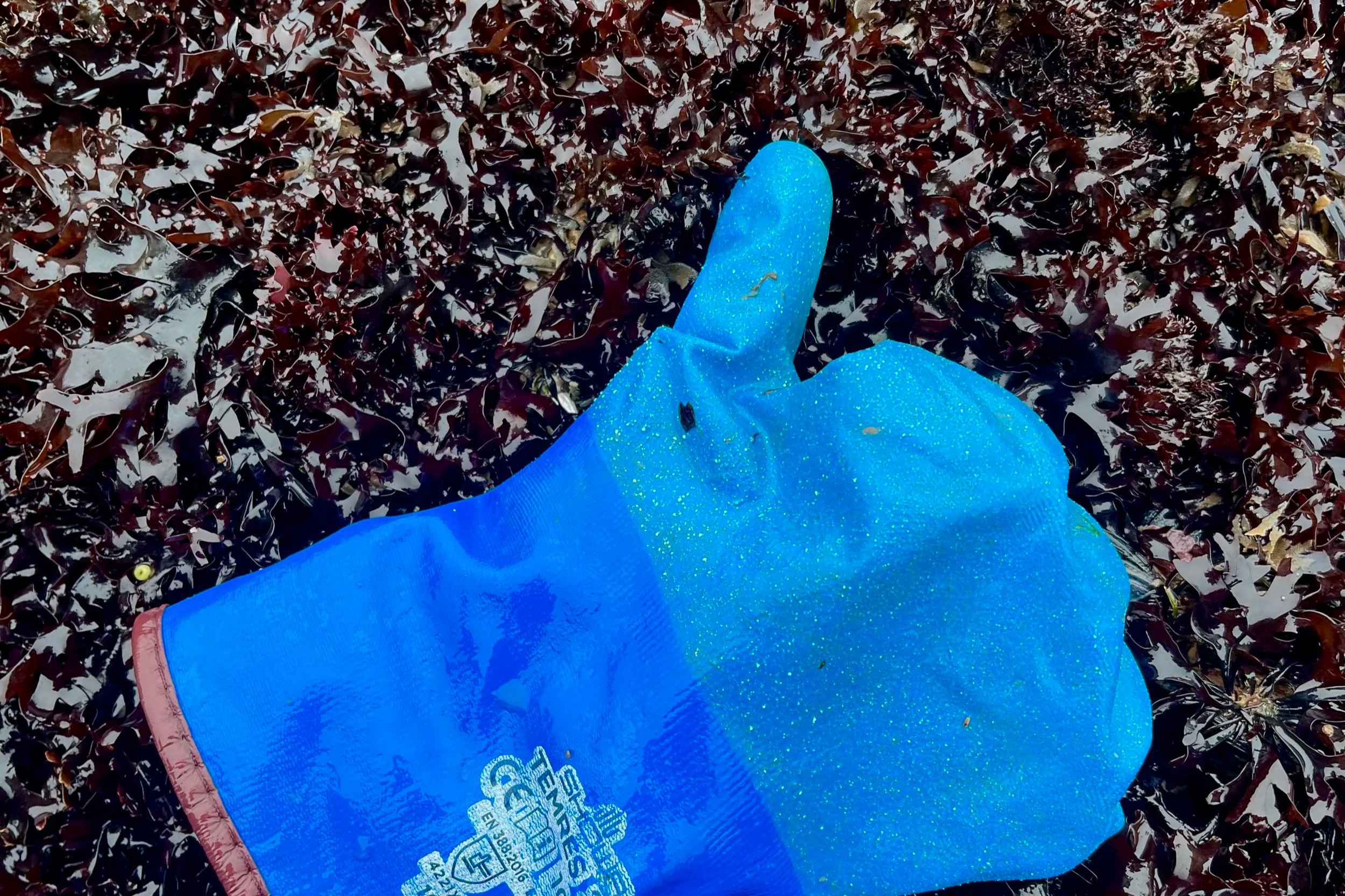
Irish Moss (Chondrus crispus) from the Gulf of Maine.
Tropical Sea Moss (Gracilaria & Eucheuma)
Warm-water tropical species
Often cultivated in tropical regions
Commonly gold, yellow, or light tan in color
Thinner or stringier appearance
Grown in significantly different ocean conditions

Tropical “gold sea moss” species commonly sold online.—Credit: https://agri.ohio.gov/divisions/food-safety/resources/sea-moss
Traditional Uses of Irish Moss
For generations, Irish moss has been used throughout Atlantic coastal communities in:
soups and broths
puddings and desserts
teas and tonics
smoothies and gels
skincare preparations
natural thickening applications
Because of its naturally occurring carrageenan compounds, Chondrus crispus has long been appreciated for creating smooth textures in recipes. The Vegan With Curves Blog has a great Irish moss gel recipe here.
Harvesting Irish Moss Along the Maine Coast
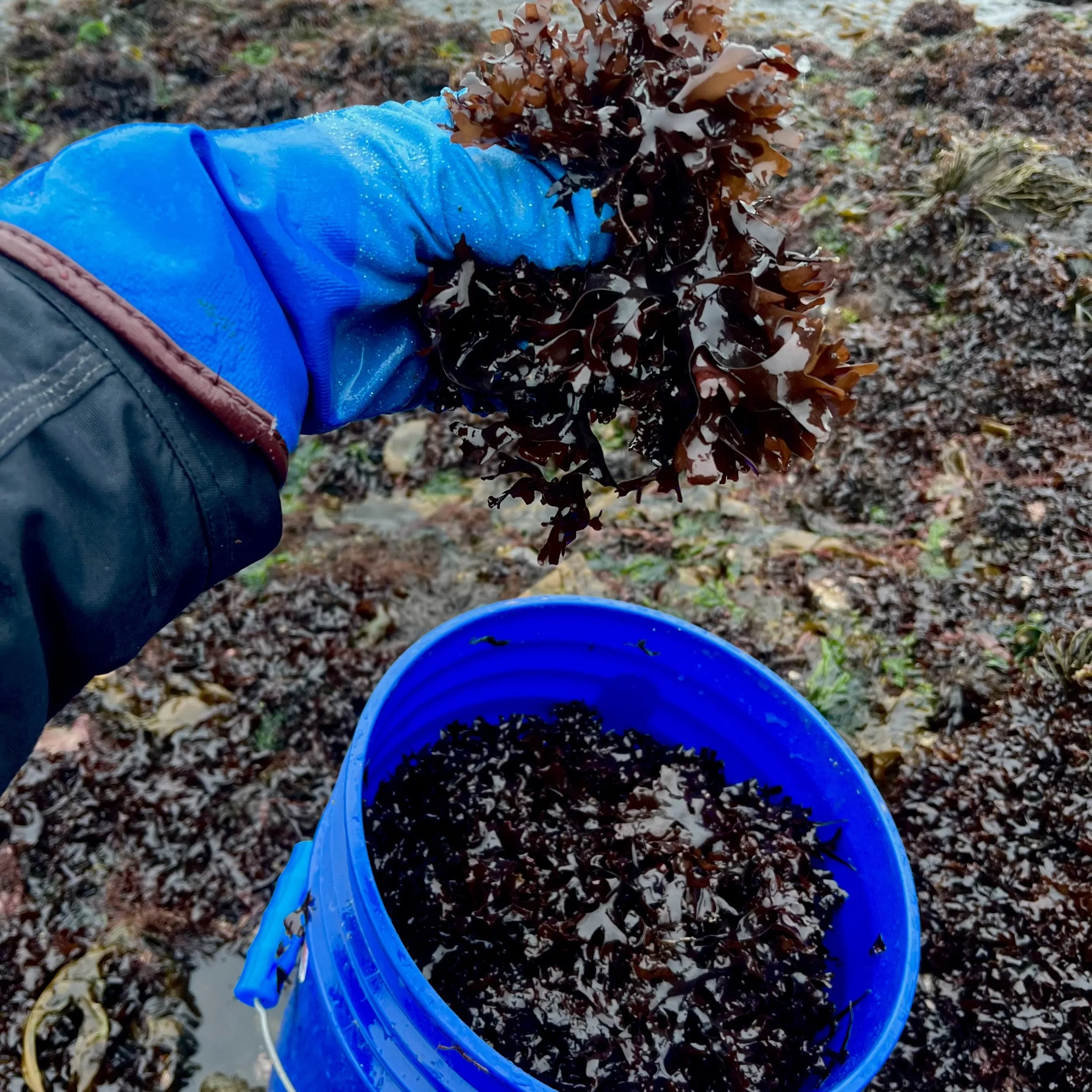
At Gulf of Maine, Inc., we sustainably hand-harvest wild Irish moss from the cold Atlantic waters of coastal Maine. We collect our wild harvested Irish moss by hand, cutting it directly from the rocks before rinsing it in fresh Atlantic seawater and naturally drying it in our greenhouse.
Our dried Maine Irish moss is available as whole leaf, flakes, or powder and has traditionally been used as a versatile edible sea vegetable in recipes, teas, smoothies, gels, and skincare preparations.
Spending time on the shoreline throughout the year allows us to observe the changing growth cycles of Irish moss firsthand — especially during the spring and summer months when fresh new fronds begin popping up everywhere.
We commonly find these fronds attached to rocks, mussel shells, and other submerged surfaces throughout the intertidal zone.

Understanding Irish Moss Today
As interest in marine botanicals and traditional seaweeds continues to grow, many people are becoming increasingly interested in the origins, harvesting methods, and ecology of Irish moss.
Today, Irish moss is commonly used in smoothies, teas, homemade gels, soups, broths, desserts, skincare preparations, and wellness routines. Many people are also drawn to Irish moss because of its long history of traditional use throughout Atlantic coastal communities.
Check out our YouTube video above to join us on an Irish moss harvest along the Maine coast — watch our Irish moss harvest video.
Along the Maine coast, Chondrus crispus remains deeply connected to the cold Atlantic environment where it naturally grows — shaped by tides, ocean temperatures, rocky shorelines, and seasonal cycles that have influenced its harvest for generations.
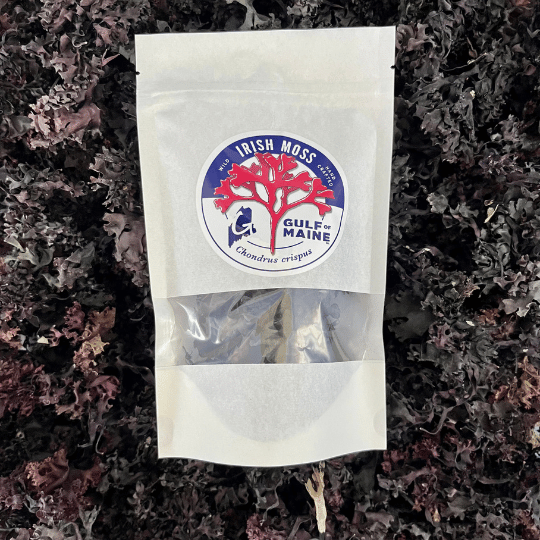
Gulf of Maine, Inc., Whole Leaf Irish Moss
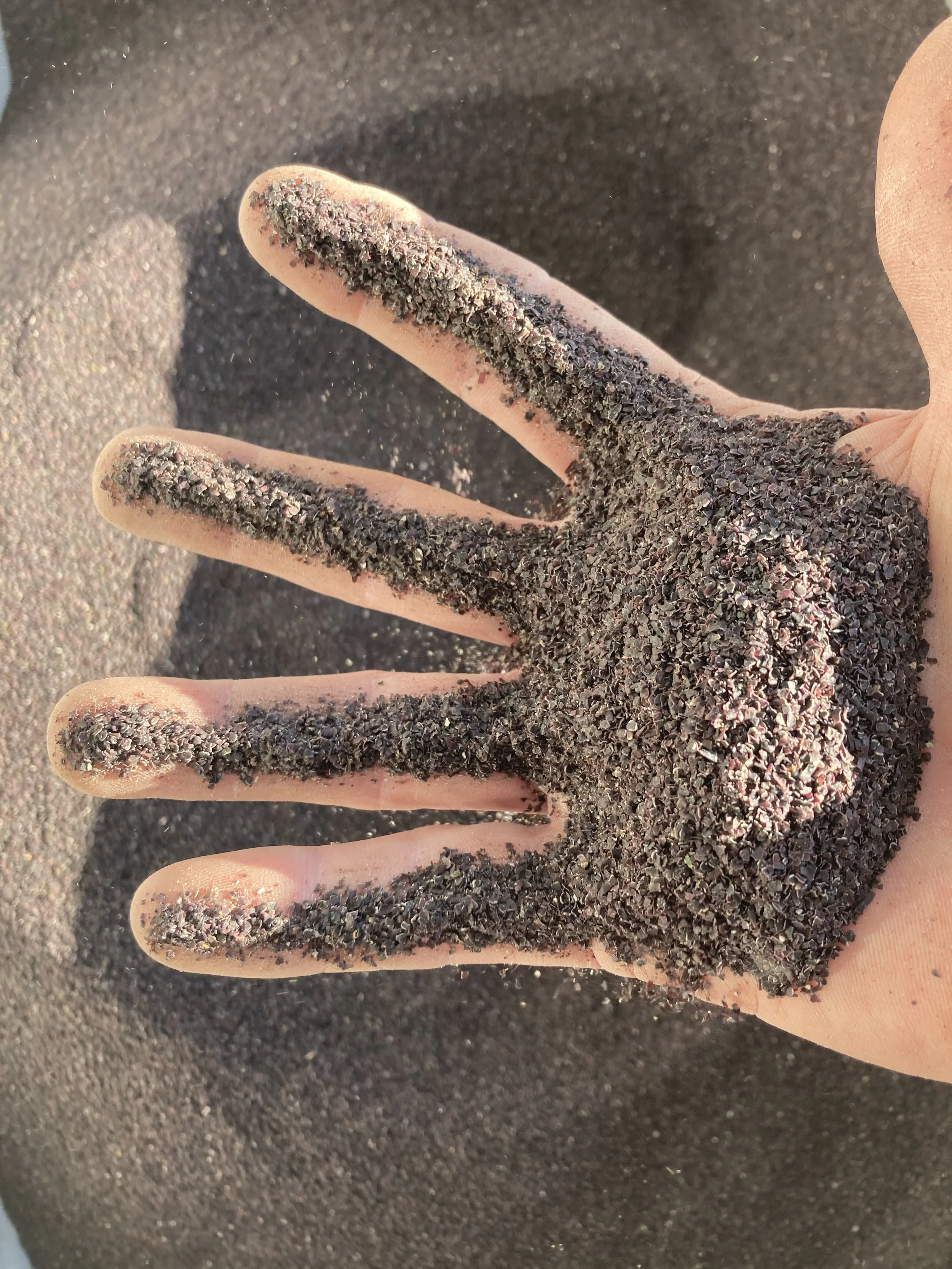
Gulf of Maine, Inc., Irish Moss Powder