What Is an Ocean Pout? Where They Live and How to Find Them in Tidepools
Most folks have never seen an ocean pout.
In fact, even people who spend their summers walking Maine beaches have probably stepped right over one without ever knowing it.
That's because ocean pout don't spend their time swimming around out in the open. They're homebodies. They like cool, dark places tucked beneath rocks where they can stay hidden from predators and wait for their next meal.
I've been exploring the coast of Maine for over 40 years, and I still get excited every time I find one. They aren't rare—you just have to know where to look.
On a recent -2 foot tide, I grabbed my net, a little aquarium, my dog Poppy, and headed down to one of my favorite rocky points to see if we could find one hiding beneath the boulders. It took flipping dozens of rocks before we finally spotted one. That's pretty typical for an ocean pout hunt.
If you've ever wondered what an ocean pout is, where it lives, or why it's so difficult to find, let me show you. You can also watch the full video on YouTube here.
What Is an Ocean Pout?
The ocean pout (Zoarces americanus) is a bottom-dwelling fish that belongs to the eelpout family, Zoarcidae.
Although they look a bit like an eel, they aren't true eels. Ocean pout have a broad head, thick lips, and a long dorsal fin that runs nearly the entire length of their body. They're built for life crawling through and hiding in rocky crevices instead of cruising through open water.
You'll find them along the Northwest Atlantic, from Labrador all the way down to the Mid-Atlantic states, but they're especially at home here in the cold waters of the Gulf of Maine.
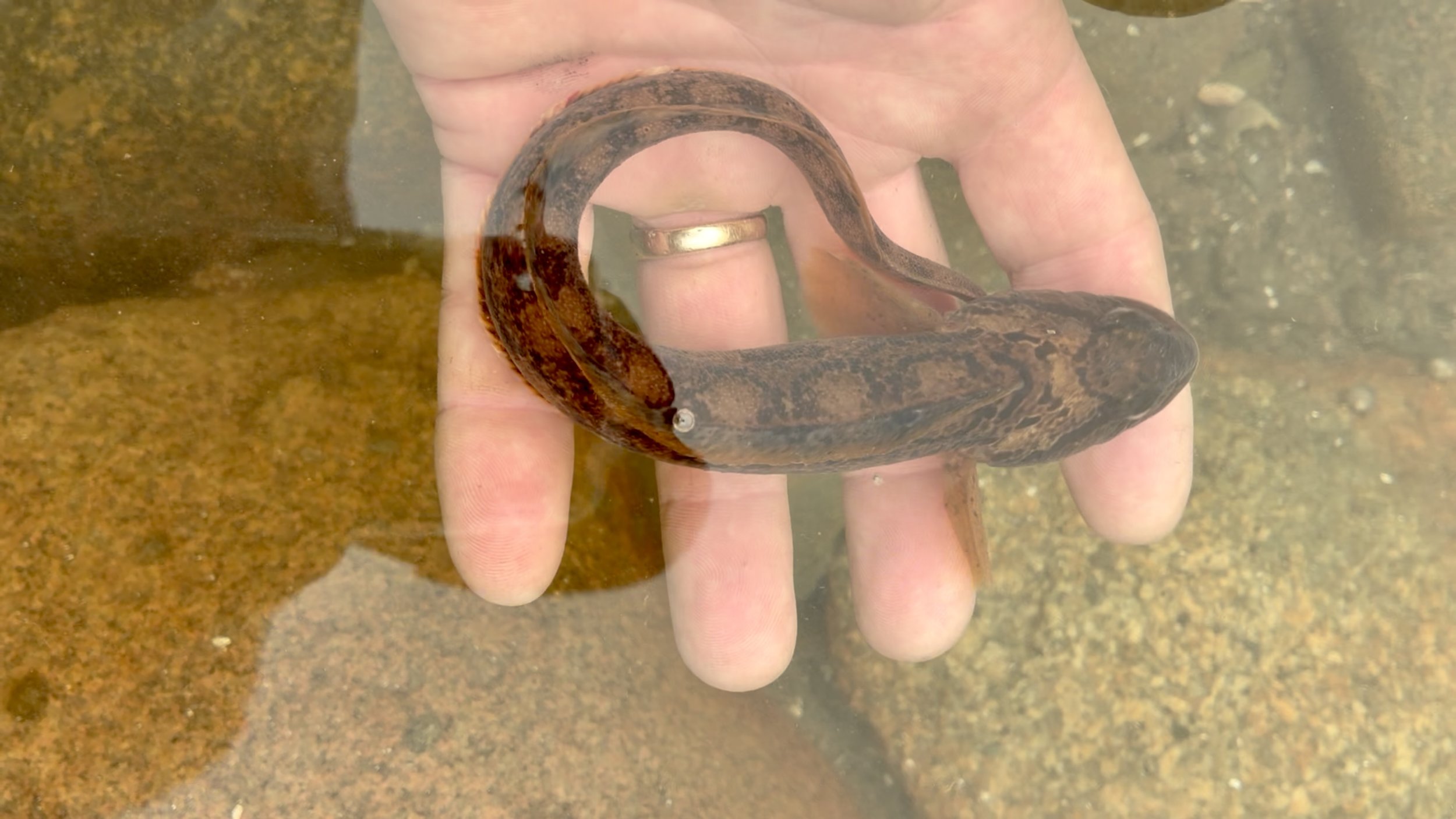
Ocean pout are surprisingly calm once you find them. This one rested in my hand before swimming back beneath the rocks.
Where Do Ocean Pout Live?
Whenever someone asks me where to find an ocean pout, I tell them not to look for the fish—look for the habitat.
Ocean pout love rocky bottoms.
Not every rock is worth flipping, though.
I'm usually looking for larger boulders that have a little space underneath them. Sometimes storms move these rocks around, and in some places scallop drags have shifted them over the years, leaving just enough room underneath for all kinds of marine life to move in. Rocks buried tightly into the mud don't have much living space underneath them.
One of my favorite places to search is what I call the pink zone.
That's the part of the shoreline coated with pink coralline algae. It's exposed only during especially low tides and always seems to be full of life.
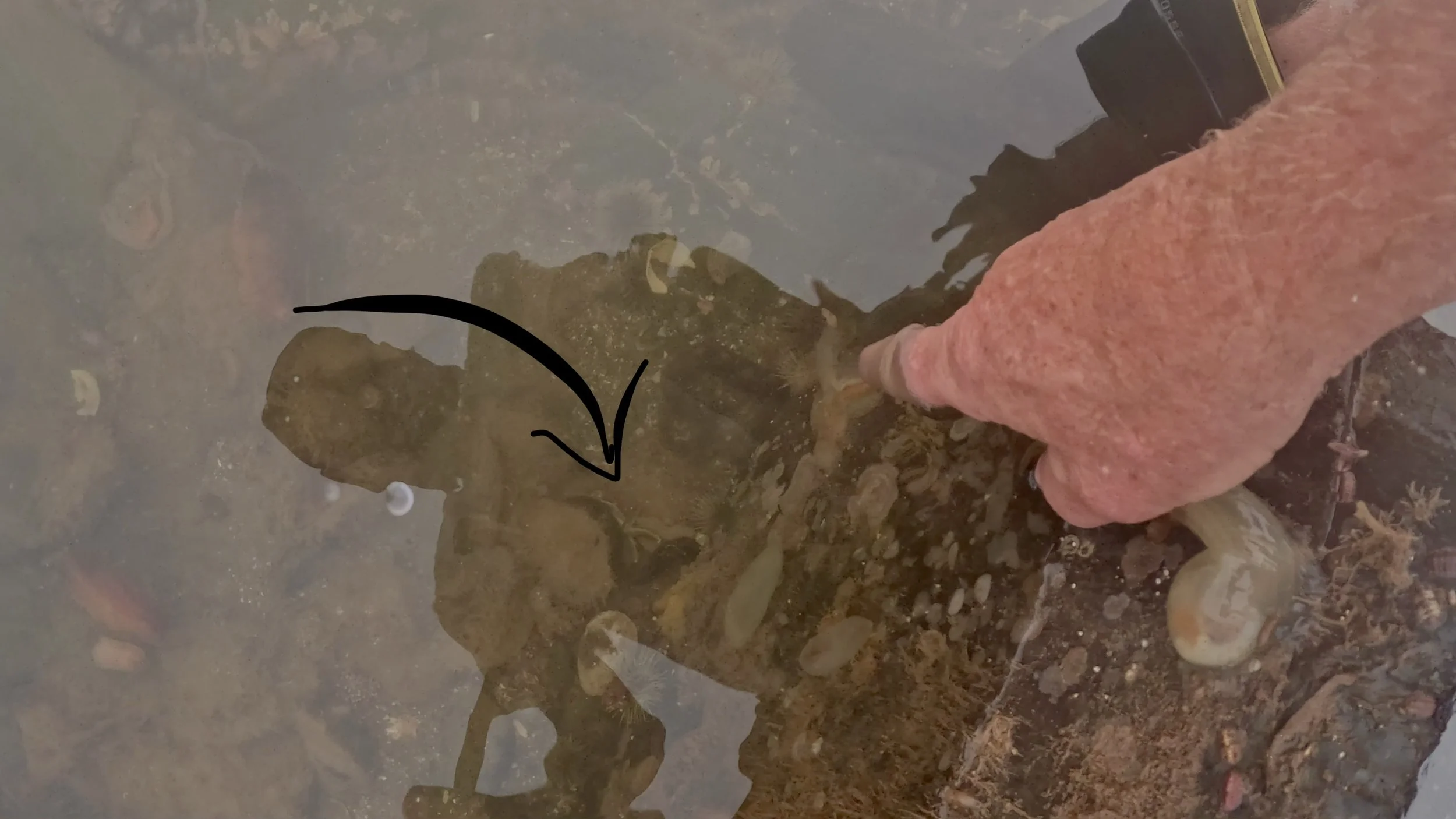
This is exactly where I expect to find an ocean pout—tucked beneath a loose boulder with just enough space to hide.
Why Are Ocean Pout So Hard to Find?
Ocean pout are masters of camouflage.
Most of the time they're curled tightly beneath a rock, reminding me of a tadpole. Their mottled brown coloring blends right in with seaweed, algae, and the surrounding rocks.
Even when you lift the perfect rock, they'll often disappear before you realize they were ever there.
During my latest search I watched two fish shoot out from underneath rocks before I could catch them. Then I thought I'd finally found an ocean pout—only to discover it was a rock gunnel instead.
How to Identify an Ocean Pout
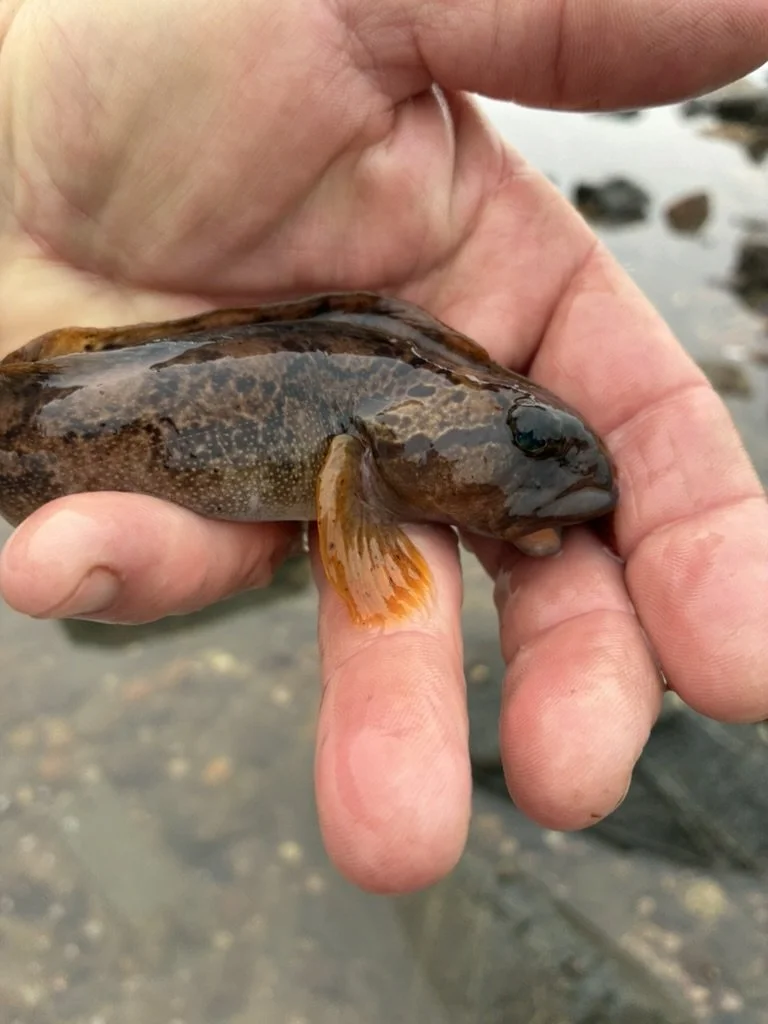
Those thick lips and broad head are two of the easiest ways to identify an ocean pout.
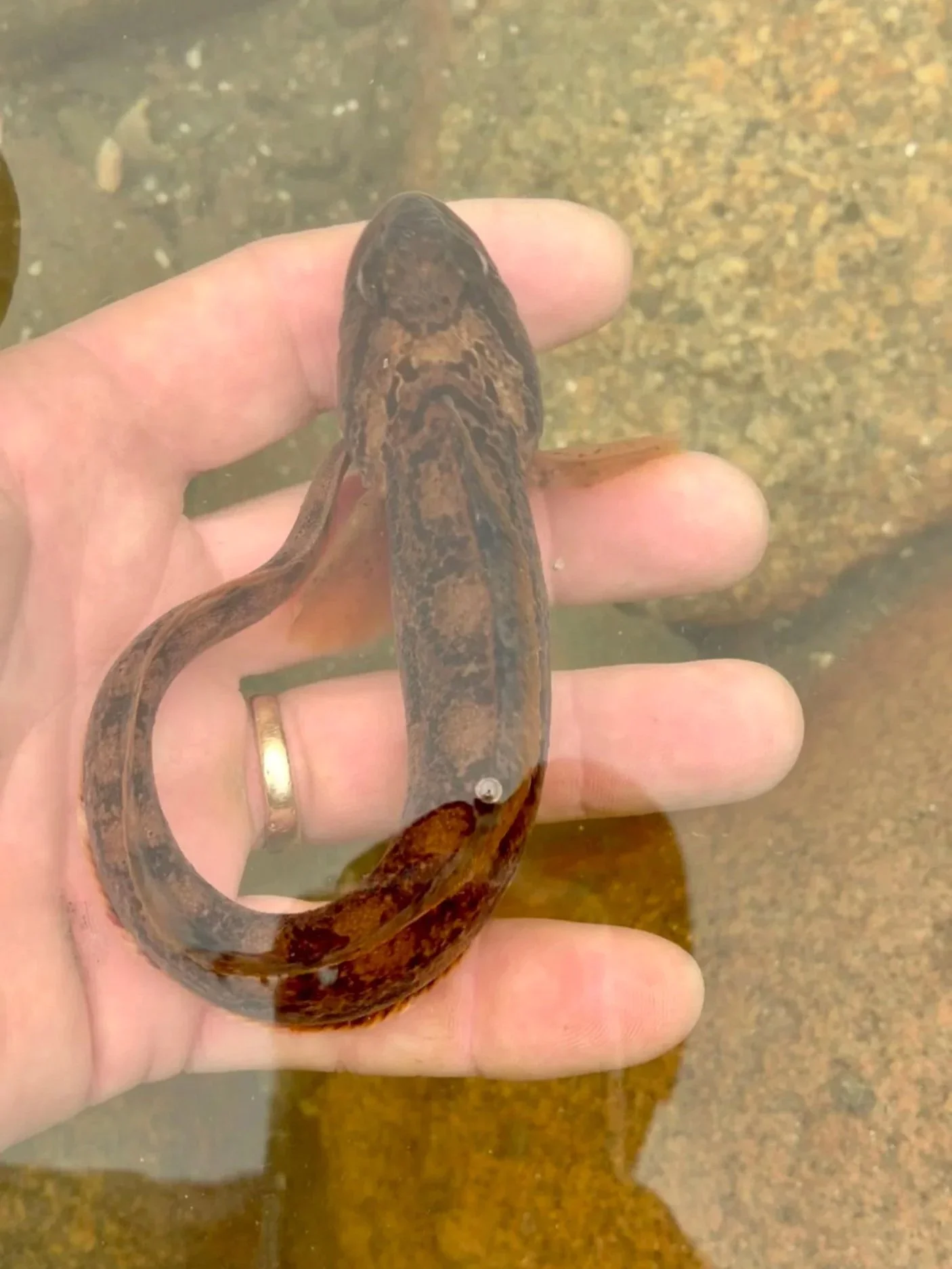
If you do happen to find one, here are a few things to look for.
Ocean pout have:
A broad, rounded head
Thick fleshy lips that give them their "pouting" appearance
A long eel like body with beautiful marbled brown patterns
Small pectoral fins behind the head
One long dorsal fin that stretches almost all the way to the tail
One of my favorite features is their face. They always look a little grumpy—like someone just woke them up from a nap. Maybe that's because I usually do.
Ocean Pout vs. Rock Gunnel
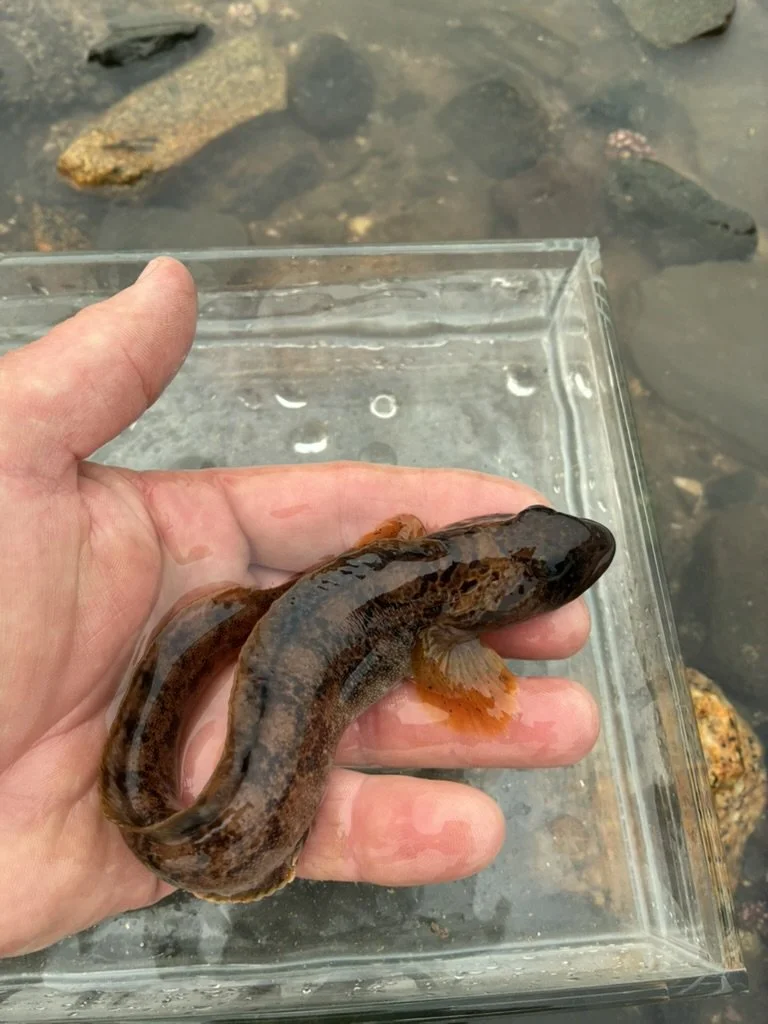
A healthy ocean pout showing off its beautiful marbled pattern before it jumped from my hand.
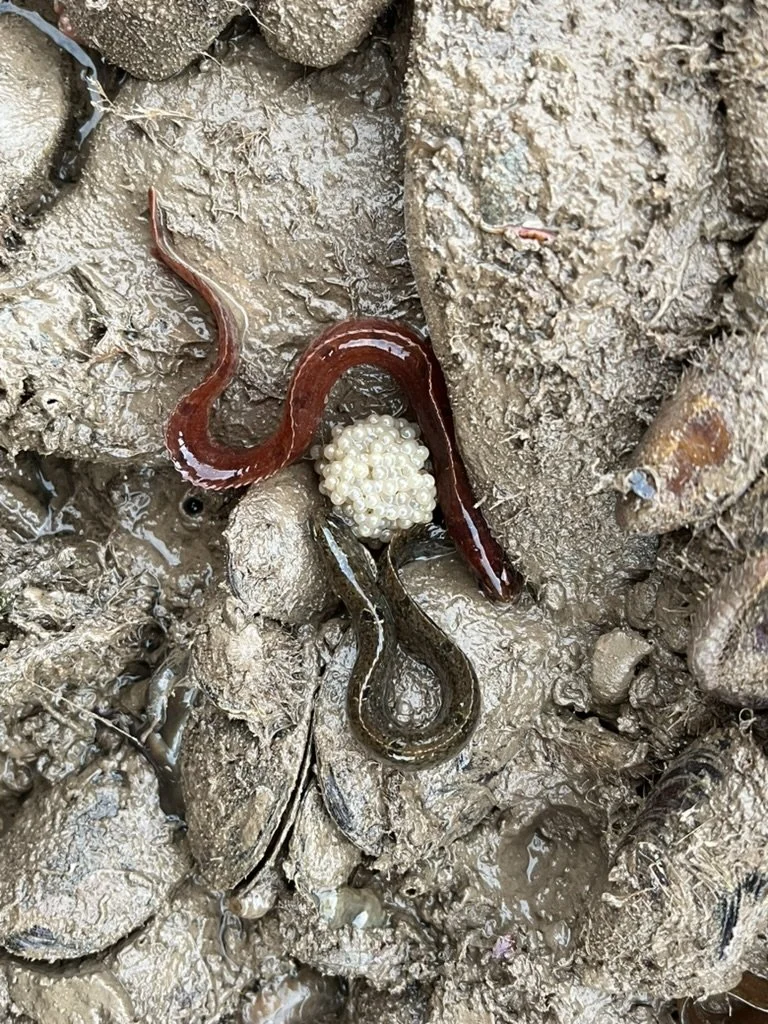
Two rock gunnel eels hiding under a rock with their eggs.
One of the easiest mistakes to make while tidepooling is confusing a rock gunnel with an ocean pout.
I've done it myself.
At first glance, they're both long, slender fish that hide beneath rocks, but once you've spent some time around them, the differences become much easier to spot.
Ocean pout have a heavier body, a broader head, and those signature thick lips that give them their name. Rock gunnels are usually slimmer, smaller, and more delicate-looking, often with distinct bands or spots running along their sides.
I've also noticed a difference in their behavior. Rock gunnels almost always dart away the moment you lift a rock. Ocean pout are certainly capable of swimming quickly when they want to, but in my experience they're usually much more docile. Many will simply coil beneath the rock or sit still for a moment before slowly moving off, giving you a chance to really appreciate them.
What Do Ocean Pout Eat?
Ocean pout don't chase schools of fish around.
They're opportunistic feeders that patrol the seafloor looking for an easy meal.
Their menu includes:
Marine worms
Small crabs
Shrimp
Mollusks
Sea urchins
Small fish
Living close to the bottom means food is always passing by if you're patient enough.
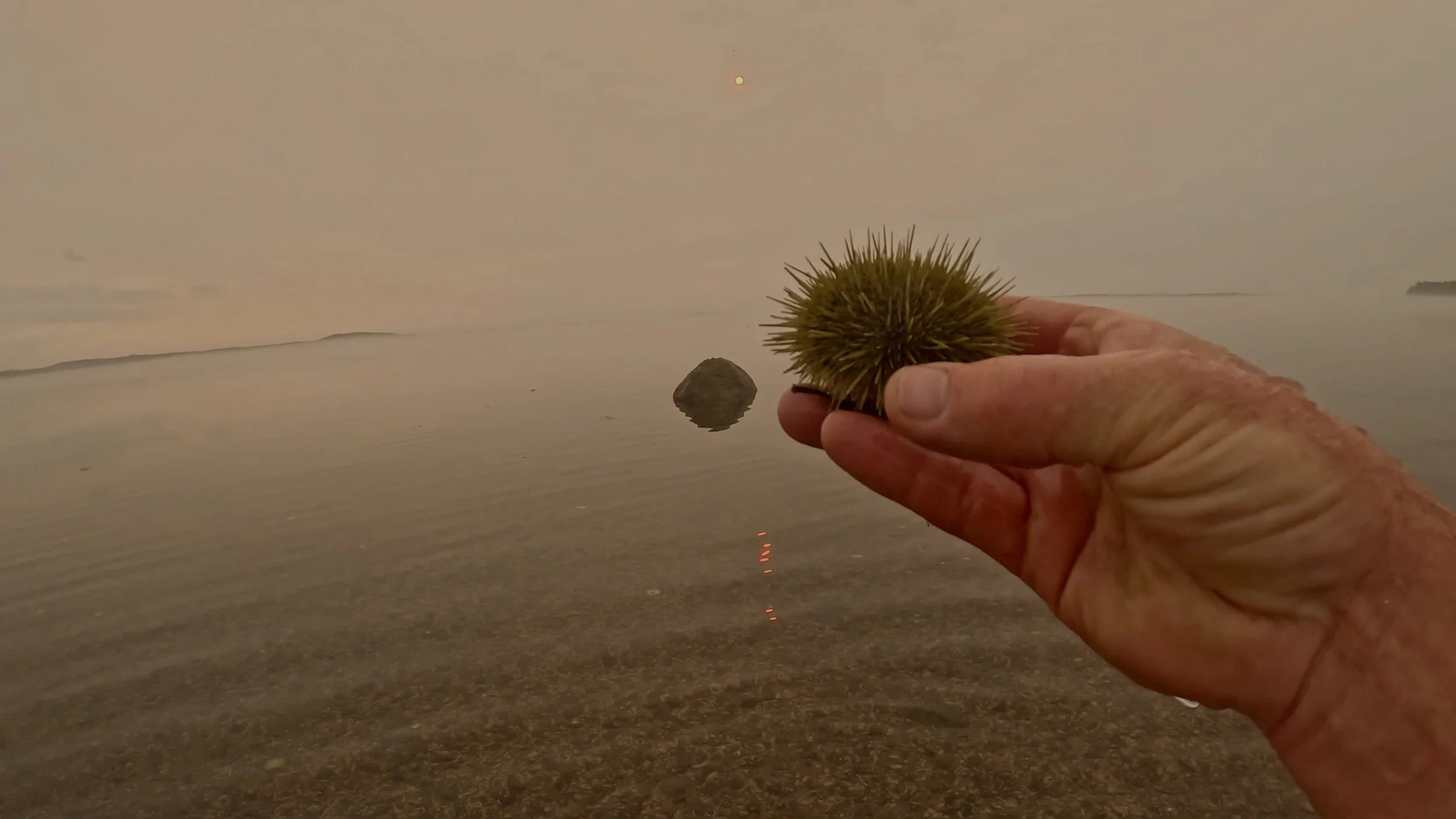
Even when I don't find the species I'm searching for, there's always something worth stopping to admire.
Built for Cold Water
One of the coolest things about ocean pout isn't something you can even see.
These fish produce special antifreeze proteins in their blood that help prevent ice crystals from forming during the coldest months of the year.
Scientists have studied these proteins for decades because they could have important applications in medicine, biotechnology, and aquaculture.
Pretty incredible, am I right?
Every Rock Tells a Story
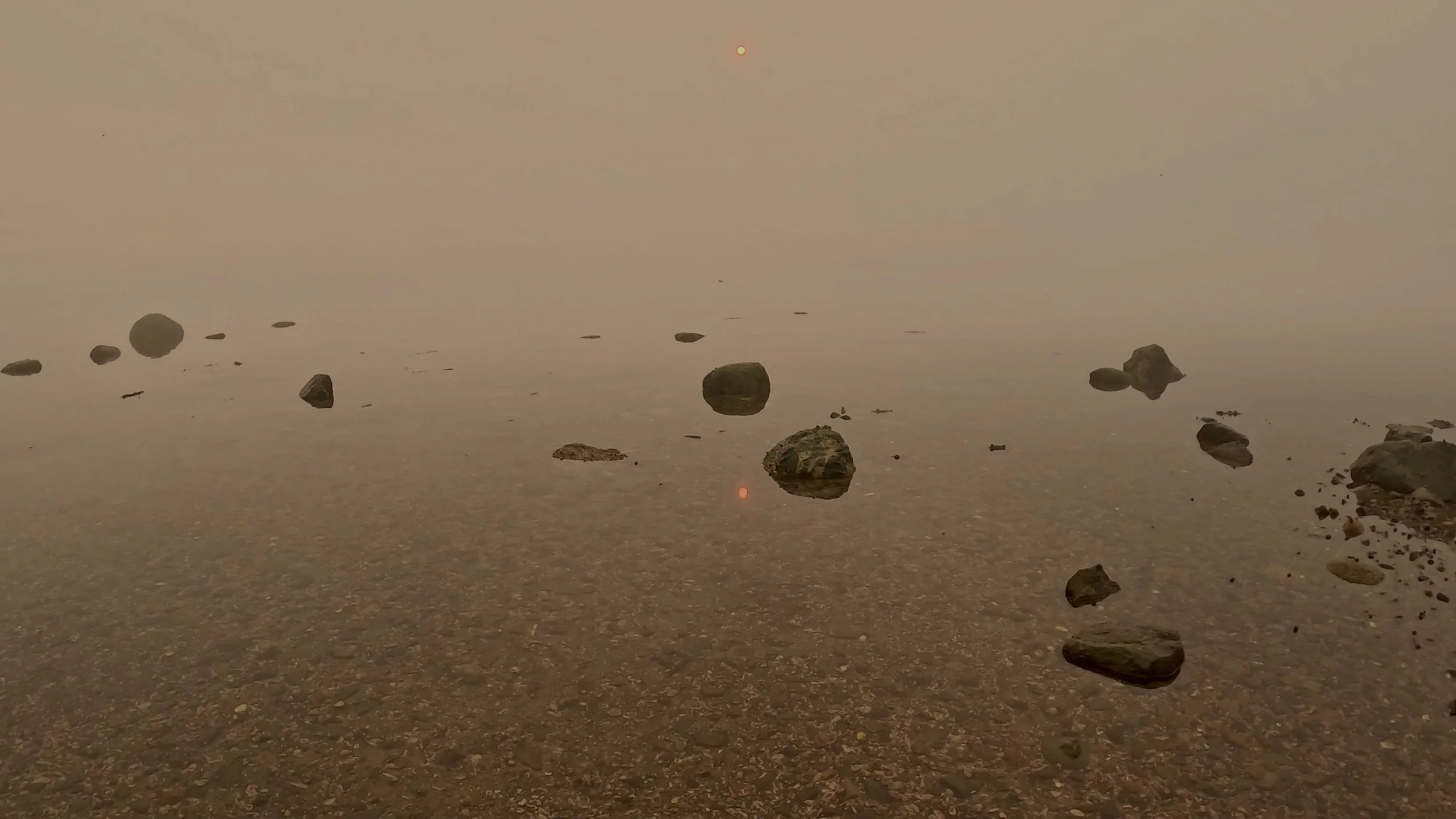
The best ocean pout habitat starts with an exceptionally low tide and plenty of loose rocky habitat to explore.
One of the reasons I love looking for ocean pout is that you never know what else you'll discover.
On this particular morning I found:
Sea cucumbers
Sea squirts
Green crabs
Blood stars
Scale worms
Spaghetti worms
Comb jellies
Lion's mane jellyfish
Whelks
Sea grapes
Some mornings I don't find the animal I'm looking for at all.
That's okay.
Because every rock has an entirely different surprise underneath and sometimes I find something even more exciting than the original species I set out looking for.
Can You Find an Ocean Pout Yourself?
Absolutely. I actually challenge you to!
The best time to look is during an exceptionally low tide on a rocky stretch of coastline.
Take your time.
Look for larger rocks with little cavities underneath them, lift them carefully, and always place every rock back where you found it.
And remember, sometimes you won't find an ocean pout.
But you'll almost always find something worth getting excited about.
Watch the Search
If you'd like to come along on the hunt, I filmed this entire tidepool adventure—from flipping the very first rock to finally finding an ocean pout just before the tide came back in.
Final Thoughts
People sometimes ask me if I ever get bored walking the same stretch of shoreline.
Not a chance.
The tide is always changing, the animals are always moving, and every low tide brings something different. Even after all these years, I'm still finding things that surprise me.
That's one of the reasons I love sharing these adventures. I hope the next time you're out exploring the coast, you'll take a closer look beneath a few rocks yourself.
Who knows... maybe you'll find your first ocean pout.
Looking for an ocean pout for your tank or aqaurium? Check out the listing below!
Live Ocean Pout (Macrozoarces americanus)
Please note this is a live marine specimen.
The Ocean Pout or Eelpout (Macrozoarces americanus), also known as the Congo Eel or Muttonfish, is a bottom-dwelling fish found along the deep-water seabeds of the Gulf of Maine. With its elongated, eel-like body and muddy yellow-brown coloration, this hardy species is well adapted to cold, low-light marine environments. It is an excellent specimen for aquariums, marine biology study, or dissection labs focusing on benthic fish anatomy and physiology.
Common name: Eelpout, Congo Eel, Muttonfish
Scientific name: Macrozoarces americanus
Locations: Deep-water seabed
Seasonality: Available all year
Colors: Muddy yellow-brown
Size: Up to 3’
Collected: By fishing line
Quantity: Sold by the each
Note: This is a live marine specimen. Natural variations in size, color, and appearance from photos should be expected. If you would like any specimen preserved, please send a request to: info@gulfofme.com.