
Sea Gooseberry (Pleurobrachia pileus): Facts, Identification & How We Find Them
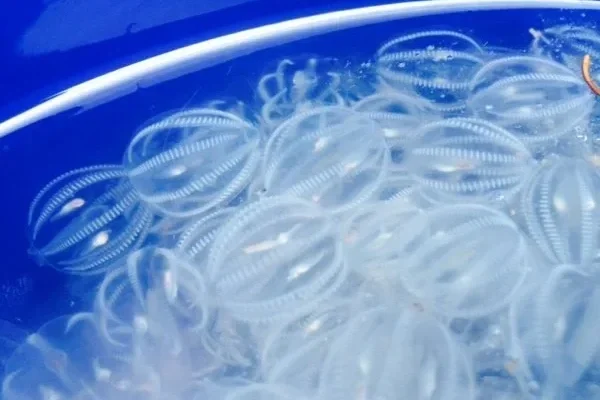
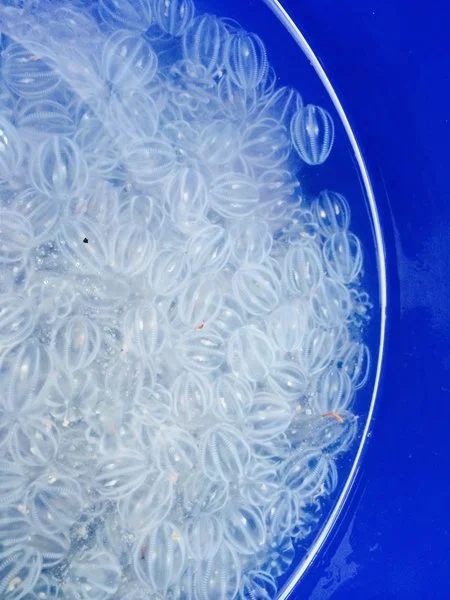
A group of sea gooseberries (Pleurobrachia pileus) collected in a bucket before being shipped to a customer for research.
Every June, we keep our eyes peeled for sea gooseberries while we're out collecting marine life for our customers. They seem to appear almost overnight, suddenly showing up in our bays here in Maine. Exactly when and where they'll show up, though, is always a bit unpredictable. Some days we find them almost immediately, while other days we come up empty-handed. Even when they're abundant, they're easy to miss.
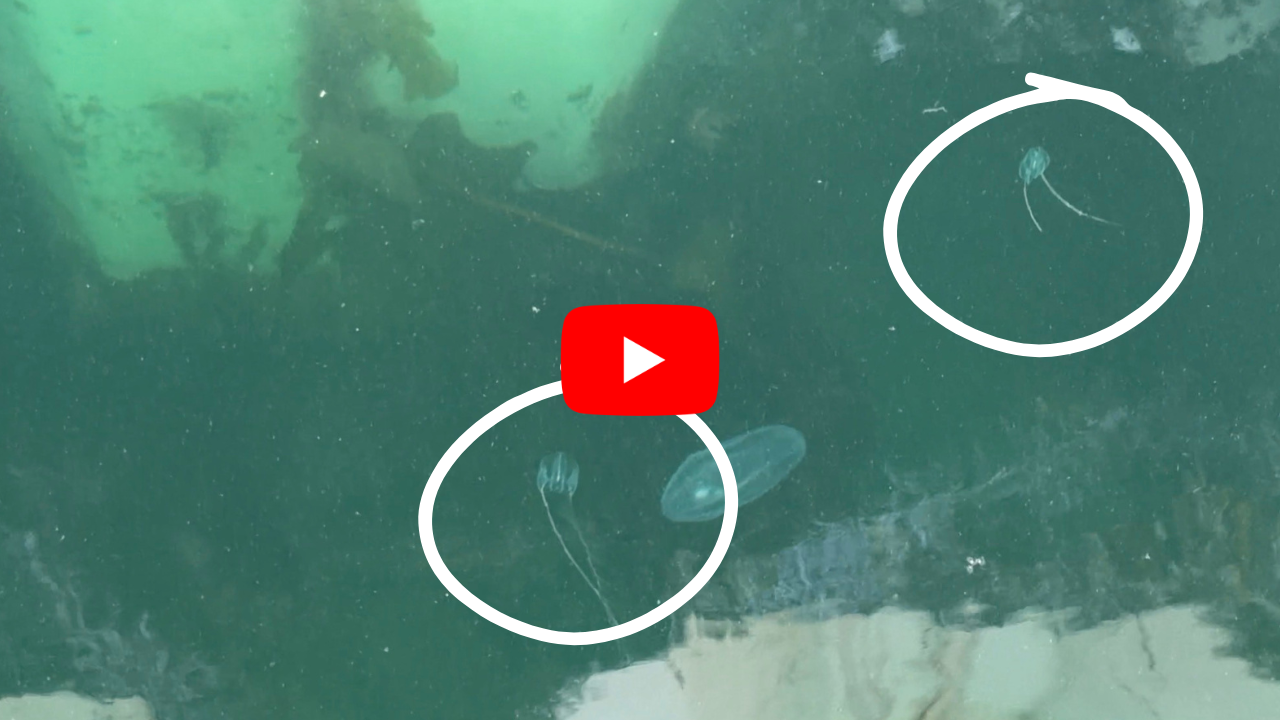
In this week's Tidepool Tim video, we found several sea gooseberries (Pleurobrachia pileus) drifting near the docks in Eastport, Maine. After bringing them back to a small observation tank, we were finally able to see details that are almost impossible to appreciate in the water—from their shimmering comb rows to their surprisingly long feeding tentacles.
Watch the video below before we take a closer look at this fascinating species.
What Exactly Is a Sea Gooseberry?
If this is your first time hearing the name "sea gooseberry," you're definitely not alone. Despite looking like tiny jellyfish, sea gooseberries (Pleurobrachia pileus) are actually comb jellies, a completely different group of animals known as ctenophores (pronounced TEEN-oh-fours).
One of the easiest ways to tell the difference is by watching how they swim. Jellyfish move by pulsing, while sea gooseberries glide through the water using eight rows of tiny hair-like structures called comb rows. In the right light, these rows scatter light into beautiful rainbow colors, which is one of the reasons comb jellies are so mesmerizing to watch.
Taxonomy
Kingdom: Animalia
Phylum: Ctenophora
Class: Tentaculata
Order: Cydippida
Family: Pleurobrachiidae
Genus: Pleurobrachia
Species: Pleurobrachia pileus
Why Are They Called Sea Gooseberries?
It's a fair question—because they don't exactly look like the gooseberries you find at the grocery store.
The name comes from their shape. Sea gooseberries have a small, rounded, almost perfectly transparent body that reminded early naturalists of the fruit, and the nickname has stuck ever since.
Personally, I think they look even more mesmerizing once you see them swimming. Their shimmering comb rows, long feeding tentacles, and the way they effortlessly propel through the water make them almost hypnotic to watch.
Those Rainbow Lines Aren't Just for Show
One of my favorite things about sea gooseberries is watching those shimmering rows of cilia in motion.
Each of those eight comb rows is made up of thousands of microscopic cilia beating together in perfect coordination. Instead of muscles, these tiny hairs propel them through the water, allowing them to swim much faster than you'd expect for something so delicate. In the YouTube video we made on the species you can see this motion in real time. It shocked us each time they suddenly took off around the tank!
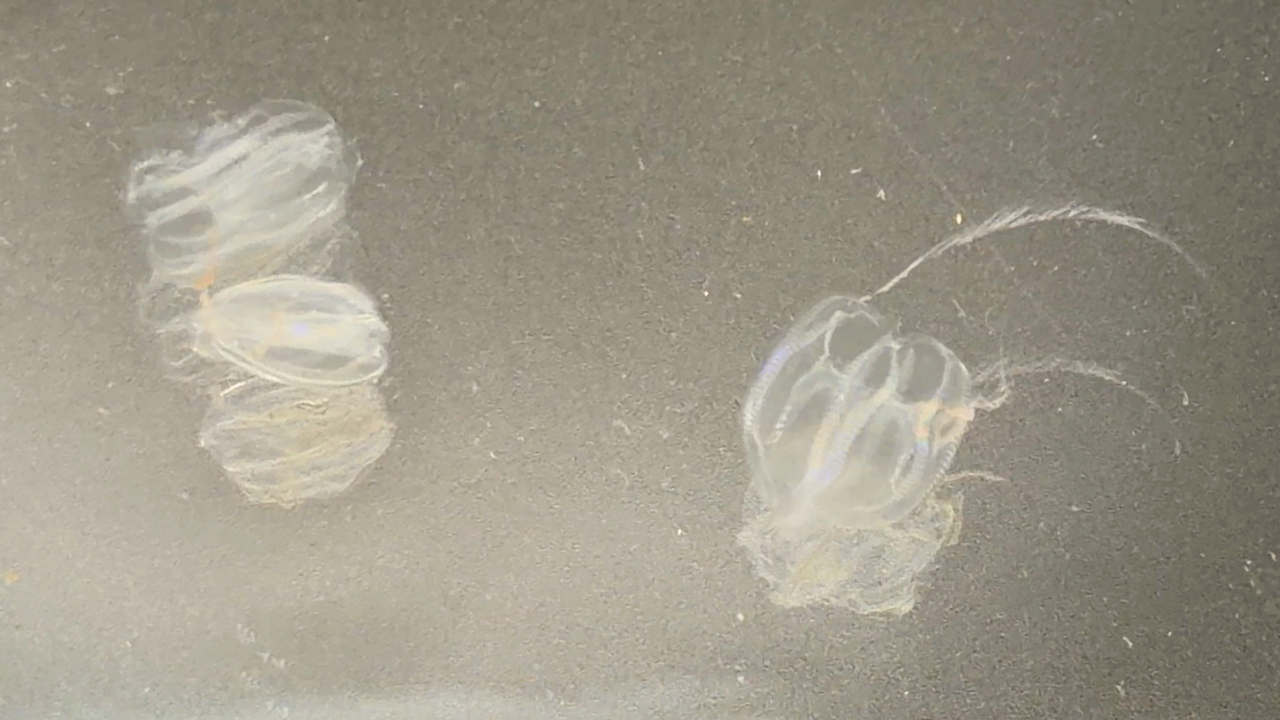
Sea gooseberries swimming in a clear observation tank showing their transparent bodies and comb rows.
They Aren't Jellyfish—And They Don't Sting
This is probably the biggest misconception about sea gooseberries.
Although they look a bit like miniature jellyfish, they don't have stinging cells. Instead, they catch food using two long tentacles covered in sticky cells called colloblasts.
These tentacles can stretch many times longer than the body itself, drifting through the water until tiny animals like copepods, fish larvae, or other zooplankton bump into them. Once something sticks, the tentacles slowly pull it back toward the mouth.
One thing we noticed while filming this video was just how different the tentacles looked in the wild compared to the observation tank. When we first spotted the sea gooseberries in the water, many had long tentacles trailing behind them. After bringing them back to the tank, though, some appeared to have no tentacles at all. They hadn't disappeared—they had simply retracted them so well that they were almost impossible to see.
Why Are They So Hard to Find?
People are always surprised when we say we can collect tons of sea gooseberries one trip, head back out later the next day, and come home empty-handed.
Even when they're in season (typically during May and June here in Maine), they don't stay in one place for very long. Winds, tides, and currents are constantly moving them around, so one shoreline can be full of them while another nearby has almost none. We usually start to see them in late May, when we believe the water conditions are just right for them. They drift into our bays, where we're able to collect and observe them, and then, just as quickly as they arrive, they disappear from our bay—or at least from sight.
That's one of the reasons Tim gets excited whenever we find them. Every collection trip is different, and you never really know what you're going to come across until you get there.
Tidepool Tim says: "One thing we've noticed over the years is that sea gooseberries don't always show up where we expect them. Some mornings we'll check one dock and find almost none, while another nearby is full of them. They're good swimmers for their size, but winds and tidal currents still play a huge role in where they gather. That's part of what makes every trip interesting."
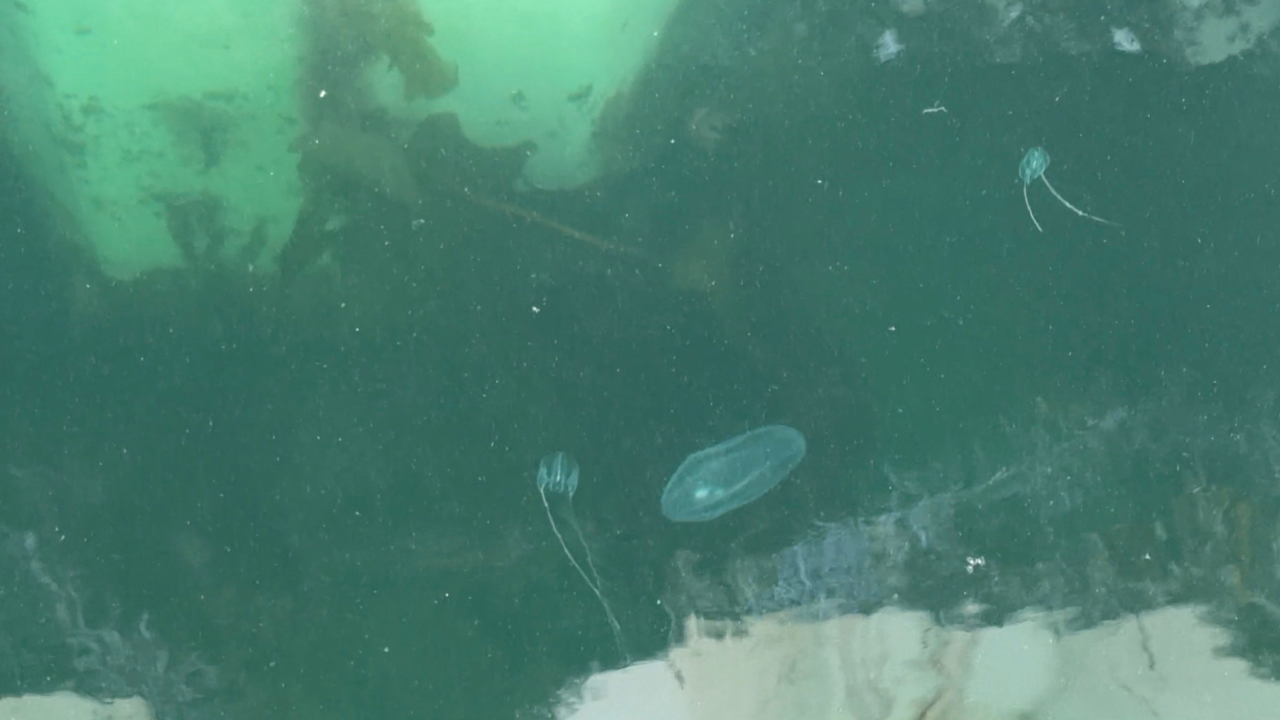
Sea gooseberries drifting beneath the docks in Eastport, Maine.
Seeing Them Up Close
Watching sea gooseberries in an observation tank completely changes the experience.
Out in the ocean, they're nearly invisible. Once they're in a clear tank, though, you can finally appreciate all the little details—the shimmering comb rows, the long feeding tentacles, and even parts of their digestive system through their transparent bodies.
They're a great reminder that some of the most fascinating marine life is also some of the easiest to overlook.
Sea gooseberries may be small, but they're one of the prettiest little animals we encounter each summer. Every time we bring a few into an observation tank, we're reminded just how much is happening beneath the surface of the ocean—often in places most people never think to look.
If you'd like to see these incredible comb jellies in action, watch the full Tidepool Tim video below.
>Watch the full video here on YouTube, from collection to observation.
Thanks for following along, and make sure to leave a comment if you have questions!
-Molly, Tim & The Gulf of Maine, Inc., team
FAQ’s
-
No. Despite their jelly-like appearance, sea gooseberries (Pleurobrachia pileus) are comb jellies, not true jellyfish. They belong to the phylum Ctenophora, while jellyfish belong to the phylum Cnidaria.
-
No. Sea gooseberries don't have stinging cells like jellyfish. Instead, they capture tiny prey using sticky cells called colloblasts, making them harmless to people.
-
Sea gooseberries feed on tiny drifting animals known as zooplankton. Their diet includes copepods, fish larvae, planktonic worms, and other small crustaceans that become trapped on their long, sticky tentacles.
-
Sea gooseberries are found throughout the cold and temperate waters of the North Atlantic Ocean, including the Gulf of Maine, the North Sea, and coastal waters around northern Europe.
-
Most sea gooseberries grow to about 1–2 centimeters (½–¾ inch) in diameter, though their feeding tentacles can extend many times longer than their body.
-
The rainbow colors aren't pigments. They're created when light passes through the eight rows of tiny beating cilia, called comb rows, that the animal uses to swim.
-
Yes, sea gooseberries can produce a faint blue-green glow under certain conditions, although the rainbow colors you usually see are caused by light reflecting off their comb rows—not by bioluminescence.
-
The exact timing depends on the location, but here in Eastport, Maine, we typically encounter sea gooseberries during June and into early July, when they're easiest to find during our marine life collections.
-
Both are comb jellies, but they're different species. Sea gooseberries (Pleurobrachia pileus) have a nearly spherical body with two long feeding tentacles, while sea walnuts (Mnemiopsis leidyi) have a more elongated body and lack the long trailing tentacles seen in sea gooseberries.
Live Sea Gooseberry (Pleurobrachia pileus)
Please Note This Is A Live Science Specimen
The Sea Gooseberry (Pleurobrachia pileus), is a small, translucent ctenophore found drifting in tidal upwellings throughout open bays of the Gulf of Maine. These delicate, gelatinous animals are mesmerizing to observe, with rows of tiny ciliary combs that refract light into shimmering rainbow colors as they pulse through the water.
Collected by gentle dip-netting, Sea Gooseberries are best viewed in seawater aquaria with minimal flow, where their rhythmic movements and iridescence can be appreciated up close. Though fragile, they are among the most captivating live specimens available for classroom and laboratory study, particularly in early summer when populations are most abundant.
Common name: Sea Gooseberry
Scientific name: Pleurobrachia pileus
Locations: Tidal upwellings in open bays
Seasonality: Early summer is best; sometimes available year-round in plankton tows
Colors: Translucent clear, white
Size: ½” average
Collected: By dip-net
Quantity: Sold by the each
Uses: Excellent for marine biology demonstrations, ctenophore research, or educational aquarium exhibits showcasing bioluminescence and ciliary motion.
Note: This is a live marine specimen. Natural variations in size, color, and appearance from photos should be expected. Ctenophores are delicate and must be handled with extreme care. If you would like a preserved sample instead, please send a request to: info@gulfofme.com.